The story of the widow Volunbrun and her slaves might be told through differing analytic frames: empire, constitution making, anti-slavery constitution making, antislavery movements, political economy, high court pronouncements pronouncements, and biography.8 In this essay the answers lie in the intimate dynamics of a household and the lived experience of the enslaved people in it. Can we understand what the problem of slavery and freedom looked like for those enslaved people whose life itineraries were shaped by the meta-forces of commercial, political, and military conflict and exchange? Being enslaved in 1796 Port-au-Prince differed from being enslaved in 1801 New York City or 1818 Baltimore. Along this Atlantic itinerary, the Volunbrun slaves confronted new rules, rituals, and structures of power. Straining to adopt their perspective, we see the lived dimensions of slavery and law. We learn how enslaved people quietly navigated a complex matrix of courts, attorneys, and reformers. We will also see how the claims of Saint-Domingue's slaves in Maryland, making their lives at the intersection of the Haitian Revolution and an emerging domestic slave trade, shaped the parameters of Southern southern legal culture.The full chapter is available here.
Jones on "Narrating Slavery, Freedom, and the Haitian Revolution in Baltimore City"
Martha S. Jones (University of Michigan) has posted "The Case of Jean Baptiste, un Créole De Saint-Domingue: Narrating Slavery, Freedom, and the Haitian Revolution in Baltimore City," which was published in The American South and the Atlantic World (University Press of Florida, May 2013), edited by Brian Ward, Martin Bone, and William A. Link. Here's the abstract:

"Signposts," "Westward Bound," "Inside the Castle" Reviewed in the Law & Politics Book Review
The Law & Politics Book Review is out with a new batch of reviews. Items of interest include:
 Walter F. Pratt, Jr. (University of South Carolina School of Law) reviews SIGNPOSTS: NEW DIRECTIONS IN SOUTHERN LEGAL HISTORY (University of Georgia Press, 2013), edited by Sally E. Hadden and Patricia Hagler Minter.
Zvi H. Triger (The Haim Striks School of Law, College of Management Academic Studies, Rishon LeZion, Israel) reviews INSIDE THE CASTLE: LAW AND THE FAMILY IN 20TH CENTURY AMERICA (Princeton University Press, 2011), by Joanna L. Grossman and Lawrence M. Friedman.
Michael Boudreau (Department of Criminology & Criminal Justice, St. Thomas University) reviews WESTWARD BOUND: SEX, VIOLENCE, THE LAW, AND THE MAKING OF A SETTLER SOCIETY (UBC Press, 2011), by Lesley Erickson.
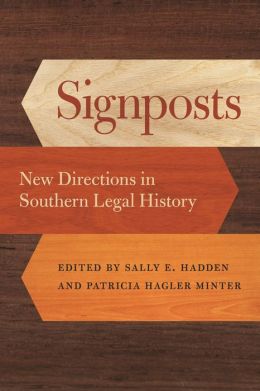 Walter F. Pratt, Jr. (University of South Carolina School of Law) reviews SIGNPOSTS: NEW DIRECTIONS IN SOUTHERN LEGAL HISTORY (University of Georgia Press, 2013), edited by Sally E. Hadden and Patricia Hagler Minter.
 Zvi H. Triger (The Haim Striks School of Law, College of Management Academic Studies, Rishon LeZion, Israel) reviews INSIDE THE CASTLE: LAW AND THE FAMILY IN 20TH CENTURY AMERICA (Princeton University Press, 2011), by Joanna L. Grossman and Lawrence M. Friedman.
Michael Boudreau (Department of Criminology & Criminal Justice, St. Thomas University) reviews WESTWARD BOUND: SEX, VIOLENCE, THE LAW, AND THE MAKING OF A SETTLER SOCIETY (UBC Press, 2011), by Lesley Erickson.
Dennis on "Blacks Informing during Slavery"
Andrea Dennis, University of Georgia Law School, has posted A Snitch in Time: An Historical Sketch of Black Informing During Slavery, which is forthcoming in the Marquette Law Review, 97 (2014). Here is the abstract:
This article sketches the socio-legal creation, use, and regulation of informants in the Black community during slavery and the Black community’s response at that time. Despite potentially creating benefits such as crime control and sentence reduction, some Blacks today are convinced that cooperation with government investigations and prosecutions should be avoided. One factor contributing to this perspective is America’s reliance on Black informants to police and socially control Blacks during slavery, the Civil Rights Movement, and the Wars on Drugs, Crime and Gangs. Notwithstanding this historical justification for non-cooperation, only a few informant law and policy scholars have examined closely the Black community’s relationship with informing. Furthermore, even among this small group of works, noticeably absent are historical explorations of Black America’s experience with informing during slavery. Drawn using a variety of primary and secondary historical and legal sources, this article develops a snapshot of the past revealing many similarities between the Black experience with informing both while enslaved and in contemporary times. Consideration of these resemblances during present debate on the topic may help to facilitate nuanced conversation as to whether and how the modern Black community and government should approach using informants in current times.
Sunday Book Review Roundup

Jill Lapore reviews Wilson (Putnam Adult) by A. Scott Berg in the New Yorker, as does Jeff Shesol for the Washington Post here. Shesol writes,
"The latest attempt to assess — or really, to firmly establish — his significance is “Wilson,” by A. Scott Berg, who won a Pulitzer Prize for his 1998 biography of Charles Lindbergh. Berg likens his approach to impressionism, with its use of “thousands of dabs of paint,” and here he paints a vivid tableau. Indeed, color abounds in this book: Railcars are “furnished with big easy chairs, footstools, and cushions, in rose brocade”; people drink “high tea with yellow Devonshire cream”; Edith Wilson’s bedroom is “decorated in ivory with a pink bedspread.” But the picture Berg is most interested in rendering is, in a way, abstract: the interior Wilson. “I have never seen a book that captured the emotional side of the man,” Berg said in a recent interview. “I wanted to do that book.”"H-Net offers up several reviews this week. There is a review of The Oxford Handbook of the Cold War (Oxford University Press) edited by Richard H. Immerman and Petra Goedde, and another of Angela Pulley Hudson's Creek Paths and Federal Roads: Indians, Settlers, and Slaves and the Making of the American South (University of North Carolina Press). There is also a review of Katherine A. Scott's Reining in the State: Civil Society and Congress in the Vietnam and Watergate Eras (University Press of Kansas).
In the latest volume of Slavery & Abolition: A Journal of Slave and Post-Slave Studies, Alfred Brophy thoughtfully reviews Andrew Fede's Roadblocks to Freedom: Slavery and Manumission in the United States South (Quid Pro Books), "a study of statutes and appellate opinions in the southern states from Revolution to Civil War that hindered slaves who were seeking freedom."
 In the New York Review of Books Nicolas Lemann writes about "The New Deal We Didn’t Know," in his review of Fear Itself: The New Deal and the Origins of Our Time (Liveright) by Ira Katznelson. Lemann writes,
"Another difference between Fear Itself and most of the familiar histories of the New Deal is that Katznelson thinks like a political scientist. That means that, although he defines the period presidentially, as the twenty years when Franklin Roosevelt and Harry Truman were in the White House, Roosevelt and Truman themselves are spectral presences. They are not the primary determiners of the course of government, and Katznelson has no interest in their personal qualities or their methods of leadership. Instead his focus is on Congress and government agencies, and more broadly on political systems, voting, and interest groups. This gives Fear Itself the feeling of a fresh look at a familiar story; what Katznelson loses in ignoring the inherent force of the hero narrative, he gains in being able to make an argument that largely ignores the presidency."Back in August we noted a review of The Great Dissent: How Oliver Wendell Holmes Changes His Mind – and Changed the History of Free Speech in America (Metropolitan) by Thomas Healy. This week the Washington Post reviewed the book.
Similarly, last week we noted several reviews of For Discrimination: Race, Affirmative Action, and the Law (Pantheon) by Randall Kennedy. This week the New York Review of Books adds another.
And finally, if you're interested in what Slate is suggesting as "the perfect reading material for the college-bound"--including the Federalist Papers--you can find their lengthy and diverse list here.
Green, "Loyal Denominatorism and the Fourteenth Amendment: Reconstruction History."
Christopher R. Green (University of Mississippi - School of Law) has posted "Loyal Denominatorism and the Fourteenth Amendment: Reconstruction History." Here's the abstract:
The exclusion of Southern representatives from Congress from December 1865 to the summer of 1868 raises two problems for the Fourteenth Amendment’s legitimacy: Congress (a) proposed the Amendment while excluding Southern representatives in 1866, and (b) required Southern states to ratify as a condition for readmission in 1867. Scholars like Bruce Ackerman, John Harrison, Akhil Amar, and most recently Thomas Colby have proposed a wide variety of conflicting ways to handle these problems. Ackerman explains the Amendment’s legitimacy on the basis of President Johnson’s 1868 capitulation to a non-Article-V process, confirmed by the Supreme Court in 1873. Harrison relies instead on the unreviewable finality of congressional membership decisions and pressured state ratifications, Amar on congressional power to republicanize Southern states with black suffrage, and Colby on the normative desirability of an intergenerationally-authored Fourteenth Amendment including cases like Brown and Roe.Read more »
Brophy on the Nat Turner Trials
Alfred L. Brophy, University of North Carolina at Chapel Hill School of Law, has posted The Nat Turner Trials, which appears in North Carolina Law Review 91 (2013). Here is the abstract:
 |
| credit |
“The Nat Turner Trials” locates the trials of slaves in the wake of the Nat Turner rebellion in the context of common, and statutory, law and extra-legal responses to slavery in Virginia and North Carolina during the early 1830s. The Article shows how trials were part of the whole system of slavery, held together by norms of white supremacy promulgated in the press, the pulpit, and on plantations. Decisions from local courts to appellate courts gave broad power to slave owners to control enslaved people. There was little done in defense of slaves, though in some ways the states’ criminal procedure statutes and the actions of some slave owners and defense lawyers may have helped to limit the number of convictions.
The article is framed by two cases in North Carolina — one in 1830 of a white man who attacked a slave in his custody and was freed from punishment and another in 1834 of a slave who killed his overseer and was found guilty of manslaughter rather than premeditated murder. Sandwiched between those two cases was the Nat Turner rebellion in neighboring Virginia during August of 1831. The trials of those accused of rebellion and conspiracy, along with the vigilante violence that accompanied the rebellion, further illustrate the ways the legal system functioned to support slavery and order.
The article highlights how trials of slaves in the wake of the Nat Turner rebellion worked to re-establish order and to mete out punishment. It also reveals how lawyers for the slaves labored — largely unsuccessfully — to free those most obviously not guilty. Those lawyers were committed to the re-establishment of order; all of the key lawyers had participated in the militia response to the rebellion. Yet the defense lawyers still tried to limit convictions, and they succeeded to some extent.
The trials worked in conjunction with — and sometimes in opposition to — the extra-legal violence that accompanied the repression of the rebellion. The trials reveal, as did the two Supreme Court of North Carolina cases that bookend this Article, the conflicts within the community, as some emphasized the power of slave owners to treat slaves as they wished, while others emphasized the subjection of everyone, including owners of slaves, to the rule of law. The court struggled in part with trying to keep the community from taking vigilante action. It also acted to punish the rebels and stopping further rebellion.
The trials tell compact, linear stories about why someone is being punished (or not). The trials are obscure, but collectively they tell a powerful story about the role of law in American history as a vehicle for establishing order.
Heins reviews Braukman on the Johns Committee in Florida, 1956-1965
Via our friends at H-Law, we have a review of Stacy Lorraine Braukman, Communists and Perverts under the Palms: The Johns Committee in Florida, 1956-1965 (University Press of Florida, 2012). Here's an excerpt, from reviewer Marjorie Heins (New York University):
[Like what you see? H-Net recently issued a plea for donations so that it can continue providing content like this free of charge and without commercial advertising. Follow the link for more information.]
When the Florida legislature created a committee in 1956 to investigate organizations that advocated violations of state law, the clearly understood purpose was to brand the NAACP, the state’s leading proponent of ending segregation, as communist-run and un-American. Using anticommunism to discredit the civil rights movement was hardly a new tactic during the McCarthy era, but the Florida Legislative Investigation Committee (FLIC), or Johns Committee (named in honor of its sponsor, state senator Charley Johns) was conspicuously unsuccessful in its efforts to stigmatize or intimidate the NAACP.
So, seeking to maintain its political credibility and its funding, the committee soon turned its attention from the assumed evils of communism and race-mixing to those of homosexuality. It initiated a witch hunt that was unique in U.S. history for its combination of prurience, invasion of privacy, twisted moralism, and psychological ignorance. Stacy Braukman’s Communists and Perverts under the Palms, despite its questionable title, provides a useful, straightforward account of the campaign.The full review is available here.
[Like what you see? H-Net recently issued a plea for donations so that it can continue providing content like this free of charge and without commercial advertising. Follow the link for more information.]
Two Reviews on Race, Family & Law in U.S. History
The new Interim issue of Common-place includes two reviews of interest.
In Legally Free, Unable to Live Freely Eva Sheppard Wolf, Almost Free: A Story about Family and Race in Antebellum Virginia (University of Georgia Press, 2012).
 The Law Could Make You RichJulie Winch, The Clamorgans: One Family's History of Race in America (Hill & Wang, 2011). Hardesty begins the review as follows:
In Legally Free, Unable to Live Freely Eva Sheppard Wolf, Almost Free: A Story about Family and Race in Antebellum Virginia (University of Georgia Press, 2012).
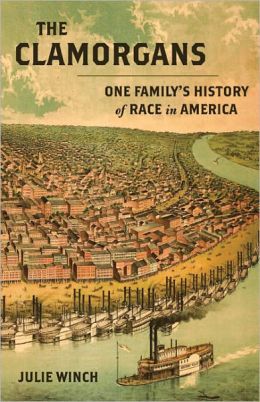
Governor Riggins, a leader of Boston's nineteenth-century black community, once publicly admonished a fellow person of color, William Patterson, and took the opportunity to offer a lesson to the community at large. Patterson had purchased unlicensed liquor for some fellow African Americans, and the authorities in Boston caught him red-handed. In the midst of dressing Patterson down, Riggins expressed the hope that the "law will make you smart." His proclamation to his fellow Afro-Bostonians—the law could be a source of empowerment for African Americans—may have been lost on Patterson, but it was a message that blacks across the United States heard loud and clear. Half a continent away in St. Louis, Missouri, the mixed-race grandsons of Jacques Clamorgan geared up to file suit and lay claim to their grandfather's extensive lands. For them, Riggins's message carried special resonance and an additional caveat. For the Clamorgan men, the law not only made them smart, but could also make them rich.
Did the Clamorgans have a legitimate chance to win their legal battles? In her wonderful The Clamorgans: One Family's History of Race in America, Julie Winch answers this question by offering readers a thorough examination of the family's past, especially their relationship with the law. . . .The full issue is available here.
New Release: Hadden & Minter, eds., "Signposts: New Directions in Southern Legal History"
This past weekend at OAH I had the pleasure of commenting on the panel "Race and Law: New Directions in Southern Legal History," chaired by David Lieberman (UC Berkeley) and featuring papers by Sally Hadden (Western Michigan University), Charles Zelden (Nova Southeastern University), and Patricia Minter (Western Kentucky University). The scholarship presented was terrific, but the real star of the show was Hadden and Minter's new edited collection, Signposts. According to the Acknowledgements, the "volume originated in a conversation many years ago, in the early morning hours before a long day at the Organization of American Historians annual meeting." It was fun to see the two editors, many conversations and conferences later, celebrating the product of their collaboration.
Here is a description of the book, from the University of Georgia Press website:
Read more »
In Signposts, Sally E. Hadden and Patricia Hagler Minter have assembled seventeen essays, by both established and rising scholars, that showcase new directions in southern legal history across a wide range of topics, time periods, and locales. The essays will inspire today's scholars to dig even more deeply into the southern legal heritage, in much the same way that David Bodenhamer and James Ely's seminal 1984 work, Ambivalent Legacy, inspired an earlier generation to take up the study of southern legal history.
Contributors to Signposts explore a wide range of subjects related to southern constitutional and legal thought, including real and personal property, civil rights, higher education, gender, secession, reapportionment, prohibition, lynching, legal institutions such as the grand jury, and conflicts between bench and bar. A number of the essayists are concerned with transatlantic connections to southern law and with marginalized groups such as women and native peoples. Taken together, the essays in Signposts show us that understanding how law changes over time is essential to understanding the history of the South.A few blurbs:
"Constitutional and legal history converge comfortably in this welcome rethinking of the southern legal heritage. Signposts is a milestone in the emergence of a more encompassing vision of the legal and constitutional history of the South."
—William M. Wiecek, author of The Birth of the Modern Constitution: The United States Supreme Court, 1941-1953
"This collection is truly first rate, offering essays that plow new ground or offer fresh perspectives on more familiar topics. While the individual essays are more than worth the price of admission, together they offer rich insights into the ways law shaped and was shaped by southern society. Hadden and Minter have done an enormous service to the field of legal history by bringing this outstanding group of authors together in a volume that underscores the vitality of southern legal history and sets an ambitious agenda for future scholarship.—Donald G. Nieman, coeditor of Local Matters: Race, Crime, and Justice in the Nineteenth-Century SouthAfter the jump -- a table of contents. (I got a sneak peak through my OAH commenting gig):
Read more »
American Perception of Job Climate at Highest Since Financial Crisis

Perceptions differ from region to region, with people in the Midwest and South viewing their prospects more negatively, at 22% and 19% respectively, with Americans from the West (31%) and East (28%) tend to view their job climates more favorably.
These more positive perceptions occur in tangent with two indexes created by Gallup that are currently experiencing upticks, the Job Creation Index and the Economic Confidence Index, which can be seen here.
U.S. Drought Worst Since Dust Bowl

Southern States Participate Most in Social Welfare Programs
A previous Data in the News postfocused on the rising participation rate in means-tested assistance programs, and an interactive map on The New York Times website this week displayed the geographic distribution of government benefits. Welfare programs accounted for 17.6% of personal income in 2009, the highest in history. In 1929, total entitlements accounted for just 1% of Americans’ incomes, but with the expansion of Social Security, the initiation of Medicare and many other government programs, and the overall growth in entitlement spending, the share of income via welfare programs has risen substantially.

And while all regions have experienced a greater flow of government benefits to their residents, states in the South and in the western portion of the Sun Belt have seen their dependence on government welfare programs rise the most. States such as Alabama, Mississippi, Kentucky, Arizona, New Mexico and Tennessee possess many counties with a high level of dependence on government benefits; some counties have a level of transfer income per capita of over $10,000.
America's Largest Cities Still Growing

Marc Perry, chief of the Population Distribution Branch of the Census Bureau appeared on C-SPAN to discuss the population shifts and demographics of the most populous cities in America. In 2010, there were 33 cities with 500,000 people or more, up from 29 in 2000. In the past decade, Fort Worth experienced the greatest growth, with a 38.6% increase in population. With a nearly 25 percent decrease in population, Detroit fell outside of the top ten most populous cities, replaced by San Jose, CA. Most of the cities with the largest percentage increase are in the South or the West; these regions underwent a much greater population boom than the Northeast and Midwest. Major population shifts however appear to be in decline. From 1983 to 2011, the geographical mobility index has steadily dropped, falling to almost half of what it was in 1983. So while population growth in these urban centers is still steadily increasing, the migration between large cities is falling significantly.
Sun Belt Dominates Population Growth

The Census recently released population estimates, which paint a picture of the new trends in growth across the country. The fastest growing metropolitan area from April 1, 2010 to July 1, 2011 was the Kennewick-Pasco-Richland region in Washington, with a 4.3% increase. 46 of the 50 fastest growing metropolitan areas were located in the South or West, a trend that has persisted in recent years with the boom of the Sun Belt. Harris, Texas added the greatest quantity of people, with an increase of 88,452. Los Angeles, California ranked second, adding 70,451 in population. Interestingly, Palm Coast, Florida, which was the fastest growing metropolitan area from 2000 to 2010, fell to 55th in the rankings, and Las Vegas, Nevada, which was the third fastest growing metro area in the last decade, dropped to 155th. Of the 50 fastest-growing metropolitan areas in the past decade, only 24 remained in the top 50 fastest growing since 2010.
Causes of Stress in Regions of the U.S.
 The American Psychological Association recently released the 2011 results of their annual nationwide survey, “Stress in America.” One portion of the report discusses the causes of “somewhat/very significant” levels of stress reported in each region of the United States in which those surveyed were asked to indicate the level of stress each of the listed sources of stress caused in their lives. Overall, money, work, and the economy were the largest causes of stress with 75%, 70% and 67% reporting that each respective factor was a cause of “somewhat/very significant” levels of stress. Among the four regions, those on the East Coast reported the most stress caused by money (80%), work (74%), and relationships (66%). Those in the Midwest reported the most stress caused by the economy (72%) and personal health concerns (59%). Southerners, on the other hand, reported the most stress from family responsibilities (62%) and health problems affecting family members (65%). Westerners reported the lowest amount of stress caused by everything except for work, where it reported slightly more stress than those in the South (69% and 67% respectively).
 3.2 Million Job Openings in November
 A report from the U.S. Bureau of Labor Statistics (BLS) shows that there were 3.2 million job openings in November, unchanged from October. This is still below the 4.4 million job openings that were recorded when the recession officially started in December 2007, though it exceeds by one million the number of openings in July 2009, which was "the most recent trough for the series." According to the report, "The number of job openings has increased 30 percent since the end of the recession in June 2009."
The report notes, "Several industries saw increases in the number of job openings over the year, while the number of job openings decreased for finance and insurance, professional and business services, and federal government. The Midwest and South regions had increases in the number of job openings and the West experienced a decline over the year."
The BLS Editor's Desk further summarizes, "There were 2.8 million job openings in private industry. Within private industry, there were 87,000 job openings in construction, and 606,000 in education and health services."


