LGBT Americans Surveyed on Experiences
A recent Pew Research Center Social & Demographic Trends report on the survey, "Lesbian, Gay, Bi-sexual, and Transsexual (LGBT) Americans: Attitudes, Experience, and Values in Changing Times" found that the majority (92%) believe that they are more accepted in society today than in the past ten years and anticipate that their acceptance will grow over the next ten years. The survey was conducted from April 11 through 29, 2013 of a nationally representative sample (1,197 individuals) of self-identified LGBT Americans adults by landline or cell phone.
When asked about their experience with discrimination aimed at them due to their sexual orientation or gender identity presently or in past years, the majority (58%) said that they have been subjected to slurs or jokes and 39% said that they have been rejected by a friend or family member. About one third (30%) of respondents report being threatened or physically attacked and 29% said that they have been made to feel unwelcome in a place of worship. Slightly less than one quarter (23%) of respondents report receiving poor service in a restaurant, hotel or other place of business and 21% said that they had been treated unfairly by an employer.
themostsearched.org offers a learning module, "Age and Attitudes about the Rights of Homosexuals: A Data-Driven Learning Guide" that investigates trends in attitudes regarding the rights of homosexuals in the United States from the early 1990s through 2007.
Read more:
http://www.pewresearch.org/
http://www.pewsocialtrends.org/
http://www.pewsocialtrends.org/2013/06/13/a-survey-of-lgbt-americans/
http://www.pewsocialtrends.org/files/2013/06/SDT_LGBT-Americans_06-2013.pdf
http://themostsearched.org/
http://themostsearched.org/resource/3237
Importance of Career Advancement by Age
Sunday Book Round-up
"On local laws that ban 'cross-dressing' 'It often acts as a cipher for other sorts of problems, right. So that if people dress decently, then there won't be gambling, then there won't be theft, then there won't be muggings — as if those two things go together. And of course, people's notions of what's 'decent' really varies across class, varies across time, and varies across age. And one way to look at some of these is really about older people policing the sexuality of younger people."
Over at The New Republic Andrew Delbanco has written a review essay of several works on Lincoln and slavery in "Lincoln's Long Game: The morally painful road to slavery's end."
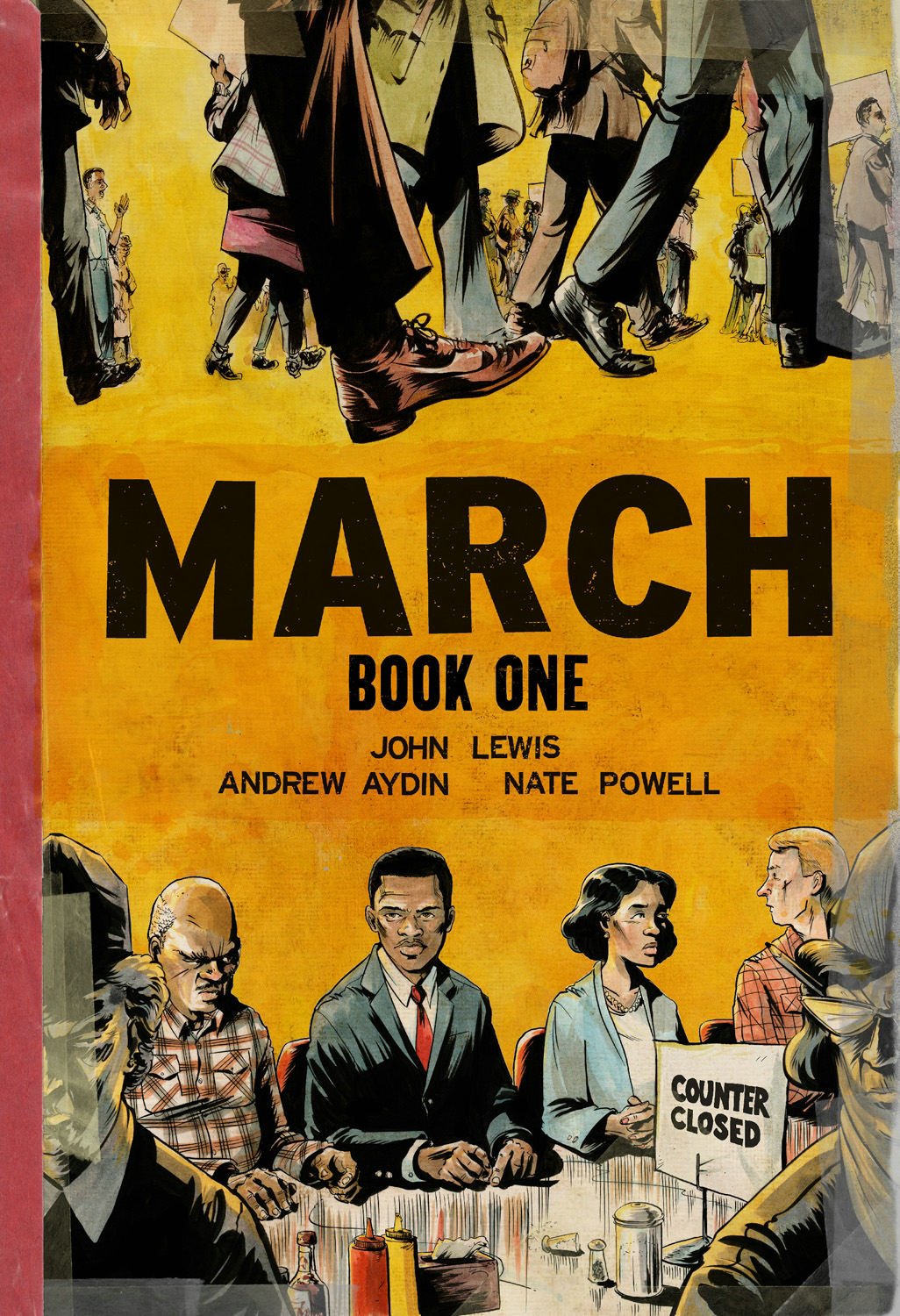
"And yet March is a fresh and sometimes shocking work, even for those familiar with Lewis' life. Not just for its violence and its graphic re-creation of a dark time, but for its inside look at the leaders of the civil rights movement. In one disturbing scene, they shout insults at each other and enact other indignities as a way to prepare for the resistance and abuse they'll face in public."
The New York Times's David Garrow also takes up the topic of civil rights in his review of William Jones's The March on Washington (Norton).
Jeannette Cockroft has reviewed Keira V. Williams's Gendered Politics in the Modern South: The Susan Smith case and the Rise of a New Sexism (Louisiana State University Press) for H-Net here.
Excerpts from Evan Mandery's book on death penalty lawyers in the 1960s and 1970s, A Wild Justice (Norton), can be found on Salon here. Salon has also published adapted excerpts from an e-book essay about the history of forced sterilization, For the Public Good (New New South).
This week the Guardian has reviewed another book about American death penalty policy, Injustice: Life and Death in the Courtrooms of America by Clive Stafford Smith.
Finally, John Yoo reviews A Principled Stand: The Story of Hirabayashi v. United States (University of Washington Press) by Gordon K. Hirabayashi in the Wall Street Journal.
Webster Williams on Justice Ginsburg's Equal Protection Clause
Professor Ruth Bader Ginsburg of Columbia Law School was the leading Supreme Court litigator for gender equality in the crucial decade, 1970-80. In addition to teaching her classes, producing academic articles, and co-authoring the first casebook on sex discrimination and the law, she worked on some sixty cases (depending on how one counts), including over two dozen cases in the Supreme Court. Rumor has it she did not sleep for ten years; her prodigious output gives the rumor some credence. Her impact on the law during that critical decade earned her the title "the Thurgood Marshall of the women's movement" and secured her place in history-even before she became a federal appellate judge and Supreme Court justice.
Credit: Columbia Law School
The author devotes her allotted space to two, intimately intertwined, topics: first, Ruth Ginsburg and the Supreme Court's standard of review in sex discrimination cases, and second, the substance of Ruth Ginsburg's concept of gender equality in law.
Gender Gap in Well-Being among Veterans
Women in the Life and Law of the D.C. Circuit Courts
"Women in the Life and Law of the D.C. Circuit Courts" is the upcoming Historical Society program that will bring together judges, administrators, law clerks, and practicing attorneys, each with direct experience in our courts, to discuss the past, present, and future of women in the Courts of the D.C. Circuit.
Stanford Emerita Professor of Law Barbara Babcock will open the program with stage-setting remarks on the roles of women in this Circuit . A panel discussion will follow in which Justice Ruth Bader Ginsburg, former Chief Judge Patricia M. Wald, Chief Judge Royce C. Lamberth, former Clerk of the U.S. District Court Nancy Mayer-Whittington, and advocates Michele Roberts and Helgi Walker will respond to questions posed by Professor Babcock, the moderator, and to the comments of other panelists and program attendees.
Please join us on Tuesday, June 18 at 4:30 p.m. in the Ceremonial Courtroom of the E. Barrett Prettyman U.S. Courthouse. A reception will follow the program. Everyone is invited; no reservations are required.
Webinar on teaching quantitative data analysis to undergraduates set for June 27
Participants will learn how Dr. Bouma and Dr. Greene successfully lead their students through the investigation of topics such as income inequality, housing segregation, race, and gender using quantitative data and methods. In addition to promoting a deeper understanding of the content, students taught with these methods improve critical thinking skills and develop a greater appreciation of the social sciences. Viewers will also learn where they can access some of Dr. Bouma and Dr. Greene's teaching materials to adapt for their own use.
Pre-registration is not required. To view the webinar, visit https://www3.gotomeeting.com/join/978777294 a few minutes before 2 p.m. on Wednesday, June 27 to join in.
"Disappointing" April Jobs Report
A recent Wall Street Journal article discusses what it refers to as a "disappointing jobs report" for April. While the unemployment rate decreased to 8.1%, this drop can largely be attributed to the 342,000 people who left the labor force over the same time period. The interactive graphic from the article, which includes three graphs, highlights several unemployment trends since the recession began in 2008. In one graph, the percentage change in payroll employment from 2008 to 2012 is compared to four other periods of recession. As the graph shows, all jobs had been recovered by year five of the previous recessions but have still not been recovered since the recession beginning in 2008. Another graph shows the percentage change in payroll employment since 2008. As this graph indicates, construction has made little improvement at -25.8% while the education and health sector have improved by 9.1% since 2008. Lastly, the third graph shows the percent change in payroll employment since 2008 by gender. According to the graph, men were hit worse initially by the recession but have since made a more rapid recovery. Currently, however, women are only 2.6% below pre-recession employment while men remain 4.6% below.Occupational Segregation and the Gender Wage Gap
Religious Americans Experience Greater Well-Being
When Mom and Dad Become Big Brother
The Pew Internet & American Life Project released new findings on parental monitoring of teenage children's internet activity. According to Pew, "more than three-quarters (77%) of parents say that they have checked to see what websites their child has visited." Pew also found that "two-thirds of parents of online teens have checked to see what information was available online about their child."
More parents check a child's internet activity now than in 2006, when the figure stood at 65%. Pew writes: "White parents of online teens (83%) are more likely to check the websites of their browsing teens than black parents (75%) or Latino parents (64%). Parents in higher-income households and those with at least a high school diploma are also more likely than others to check up on their teen’s online travels."
Additionally, Mothers who use the internet (75%) are more likely than fathers (55%) to say they check information on their children on the internet. Further, "higher-income parents are more likely to do this than those who live in households with more modest incomes." White and black parents are more likely to report doing so than Latino parents, and parents with higher levels of education are also more likely to research their teenage child's "digital reputation." The percentage of parents of girls aged 14-17 (72%) researching their child's internet reputation far exceeds the 55% of parents who research information on younger sons' internet reputations.
39% of parents are friends or connected with their children on social networking sites, but Pew found that this connection comes with an increased likelihood of parent-child conflict. "Teens whose parents report that they are friends with their child on social network sites are more likely than teens who aren’t friends with their parents to say that they had a problem with their parents because of an experience on social media (18% vs. 5%)."
Country Remains Divided on Abortion Issue
Gallup polling shows that the issue of abortion continues to split Americans down the middle, though for the first time since 2008 a slight majority call themselves "pro-choice" (49%), just eking out those who identify as "pro-life" (45%). But despite this change, a majority of Americans (51%) still believe abortion to be "morally wrong," with only 39% asserting that it is "morally acceptable." Excluding 2006, when results showed Americans to be divided on the moral aspect of the issue, results regarding morality have been "fairly steady since 2002."
50% of Americans answer that abortion should be legal under certain circumstances, but this year's results suggest that more people are taking extreme views on the legality of abortion than they have historically. 27% answered that abortion should be legal in all cases while 22% wanted it to be illegal in all cases. The 49% combined believing in either of the extreme views was the highest since 1992.Americans were fairly consistent in their opinions on abortion across gender. Age and partisan views appear to be a far more likely predictor of an individual's stance on the issue. 49% of adults 55 and older said they were "pro-life," as compared with majorities of those aged 35-54 (53%) and 18-34 (51%) who said they were "pro-choice." And while 68% of Democrats claimed to be "pro-choice," a full 67% of Republicans took the opposite stance, saying they were "pro-life."
Writes Gallup about the results for 2011: "Americans' views on abortion held fairly steady over the past year, with the public still sharply divided over the 'pro-life' and 'pro-choice' labels."NH cf
Pew Survey Finds Majority Believes Homosexuality Should Be Accepted, Increasing Percentage in Favor of Gay Marriage
According to the Pew Research Center for the People & the Press, a majority of Americans (58%) believe homosexuality should be accepted, and not discouraged, by society. This finding becomes magnified the younger the survey population, with 63% of those under 50 years of age and 69% of individuals under 30 years of age saying that society should accept homosexuality. Among those older than 50 years of age, a smaller majority (52%) agrees that it should be accepted.And although a majority of Americans do not favor gay marriage today, the survey shows increased support for the cause, with the 45% today who favor gays and lesbians being legally allowed to marry a large increase from the 35% who took that stance in April 2009. 46% of those surveyed said they were against same-sex marriage, 1% more than those in favor but noticeably less than the 54% who were against same-sex marriage in April 2009. The Pew Center writes: "Opposition to gay marriage has fallen by 19 points (from 65%) since 1996."
Opposition to gay parenting has also fallen in recent years, with the 35% today who say more gay parents is a bad development for society a big decrease from the 50% who viewed the trend negatively four years ago.
Although majorities across most demographic groups were found to support societal acceptance of homosexuality, views toward homosexuality were found to differ significantly based on an individual's religious and political preferences, as well as his/her race and gender. While 67% of Democrats and 63% of independents say homosexuality should be accepted, only 40% of Republicans share that opinion.And while 79% of the religiously unaffiliated, 66% of white Catholics, and 65% of white mainline Protestants believe homosexuality should be accepted, percentages are smaller among other religious groupings. Only 29% of white evangelical Protestants believe homosexuality should be accepted, while 63% believe it should be discouraged by society.
Among races, Hispanics (64%) and whites (58%) were found to be more supportive of homosexual acceptance than African Americans (49%). With regard to gender, women (64%) are more accepting than men (52%).
Findings are from the Pew political typology survey, released earlier this May.
NH cf