Rabb to Harvard Law School

Harvard Law School has announced that legal historian Intisar Rabb will join the faculty in 2014. From the HLS press release:
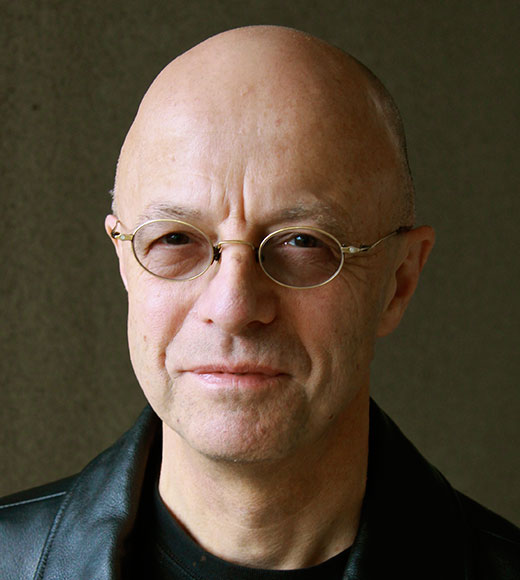
Intisar A. Rabb (credit)
Intisar A. Rabb, a leading expert on Islamic Law and legal history, will join the faculty of Harvard Law School beginning Spring 2014, with an appointment as a tenured Professor of Law.
Rabb is currently associate professor of Middle Eastern and Islamic Studies and Law at New York University School of Law, where she holds a joint appointment at the NYU Middle Eastern and Islamic Studies Department and the NYU School of Law. At HLS, she will be a faculty director of the Islamic Legal Studies Program.
Read on here.

Congratulations to Intisar Rabb and to Harvard Law School!

Weekend Roundup

Wendell Pritchett (credit)
  • Legal historian Wendell Pritchett has announced that he is stepping down as Chancellor of Rutgers-Camden. After a sabbatical, he will return to his posts in the law school and history department.
  • Portions of Making Legal History, a festschrift for William Nelson, including the TOC, are now up on Google Books.
  • According to The Missoulian, Melvin Urofsky will deliver a Constitution Day lecture, “Dissent and the Constitutional Dialogue” at 7:30 p.m. on Monday, September 16, in the North Underground Lecture Hall at the University of Montana.
  • Language barriers may have prevented many LHB readers from accessing Mireille Delmas-Marty and Henry Laurens, eds., Terrorismes: Histoire et droit (Paris: CNRS Éditions, 2010). Thankfully, Books&Ideas.net has published a review, by Perrine Simon-Nahum (translated by Michael C. Behrent). 
      Weekend Roundup is a weekly feature compiled by all the Legal History bloggers.

      Indiana Law's Jerome Hall Postdoctoral Fellows Announced

      The Center for Law, Society, and Culture at the Indiana University-Bloomington announce the selection of its two Jerome Hall Postdoctoral Fellows for 2013.  The first is Cindy Daase:
      Cindy Daase recently completed her Ph.D. at the Faculty of Law, Freie Universität Berlin, from which she has also earned an M.A. in East European studies, European and public international law, and journalism. She has been a visiting fellow at the Lauterpacht Centre for International Law, University of Cambridge, and a visiting doctoral researcher at the Transitional Justice Institute, University of Ulster, Magee Campus, Londonerry; and at the Faculty of Law, University of Alberta, Edmonton.

      During her time as a Jerome Hall Fellow, Daase plans finalize her first monograph on "Law in the Twilight: The Negotiation and Implementation of Peace Agreements between State and Non-State Parties." Her work is based upon and extends the research contained in her doctoral thesis, Internationalization of Peace Agreements between State and Non-State Parties.
      The second is Howard Pashman, whose article The People's Property Law: A Step Toward Building a New Legal Order in Revolutionary New York appears in the latest issue of the Law and History Review. 
      Howard Pashman's research examines how popular uprisings reestablish legal order during their movements. His dissertation takes the example of the American Revolution to understand the broader process in which insurgents struggle to build a legal order that enjoys popular support. His areas of interest include legal history, property law, and state building.

      As a Jerome Hall Fellow, Pashman will expand his dissertation into a book manuscript. His dissertation (Making Revolution Work: Law and Politics in New York, 1776-1783) analyzes in detail how one state managed to rebuild legal institutions during a period of violent upheaval. The project argues that property redistribution was the key element in that change. By seizing property from British sympathizers and selling it to supporters of independence, New Yorkers made their revolution work. They transformed an insurgency into a society with working legal institutions such as courts. Property redistribution helped New Yorkers rebuild legal structures on the ground, and do so in a way that ordinary people accepted. While researching and writing the project, he received fellowship support from the Cromwell Foundation, Mellon/ACLS, and Northwestern University. In 2013 he completed Northwestern University's joint JD-PhD program, with a PhD in American History.

      In addition to his joint degree from Northwestern, Pashman holds an M.A. in history from Northwestern and an M. Phil. in historical studies from the University of Cambridge, Clare College. He was a William Nelson Cromwell Fellow in American Legal History in 2010-11 and a fellow at the Hurst Summer Institute in Legal History in 2011.

      Tomlins to UC Berkeley

      credit
      As Sally's recent post reminds us, the hiring season has arrived. Here's some news coming out of the previous cycle: Christopher Tomlins, Chancellor's Professor of Law at University of California, Irvine, has formally accepted his offer from the University of California, Berkeley School of Law. He will join the Berkeley faculty in July 2014.

      Tomlins will teach mainly in the law school's interdisciplinary Jurisprudence and Social Policy Program (following in the footsteps of Harry Scheiber and joining David Lieberman).

      Tomlins has authored numerous books and articles, including Freedom Bound (2010) (winner of the 2011 Bancroft Prize). He has also edited several important collections, including the three-volume Cambridge History of Law in America (with Michael Grossberg).

      Congratulations to Tomlins and to UC Berkeley!

      William E. Nelson, Scholar and Historian

      [Via H-Law, we have the following announcement of the roundtable discussion, "William E. Nelson, Scholar and Historian."]


      On Thursday, 7 November 2013, from 3:30 pm to 5:30 pm, the Chicago-Kent Law Review and Professors Felice Batlan and R. B. Bernstein present a roundtable discussion of the work of William E. Nelson in the Orchid D room of the Hyatt Regency Miami, the convention hotel for the 2013 convention of the American Society for Legal History.  The articles that will be the basis of the roundtable will appear in a forthcoming issue of the Chicago-Kent Law Review in 2014.  This session will not be an official part of the ASLH convention, but will complement its proceedings.  The roundtable will feature:

      Moderators: Felice Batlan, Chicago-Kent Law School, and R. B. Bernstein, City College of New York and New York Law School

      David Thomas Konig, Washington University in St. Louis, on Americanization of the Common Law: The Impact of Legal Change on Massachusetts Society, 1760-1800 and Dispute and Conflict Resolution in Plymouth County, 1725-1825

      Gautham Rao
      , American University Law School, on The Roots of American Bureaucracy, 1830-1900

      Paul Finkelman, Albany Law School, on The Fourteenth Amendment: From Political Principle to Judicial Doctrine

      Mark McGarvie, William and Mary Law School, on Marbury v. Madison: The Origins of Judicial Review* and *Constitution and Rights in the Early American Republic

      Edward A. Purcell, Jr., New York Law School, on The Legalist Reformation: Law, Politics, and Ideology in New York, 1920-1980 and Fighting for the City: A Legal History of the New York Corporation Counsel

      Brad Snyder, University of Wisconsin Law School
      , on In Pursuit of Justice: Edward Weinfeld as Lawyer and Judge and Nelson's articles on Justice Byron R. White

      Lauren Benton, New York University, on The Common Law in Colonial America, volumes 1 & 2.

      Professor William E. Nelson, New York University School of Law, will respond.

      Light refreshments will be provided.

      Weekend Roundup

          • Prawfsblawg reports that Michael Lobban is moving from Queen Mary to the London School of Economics.
          Weekend Roundup is a weekly feature compiled by all the Legal History bloggers.

          Harvard Legal History Workshop Schedule, 2013-14

          I'm pleased to share the schedule for this year's Harvard Legal History Workshop. The lineup is as follows.

          Sept 18: Daniel Ernst, Professor of Law, Georgetown University, “Chief Justice Hughes and Administrative Law, 1930-1941”
          Comment: Mark Tushnet, William Nelson Cromwell Professor of Law, Harvard Law School

          Sept 25: Karen Tani, Assistant Professor of Law, University of California, Berkeley Law, “The ‘Indian Problem’: Welfare, Rights, and Citizenship in the Wake of the New Deal”
          Comment: Lucie White, Louis A. Horvitz Professor of Law, Harvard Law School

          Oct. 9 Risa Goluboff, John Allan Love Professor of Law and Professor of History, University of Virginia, “People out of Place: The Sixties, the Supreme Court, and Vagrancy Law”
          Comment: Lisa McGirr, Professor of History, Department of History, Harvard University

          Oct 16: Serena Mayeri, Professor of Law and History, University of Pennsylvania, “Status of Marriage: Marital Supremacy Challenged and Remade, 1960-2000”
          Comment: Michael Klarman, Kirkland and Ellis Professor of Law, Harvard Law School

          Oct 23: Jane de Hart, Professor of History, University of California, Santa Barbara, Department of History, “Ruth Bader Ginsburg: Pursuing Equality”
          Comment: Nancy Cott, Jonathan Trumbull Professor of American History, Department of History, Harvard University

          Oct 30: Daniel Sharfstein, Professor of Law, Vanderbilt University, “West from Reconstruction: Struggles Over Liberty and Equality, 1865-74”

          Feb 26, 2014 Sara Mayeux, HLS Berger-Howe Fellow in Legal History, “The Right to Counsel and the Political Limits of Originalism”

          Mar 27, 2014 Hendrik Hartog, Class of 1921 Bicentennial Professor in the History of American Law and Liberty, Professor of History, Princeton University, “Imagining Gibbons v. Ogden without the Commerce Clause: A Sketch”

          Weekend Roundup

          • Around the web, friends and admirers continue to pay tribute to Pauline Maier (1938-2013). MIT's obituary is here; the New York Times write-up is here; the Washington Post's, here. Chris Beneke penned a nice note here, at the Historical Society. (A taste: "Maier treated her fellow historians with the same honest consideration that she tendered her historical subjects, remaining ever open to the possibility that the lowly might possess more insight than their better appointed counterparts (as well as the possibility that they might be out of their senses).").
          • I love the opening to this op-ed, by Catherine O'Donnell (Arizona State University): "I am an historian with a secret. I don’t think studying the past tells us what to do in the present. I should qualify that: If you are considering whether to invade Russia in winter, history provides the answer." The rest is good, too. (Hat tip- History News Network) (KMT)
              • From In Custodia Legis: a compilation of unusual (from today's perspective) and now defunct laws from the United Kingdom, including "the common law offense of being a 'common scold'" and the statutory offense of gambling in a library. 
                Weekend Roundup is a weekly feature compiled by all the Legal History bloggers.

                Rest in Peace, Pauline Maier (1938-2013)

                Via H-Law, Richard B. Bernstein just circulated this very sad news:
                credit
                Pauline Maier, the William R. Kenan, Jr., Professor of History at MIT and a leading scholar of American colonial, revolutionary, and early republic history, died this morning, 12 August 2013, after a brief illness.

                A fuller essay detailing Maier's life, career, and scholarship will appear on H-LAW later today or tomorrow.
                We will update this post as tributes and remembrances come in.

                UPDATE: Richard B. Bernstein has now circulated a full and heartfelt obituary. Here's a particularly evocative excerpt:
                [Pauline Maier] was not only a role model to me, as to so many other historians, but she also brought out the sheer fun of doing history, of digging through sources and framing arguments and testing them against our colleagues and against the existing literature. She also was one of the premier explainers of our profession, elucidating complex ideas and tangled historical events and processes in clear, graceful language, and always with a wry and creative sense of humor. And she epitomized the best of the profession in her ability to reach out – whether to colleagues, to prospective colleagues, or to a general audience – with infectious joy and excitement.
                Read on here, at H-Net.

                UPDATE: Fond remembrances continue to pour in --

                Weekend Roundup

                • The Times Colonist recently published the story Royal B.C. Museum Protects Court Documents Full of History and Great Stories.  These include “60 boxes of bound volumes and other items . . . largely from the B.C. Court of Appeal, which first sat in 1910, but some are from its predecessor, the Supreme Court of B.C. — then also known as the Full Court.”  These include “a number of ‘cause’ books included in the material, heavy volumes that contain summaries of cases and were once toted from place to place by judges.” 
                  • David Beito (credit)
                    From the National Review: The New Deal Witch Hunt. "Federal targeting and intimidation of conservatives is nothing new," writes David T. Beito (University of Alabama).
                    Weekend Roundup is a weekly feature compiled by all the Legal History bloggers.

                    Historians Comment on the Trayvon Martin Killing and George Zimmerman Acquittal

                    On February 26, 2012, neighborhood watch volunteer George Zimmerman shot and killed teenager Trayvon Martin. What Zimmerman claimed was an act of self defense others characterized as a racially motivated, unprovoked attack. Late last Saturday a Florida jury found Zimmerman not guilty on charges of second degree murder. Here's a sampling of what historians have to say:
                    • See also this roundup from the UNC Press Blog. 
                    UPDATES:
                    • You can hear commentary from Donald Tibbs (Drexel Law School) here, on Radio Times. (Hat tip: Faculty Lounge).
                    • Former guest blogger David Bernstein has posted comments here, at the Volokh Conspiracy.

                      Morey to Clemson

                      Congratulations to Clemson University and to Maribel Morey on the former’s hiring of the latter as an Assistant Professor of History.  Morey has just received her Ph.D. in history from Princeton, where her advisers were Hendrik Hartog and Stanley Katz.  Her dissertation is "The Making of An American Dilemma (1944): The Carnegie Corporation, Gunnar Myrdal, and the Unlikely Roots of Modern Civil Rights Discourse."  The holder of a JD from NYU in 2006, she received Fulbright and American-Scandinavian Foundation grants for her dissertation research.  In the 2012-13 academic year she was a Samuel I. Golieb Fellow in Legal History at NYU School of Law.

                      Rest in Peace, Edmund S. Morgan, 1916-2013

                      From the New York Times: "Edmund S. Morgan, an award-winning historian who illuminated the intellectual world of the Puritans, explored the paradox of freedom and slavery in colonial Virginia and, in his 80s, wrote a best-selling biography of Benjamin Franklin, died on Monday in New Haven. He was 97." Read on here.

                      To watch a 2009 conversation between Morgan and Annette Gordon-Reed, follow the link to the Gilder Lehrman Center website.

                      Weiner's Worlds of Law

                      Over on Worlds of Law, Marc Weiner, a former guest blogger, has three interesting posts:
                      • Sharp's Numbers, about Blackstone's Commentaries and a book owned by Granville Sharp housed in the Yale rare books collection 
                      • Maine Meets Maine, a video reflection on the historical significance of the cattle pound, joining the State of Maine and Henry Sumner Maine.
                      • A thread on E.B. White and international law, and more generally about certain characteristics of the midcentury legal imagination.  The final post is "Why International Law is Like Webster's Third Dictionary (at least, for E.B. White)."

                      Mintz on the Historians' Briefs in Windsor

                      Over at Inside Higher Ed, Steven Mintz asks, Does History Matter?

                      At a time when many question the relevance of history,  it is noteworthy that the U.S. Supreme Court case that prohibited  the federal government from undercutting a state’s decision to extend "the recognition, dignity and protection" of marriage to same-sex couples, hinged on arguments advanced by professional historians.

                      More

                      Altman Accepts Amherst VAP

                      Congratulations to Clara Altman, Legal History Blogger and Facebook Coordinator, for landing a position as Visiting Assistant Professor of Law, Jurisprudence, and Social Thought, which she will shortly take up at Amherst College.  Clara is completing her dissertation, “Courtroom Colonialism: Philippine Law and U.S. Rule, 1898-1935,” at Brandeis University.  She has just completed a year as a fellow in the Miller Center for Public Affairs at the University of Virginia.  All of us Legal History Bloggers are grateful to Clara for her faithful and imaginative work as Facebook Coordinator and regular creator of our Sunday book review post.

                      Dubrow Wins Mellon New Directions Fellowship

                      According to the North Adams Transcript, "Sara Dubow, associate professor of history at Williams College, has been awarded a New Directions Fellowship from the Andrew W. Mellon Foundation to develop research projects that focus on the legal history of reproductive and sexual politics."  More.

                      Weekend Roundup

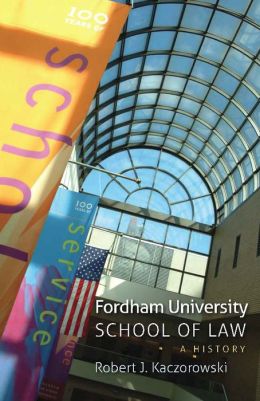
                      • Over at Concurring Opinions, Danielle Citron plugs Robert Kaczorowski's Fordham University School of Law: A History.  “Ever since the inception of the recession, we have been embroiled in a conversation about legal education–its costs, value, and flaws," she writes.  “Amidst this debate, legal historian Robert Kaczorowski has written a brilliant and engrossing history of Fordham Law School, one that highlights, among many issues, the struggles that law schools have with their universities about the funds they generate.”  More.  
                        • The Washington Post's story on the National Archives' Founders Online project, is here.  The project puts on the web “over 119,000 searchable documents, fully annotated,” by or relating to George Washington, Benjamin Franklin, John Adams (and family), Thomas Jefferson, Alexander Hamilton, and James Madison, “from the authoritative, federally funded Founding Fathers Papers projects.”
                        • Emory Law's profile of LHB Founder Mary L. Dudziak is here. 
                           Weekend Roundup is a weekly feature compiled by all the Legal History bloggers.

                          Blog Archive