[We gave the following "Call for Papers from Those Teaching Legal History Courses in U.S. Law Schools."]
The October 2013 issue of the American Journal of Legal History contains a symposium on teaching legal history in U.S. law schools. As a follow-up, the symposium’s essays are going to be republished in a book entitled “Teaching Legal History: Comparative Perspectives.” The book’s publisher is the esteemed London firm of Wildy, Simmonds & Hill. Because the space available in the book is greater than what was available in the Journal, we are seeking additional contributions that follow the style of the existing essays. Accordingly, we would be pleased to receive your submission. The operational details are as follows:
Completed essays are due by February 15, 2014 and should be e-mailed, preferably in Word, to Professor Bob Jarvis, Nova Southeastern University, at jarvisb@nova.edu. This deadline is firm and extensions will not be possible. Acceptance/declination decisions will be made as soon after the deadline as possible.
Essays cannot exceed 1,500 words and should describe how you teach the course and why you teach it as you do. The word length will be strictly enforced and footnotes, if any, should be kept to a minimum.
While we’re open to a wide variety of styles and approaches, we really want practical (as opposed to theoretical) pieces. In other words, we want to know what people are really doing in their classrooms when they teach legal history.
Although we appreciate that many folks include a lot of legal history in their non-legal history courses (particularly if they teach, for example, constitutional law), this book, like the symposium, is limited to actual legal history courses taught in U.S. law schools.
Lastly, if you do not have access to a copy of the Journal, please e-mail Bob Jarvis for a sample essay.

Teaching Legal History: AJLH 53:4 (2013)

AMERICAN JOURNAL OF LEGAL HISTORY
Volume 53, Issue 4 (October 2013)
“TEACHING LEGAL HISTORY IN U.S. LAW SCHOOLS: A SYMPOSIUM”
Editor’s Note
INTRODUCTION
A History of Legal History Courses Offered in American Law Schools, Joan Sidney Howland
I. OBJECTIVES
Teaching Legal History in the First Year Curriculum, Christian G. Fritz
Teaching American Legal History in a Law School, Peter D. Garlock
Teaching Legal History at a Small Law School, Carlton F.W. Larson
What I Do When I Teach Legal History, Stephen B. Presser
Legal History in Context, Logan Everett Sawyer III
A Legal History Course for a Christian Legal Education, Craig A. Stern
II. TECHNIQUES
Teaching American Legal History Through Storytelling, Michael Ariens
Teaching the Legal History You Write About, Scott Douglas Gerber
Art and Legal History, Timothy J. Innes
Using Videos to Teach American Legal History, Catherine J. Lanctot
Legal History Through Digital Sources, Ryan Rowberry
The Fun of Teaching American Legal History, Geoffrey R. Watson
III. DOMESTIC SUBJECT MATTERS
Conceptualizing the Evolution of Corporate Law, Amitai Aviram
An Antebellum Slave Law Colloquium, Bryan Camp
Teaching America’s Antitrust Laws and Their Enforcement, Thomas J. Horton
Designing a Course in Judicial Biography, Mae Kuykendall
The Search for National Identity, Sheldon M. Novick
Legal History Seminar: Leading Maryland Cases, Edward C. Papenfuse and Garrett Power
IV. FOREIGN SUBJECT MATTERS
On Teaching the History of International Law, William E. Butler
Hawaii: Pacific Crucible of American Legal History, Williamson B.C. Chang
The Multidimensional Teaching of Legal History, Peter L. Reich
Imagination and Creativity: My History of Marriage Seminar, Charles J. Reid, Jr.
Becoming a Legal History Teacher, Jonathan Rose
V. LAWYERING SKILLS
Teaching Legal History in the Age of Practical Legal Education, Douglas E. Abrams
Teaching Legal History Through Legal Skills, Howard Bromberg
Using History to Teach Students How to be Lawyers, Gregory F. Jacob
Legal History: Teaching Skills Practicing Lawyers Need, Robert M. Jarvis
The History of Contemporary Law and Policy, Molly Selvin
What the Actions of Abe Lincoln Continue to Teach Us Today, Michael J. Slinger
Rose on Becoming a Legal History Teacher
Jonathan Rose, Arizona State University College of Law, has posted Becoming a Legal History Teacher. Here is the abstract:
This essay recounts my beginning teaching of legal history. My experience is likely distinctive because at almost 60 years old and after over three decades as a law professor, I became interested English legal history. My initial activities were limited to scholarship and did not involve teaching. But I thought I should also start teaching in this field. Thus, after about five years writing articles and over three decades of teaching traditional law school courses (Contracts, Antitrust, Professional Responsibility, and Law and Economics), I decided that I should teach a course in English legal history.
Turning to English legal history was a major change in my career. I had no training in history and lacked the necessary language and paleographic skills. With the exception of Antitrust, I, like many law professors, had begun teaching new courses without substantial knowledge or experience. But I viewed my lack of knowledge with English legal history as different. Except for the few topics on which I had written, my ignorance of this vast and complicated field was profound. Moreover, it was not like learning a more traditional legal subject and it also required knowledge of English history.
Although there have been a number of beneficiaries of this English legal history course, I have been the greatest beneficiary. Teaching legal history has been a learning experience for me. It is hard for me to believe that any of the students learned as much as I have. I have always said that there are some subjects you teach to teach the students and some to teach yourself as well as the students. Such as been my experience in teaching English legal history. Moreover, it has strengthened my scholarship as well.
Sunday Book Roundup
This weekend, you can find a review of Charles Moore's new biography, Margaret Thatcher: From Grantham to the Falklands (Knopf) in New Republic. Reviewer John Gray writes,
 HistoryToday reviews City Water & City Life:Water and the Infrastructure of Ideas in Urbanizing Philadelphia, Boston and Chicago (University of Chicago Press), by Carl Smith here.
H-Net has added two reviews of interest: editors Keith M. Brown and Alastair J. Mann's The History of the Scottish Parliament, Volume 3, Parliament in Context, 1235-1707 (Edinburgh University Press) here; and a second review of both John Ashworth's The Republic in Crisis, 1848-1861 (Cambridge University Press) and the edited volume A Political Nation: New Directions in Mid-Nineteenth-Century American Political History (Gary W. Gallagher, Rachel A. Shelden, eds.) (University of Virginia Press).

The Washington Post reviews Mac Griswold's The Manor, a cultural landscape history of a slave plantation here. (Another review of the book was included in a prior book roundup post here.) The reviewer describes the book:
 The Washington Post also reviews Mistrial: An Inside Look at How the Criminal Justice System Works . . . and Sometimes Doesn’t (Gotham) by Mark Geragos and Pat Harris.
Salon has published excerpts from In Spies We Trust: The Story of Western Intelligence (Oxford), by Rhodri Jeffreys-Jones.
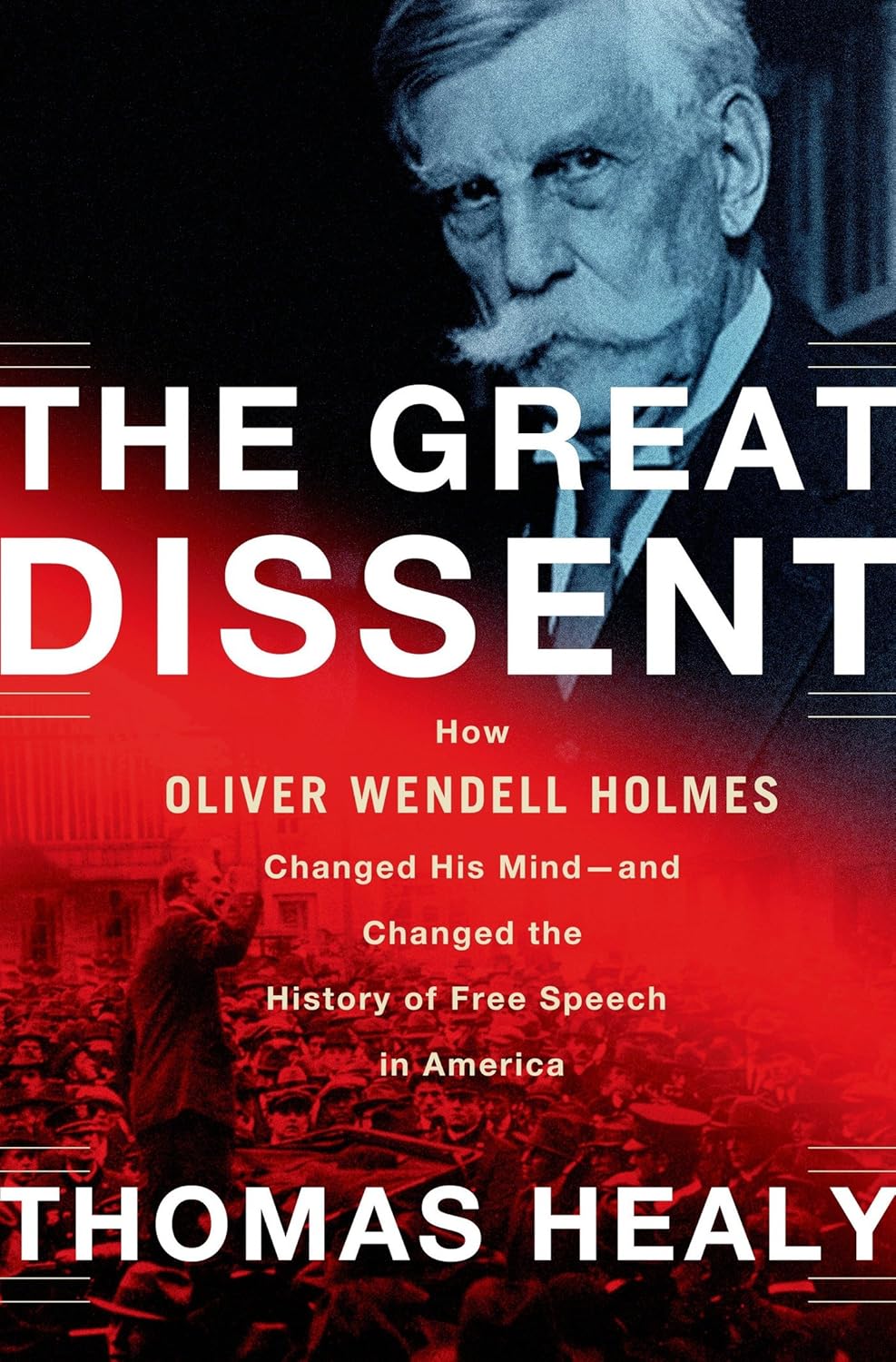
For Wall Street Journal subscribers, there is a review of Thomas Healy's The Great Dissent (Metropolitan), as well as a review of Lawrence J. Vale's Purging the Poorest: Public Housing and the Design Politics of Twice-Cleared Communities (Chicago). Of Vale's work, the reviewer writes,
Robert D. Sloane has posted a review of James Q. Whitnman, The Verdict of Battle: The Law of Victory and the Making of Modern War (Harvard University Press) on SSRN (forthcoming in American Journal of International Law).
For those heading back to the classroom this month, the New York Times reviews Why Teach? In Defense of a Real Education (Bloomsbury), by Mark Edmundson, an English professor at the University of Virginia.
And for those of you who'd like to check out a few reviews of the summer reads that our guest blogger, Sally Gordon, recommended earlier this week, try these:
"Covering the time from Thatcher's birth up to her role in the Falklands war in 1982, Margaret Thatcher: From Grantham to the Falklands is one of two projected volumes; but this is already a major study of a pivotal leader—indeed, it is already one of the greatest biographies in the English language."
 HistoryToday reviews City Water & City Life:Water and the Infrastructure of Ideas in Urbanizing Philadelphia, Boston and Chicago (University of Chicago Press), by Carl Smith here.
H-Net has added two reviews of interest: editors Keith M. Brown and Alastair J. Mann's The History of the Scottish Parliament, Volume 3, Parliament in Context, 1235-1707 (Edinburgh University Press) here; and a second review of both John Ashworth's The Republic in Crisis, 1848-1861 (Cambridge University Press) and the edited volume A Political Nation: New Directions in Mid-Nineteenth-Century American Political History (Gary W. Gallagher, Rachel A. Shelden, eds.) (University of Virginia Press).

The Washington Post reviews Mac Griswold's The Manor, a cultural landscape history of a slave plantation here. (Another review of the book was included in a prior book roundup post here.) The reviewer describes the book:
"“The Manor” traces the history of the house and its inhabitants, quickly leaving the garden behind to explore archaeology and research that range from West Africa to Barbados and back to Shelter Island. When Griswold stumbled upon the place, it was inhabited by Andrew and Alice Fiske, descendants of the original owners, Nathaniel and Grizzell Sylvester. Called Sylvester Manor, the house had been in the family in an unbroken line since the 1650s, providing an extraordinary lens with which to view a complex American story about (among other things) race, religion and the history of slavery in the North — largely documented."
 The Washington Post also reviews Mistrial: An Inside Look at How the Criminal Justice System Works . . . and Sometimes Doesn’t (Gotham) by Mark Geragos and Pat Harris.
Salon has published excerpts from In Spies We Trust: The Story of Western Intelligence (Oxford), by Rhodri Jeffreys-Jones.
For Wall Street Journal subscribers, there is a review of Thomas Healy's The Great Dissent (Metropolitan), as well as a review of Lawrence J. Vale's Purging the Poorest: Public Housing and the Design Politics of Twice-Cleared Communities (Chicago). Of Vale's work, the reviewer writes,
"The beauty of Mr. Vale's book is that as a scrupulous scholar he lays out his two case studies with all the careful detail you as a reader need to judge his conclusions. But in the end, the reformist approach exemplified by Ms. Glover is probably correct. "Poverty does not have to be a permanent condition covering multiple generations," she has said. "And we should not establish housing programs on the assumption that it is.""

Robert D. Sloane has posted a review of James Q. Whitnman, The Verdict of Battle: The Law of Victory and the Making of Modern War (Harvard University Press) on SSRN (forthcoming in American Journal of International Law).
For those heading back to the classroom this month, the New York Times reviews Why Teach? In Defense of a Real Education (Bloomsbury), by Mark Edmundson, an English professor at the University of Virginia.
And for those of you who'd like to check out a few reviews of the summer reads that our guest blogger, Sally Gordon, recommended earlier this week, try these:
- An October 2012 New York Times review, and an August 2012 Slate review by Eric Posner, of John Fabian Witt's Lincoln's Code.
- A 1998 H-Net review of James C. Scott's Seeing Like a State, as well as an April 1998 review (with a link to the first chapter) in the New York Times.
- A 2012 review of Sarah Osborn's World: The Rise of Evangelical Christianity in Early America by Catherine A. Brekus, from Books and Culture, and a second review here from Christianity Today.
- Last but not least, Beyond the Blurb reviewed Martin Walker's Bruno, Chief of Police in 2011.
ICPSR Webinar Alert! Teaching Students to Document Empirical Research - Wed, August 28, 2 pm
ICPSR Webinar Alert! Teaching Students to Document Empirical Research - Wed, August 28, 2 pm EDT
The guiding principle behind the protocol is replicability: The documentation should be complete and transparent enough to allow an interested third party to easily and exactly reproduce all the steps of data management and analysis that led from the original data files to the results reported in the paper. We will describe what the protocol entails, and as an example we will show the documentation that an economics major assembled for his senior thesis last year. We will also discuss a one and one-half day workshop we will be offering in October, aimed at instructors who are interested in teaching this research documentation protocol to their students.
This webinar will be presented by Richard Ball, Associate Professor of Economics, Haverford College, and Norm Medeiros, Associate Librarian, Haverford College. For more information, see www.haverford.edu/TIER
The webinar is free and open to all interested. Please feel free to forward this invitation.
To register go to: https://www2.gotomeeting.com/register/967760842
The guiding principle behind the protocol is replicability: The documentation should be complete and transparent enough to allow an interested third party to easily and exactly reproduce all the steps of data management and analysis that led from the original data files to the results reported in the paper. We will describe what the protocol entails, and as an example we will show the documentation that an economics major assembled for his senior thesis last year. We will also discuss a one and one-half day workshop we will be offering in October, aimed at instructors who are interested in teaching this research documentation protocol to their students.
This webinar will be presented by Richard Ball, Associate Professor of Economics, Haverford College, and Norm Medeiros, Associate Librarian, Haverford College. For more information, see www.haverford.edu/TIER
The webinar is free and open to all interested. Please feel free to forward this invitation.
To register go to: https://www2.gotomeeting.com/register/967760842
Weekend Roundup
- The conversation on dissertation embargoes continues at the Chronicle of Higher Education: "Embargoes Can Go Only So Far to Help New Ph.D.'s Get Published, Experts Say." See also this post over at Historiann. (For earlier coverage of the topic, check out last Saturday's roundup.)
- The Times Colonist recently published the story Royal B.C. Museum Protects Court Documents Full of History and Great Stories. These include “60 boxes of bound volumes and other items . . . largely from the B.C. Court of Appeal, which first sat in 1910, but some are from its predecessor, the Supreme Court of B.C. — then also known as the Full Court.” These include “a number of ‘cause’ books included in the material, heavy volumes that contain summaries of cases and were once toted from place to place by judges.”

- We've previously noted the publication of Opening Statements: Law, Jurisprudence, and the Legacy of Dutch New York, edited by Albert M. and Julia C. Rosenblatt. Here is an interview of the editors from the Poughkeepsie Journal.
- From the Junto: a post on "Teaching with Legal Sources: The Case of Ann Hibbens."
- R. B. Bernstein's appreciation of Edmund Morgan for H-law is here. Also worth a read: Roman Hoyos's thoughts on "Edmund Morgan . . . and Popular Constitutionalism," over at the Faculty Lounge.
From the National Review: The New Deal Witch Hunt. "Federal targeting and intimidation of conservatives is nothing new," writes David T. Beito (University of Alabama).David Beito (credit)

- "Why the Relentless Assault on Abortion in the United States?" Ruth Rosen (University of California, Davis) offers answers over at History News Network.
- Here's a headline you don't see every day: "Kenyan lawyer on quixotic quest to nullify trial of Jesus." (Hat tip: HNN)
The U.S. Legal History Survey Revisited: IV -- Methods of Evaluation -- Historiographical Essay
After a brief hiatus, I am returning to my series of posts on teaching the U.S. Legal History survey. (Earlier posts are here, here, and here). When I left off, I was pondering how to evaluate student learning. In retrospect, it might have been useful to find ways of evaluating the students throughout the course -- perhaps through shorter response papers or in-class exercises. (Do you all do this? What sort of assignments do you use?). This past semester, however, I based final grades entirely on a final assignment: either a ten-hour, essay-style take-home exam or a 20-25 page historiographical essay (student's choice).
The historiographical essay is an unusual assignment for a law school class, but I thought it worked well and I'll likely use it again. Here's how I introduced the assignment:
The historiographical essay is an unusual assignment for a law school class, but I thought it worked well and I'll likely use it again. Here's how I introduced the assignment:
A historiographical essay is a review of the historical writings on a particular topic or field of study (for example, the law of slavery in the antebellum South or the “Constitutional Revolution” of 1937). Historiographical essays are rooted in the idea that there is no one, “true” history, but rather a set of overlapping interpretations, which are influenced by the historian’s time, place, and identity. How an historian interprets the past will be based on his or her values, education, theoretical perspective (e.g. Marxist, feminist, etc.), and social context, as well as by the primary sources that are available at the time.
A historiographical essay seeks to identify and explain change over time in how historians have approached a single topic. This requires, first, taking apart a number of books (five or six will do for this assignment). The essay should identify each book’s argument and demonstrate an understanding of how (i.e. with what evidence) the author built his or her argument. A successful historiographical essay will, second, link the books together, showing the ways in which the selected historians have built upon each other's work or are in dialogue with each other. Third, the essay should suggest productive lines for future inquiry: perhaps there is an angle that has not been explored, a theoretical perspective that scholars have yet to bring to bear on the topic, or a weakness that runs throughout the books under consideration. A historiographical essay need not be celebratory; indeed, it may be critical. What matters most is that the essay provides a thoughtful, nuanced portrait of the chosen field of scholarship.
Every student in this class is capable of producing an excellent historiographical essay, so do not be discouraged if you do not have a strong background in history. That said, this option might be particularly useful to students who have a deep interest in a particular topic and students interested in academic careers.Read more »
LSA Stanton Wheeler Mentorship Award to Friedman
Congratulations to Lawrence Friedman (Stanford University)! The Law & Society Association has named him the winner of this year's Stanton Wheeler Mentorship award. Here's the citation:
Lawrence M. Friedman has served as a beloved mentor to generations of students, colleagues, and scholars in the law and society tradition. Teaching over many years in a law school environment, he has educated and inspired not only his JD students but also undergraduate students and students in other graduate programs and professional schools. Students from outside the United States benefited from the international legal studies programs that Lawrence has helped to sustain. Colleagues near and far regard him as a model of “first-rate citizenship and institution-building for the profession at large.”
Image credit Lawrence Friedman’s mentorship goes well beyond inspiring others by outstanding teaching and brilliant and prolific scholarship. Many nominators wrote movingly of the way in which Lawrence Friedman took deep interest in their personal well-being and professional development. He offered trenchant advice and unflagging support that transformed their lives.
- “I may not have found my place in legal education at all, but for Lawrence’s insightful tutelage and sheer tenacity in laboring long term as my mentor.”
- “He believed in my potential as a scholar, perhaps even more than I did myself.”
- “Without Lawrence’s support for my research and teaching ambitions, I truly do not know whether I would have been able to pursue the path that I have to this day.”
- “His influence and his example impressed upon me the importance of doing everything I can to mentor my own students.”
For his outstanding mentorship of law and society scholars, Lawrence Friedman richly deserves the Stan Wheeler Mentorship Award.

The U.S. Legal History Survey Revisited: III -- Methods of Evaluation
This is another installment of my series of posts on teaching the U.S. Legal History survey. (Earlier posts are here and here.) Having just finished grading, the question of how to evaluate student learning is on my mind. I decided to give my students a choice: they could either complete a ten-hour, essay-style take-home exam or they could write a 20-25 page historiographical essay on a professor-approved topic of their choice.
For the exam: I gave the students three essay questions and asked them to choose two. I placed a 5000-word limit on their answers. I encouraged the students to engage with material from across the semester and to include examples from at least three distinct historical periods.
Here is one of the essay questions I used:
Here's a question that gave the students a harder time:
Answering the question required original thought. Curiously, some students also assumed that the word "government" meant "federal government" and wrote answers that were essentially about federalism.
For those of you who use essay questions to evaluate your students: What do you think about when you are designing your questions? What types of prompts tend to work well for you? Which are less successful? Do you try to make your questions straightforward, like my first example, or do you try to make your students think harder about what the question is after?
Next up: thoughts on the historiographical essay assignment.
For the exam: I gave the students three essay questions and asked them to choose two. I placed a 5000-word limit on their answers. I encouraged the students to engage with material from across the semester and to include examples from at least three distinct historical periods.
Here is one of the essay questions I used:
A prominent U.S. historian recently made the following observation: “The language of the Declaration of Independence and the preamble to the U.S. Constitution expressed a powerful vision of the fundamental right to freedom, liberty, and equality.” One way to understand U.S. legal and constitutional history is in terms of that vision’s “incremental[] transform[ation],” over the span of many decades, “into a lived reality for a broader and broader number of Americans.” Do you find this interpretation persuasive? Why or why not?[The quotes are pulled from Barbara Welke's Law and the Borders of Belonging in the Long Nineteenth Century United States (Cambridge University Press, 2010), although, for the record, these snippets do not represent the argument of her book.] This particular question gave the students lots of interpretive space, lent itself to clear thesis statements, and produced a range of answers, some quite sophisticated. From a grading perspective, the question resulted in a nice curve. I'm also pretty sure that for students, it was not overly intimidating.
Here's a question that gave the students a harder time:
Notions of the boundaries of government authority over individuals and groups have been central to all of U.S. history. Explore the ways in which these boundaries have shifted or been re-imagined and suggest an explanation for this change over time.In retrospect, I still think it was a fair question, but it produced some weak answers -- perhaps because I did not build into this prompt an interpretation for the students to argue for or against.
Answering the question required original thought. Curiously, some students also assumed that the word "government" meant "federal government" and wrote answers that were essentially about federalism.
For those of you who use essay questions to evaluate your students: What do you think about when you are designing your questions? What types of prompts tend to work well for you? Which are less successful? Do you try to make your questions straightforward, like my first example, or do you try to make your students think harder about what the question is after?
Next up: thoughts on the historiographical essay assignment.
Klerman on Teaching English Legal History
Daniel Klerman, University of Southern California Law School, has posted Reading, Writing, and Questions in Advance: Teaching English Legal History. Here is the abstract:
This short essay describes and explains a teaching method with four key elements: (1) telling students in advance the questions to be discussed in the next class, (2) requiring some students to submit written answers to the questions before class, (3) assigning only short, primary source readings, (4) banning laptops, recording classes, and distributing PowerPoint slides. This method enhances the quality of class discussion and helps students appreciate the importance of careful reading of primary sources. With minor modifications, this method can also be used for modern law classes.Professor Klerman's essay points readers to his personal website, on which, if you click the "Legal History" button, you may find materials relating to his course.
The U.S. Legal History Survey Revisited: II - Teaching the War on Terror
This is a continuation of a series of posts on my first time teaching the U.S. Legal History survey (the first post is here). (Guest blogger Anders Walker's 2012 posts on this topic are collected here.)
For the final class of the semester, I allowed my students to choose a topic from among several options. They selected "Law and the 'War on Terror.'" (The other options were "Affirmative Action in Education and Employment," "The Legal Profession at the Dawn of the 21st Century," and "Consumer Rights and Corporate Responses.")
My first task was to select readings. I knew immediately that I would assign the final chapter of Mary L. Dudziak's War Time: An Idea, Its History, Its Consequences ("What Is a War on Terror?"). I wanted to assign a few other readings as well, but time was short and I failed to get my act together. Here are some other sources I considered (with a hat tip to Mary Dudziak for many of these suggestions):

For the final class of the semester, I allowed my students to choose a topic from among several options. They selected "Law and the 'War on Terror.'" (The other options were "Affirmative Action in Education and Employment," "The Legal Profession at the Dawn of the 21st Century," and "Consumer Rights and Corporate Responses.")
My first task was to select readings. I knew immediately that I would assign the final chapter of Mary L. Dudziak's War Time: An Idea, Its History, Its Consequences ("What Is a War on Terror?"). I wanted to assign a few other readings as well, but time was short and I failed to get my act together. Here are some other sources I considered (with a hat tip to Mary Dudziak for many of these suggestions):

- Excerpts from Karen J. Greenberg & Joshua L. Dratel, The Torture Papers: The Road to Abu Ghraib (Cambridge University Press, 2005).
- Excerpts from Jack Goldsmith, The Terror Presidency: Law and Judgment Inside the Bush Administration (W.W. Norton & Co., 2007).
- Excerpts from the National Commission on Terrorist Attacks Upon the United States, The 9/11 Commission Report (2004).
- Sources from the September 11 Digital Archive.
- Colonel Charles J. Dunlap, Jr. (USAF), "Law and Military Interventions: Preserving Humanitarian Values in 21st Century Conflicts," paper prepared for the Humanitarian Challenges in Military Intervention Conference, Carr Center for Human Rights Policy, Kennedy School of Government, Harvard University, Nov. 29, 2001.
- Jack M. Balkin, "The Constitution in the National Surveillance State," in Jack M. Balkin & Reva B. Siegel, eds., The Constitution in 2020 (Oxford University Press, 2009).
- Selections from Austin Sarat & Nasser Hussain, eds., When Governments Break the Law: The Rule of Law and the Prosecution of the Bush Administration (New York University Press, 2010).
- Excerpts from Jess Bravin, The Terror Courts: Rough Justice at Guantanamo Bay (Yale University Press, 2013).
- The Lawfare blog might offer some other leads, but I confess to not knowing much about it. (Mark Tushnet recently posted a cautionary note of sorts, here.)
The U.S. Legal History Survey Revisited: I
This is the start of a series of posts on my first time teaching an introductory legal and constitutional history course. Guest blogger Anders Walker has covered this ground before, and I hope readers continue to benefit from his terrific posts (here). We ought to revisit this topic regularly, as pedagogical methods change, the field shifts, and the appetite for legal history waxes and wanes.
Some of my comments will be specific to teaching legal history in a law school setting, but I hope the conversation will extend to courses taught at the undergraduate and graduate level in history departments. I imagine that my law school course is not in fact so different from an undergraduate level survey. For example, I taught in lecture format and did not assume a strong background in U.S. history. The main differences seem to be the assignments (one final exam/paper as opposed to various projects and shorter papers over the course of the semester) and my operating assumptions about the students' knowledge of legal doctrine and legal institutions.
First, the syllabus. For all you first-time legal history teachers, there are a few great collections of legal history syllabi on the web: check out the links on H-Law, here, and on the Triangle Legal History Seminar's website, here. Anders Walker's syllabus is here, on SSRN. (To those of you who have contributed to these syllabi banks -- thank you!) I also emailed a few legal historians whom I admire, and without fail, they were very generous about sharing with me.
My syllabus is shamelessly derivative of the "Legal History: Law in American Life" course that Sarah Barringer Gordon teaches at the University of Pennsylvania School of Law, but I revised a bit to reflect my strengths and interests, as well as to take into account student feedback (e.g., they voted for "Law and the 'War on Terror'" for the final week). I'm sure I will continue to tweak this syllabus, but for the purposes of discussion, here it is:
Read more »
Some of my comments will be specific to teaching legal history in a law school setting, but I hope the conversation will extend to courses taught at the undergraduate and graduate level in history departments. I imagine that my law school course is not in fact so different from an undergraduate level survey. For example, I taught in lecture format and did not assume a strong background in U.S. history. The main differences seem to be the assignments (one final exam/paper as opposed to various projects and shorter papers over the course of the semester) and my operating assumptions about the students' knowledge of legal doctrine and legal institutions.
First, the syllabus. For all you first-time legal history teachers, there are a few great collections of legal history syllabi on the web: check out the links on H-Law, here, and on the Triangle Legal History Seminar's website, here. Anders Walker's syllabus is here, on SSRN. (To those of you who have contributed to these syllabi banks -- thank you!) I also emailed a few legal historians whom I admire, and without fail, they were very generous about sharing with me.
My syllabus is shamelessly derivative of the "Legal History: Law in American Life" course that Sarah Barringer Gordon teaches at the University of Pennsylvania School of Law, but I revised a bit to reflect my strengths and interests, as well as to take into account student feedback (e.g., they voted for "Law and the 'War on Terror'" for the final week). I'm sure I will continue to tweak this syllabus, but for the purposes of discussion, here it is:
Read more »
Public Opinion of Public School Teachers


 Results from an annual poll conducted by Phi Delta Kappa (PDK) and Gallup shed light on Americans' views on teachers at public schools. According to the poll, 76% of respondents said that they "think high-achieving high school students should be recruited to become teachers" and 74% said they would encourage the brightest person they know to become a public school teacher if that person said they would like to be a teacher. Furthermore, 67% said they would like to have a child of their own "take up teaching in public schools as a career." There was less of a consensus on math and science teachers, however. When asked "which do you think is more important for our nation's future -- to encourage high school and college students with skills in science and math to become scientists or to become science and math teachers?" 48% of respondents said "become scientists" and 48% said "become science and math teachers." While these results suggest that Americans see a need for talented scientists, they also feel that intelligent young people and their own children should be encouraged and recruited to become teachers.
BL cf


