Millions of Americans Unable to Afford Prescription Medication


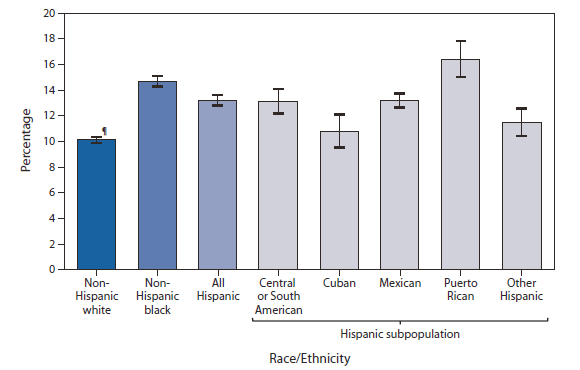
Prescription medicine is often unattainable for millions of Americans simply due to the price of these drugs.  The Centers for Disease Control and Prevention’s National Health Interview Survey illustrates the difficulties in accessing medicine that exist for a significant proportion of Americans.  In the past year, 10.1% of non-Hispanic white adults reported that drug costs prevented them from buying necessary medications.  That percentage jumps to 13.2% for Hispanics and rises further to 14.7% of non-Hispanic blacks.  Interestingly, there are significant variations between Hispanic sub-populations: while 16.4% of Puerto Rican adults could not afford prescription drugs in the past year, a comparatively low percentage of Cuban adults (10.8%) were unable to buy necessary drugs.

Net Migration From Mexico to U.S. Hits Zero


In the past four decades, 12 million Mexican immigrants came to the U.S., just over half of whom were unauthorized.  Recently, though, this flow of immigration, which represented the largest flow between any two countries in the world, has reversed.  Whereas from 1995 to 2000 the net flow of immigration into the United States via Mexico was positive, from 2005 to 2010, that flow reversed.  The Pew Research Center released a study investigating immigration between the bordering nations, and pointed to “the weakened U.S. job and housing construction markets, heightened border enforcement, a rise in deportations, the growing dangers associated with illegal border crossings, the long-term decline in Mexico’s birth rates and broader economic conditions in Mexico.”  In 2011, about 6.1 million unauthorized Mexican immigrants lived in the U.S., down from a peak of almost 7 million in 2007.  Over the same time period, the number of authorized Mexican immigrants rose about 200,000.  

Blog Archive