With the jobs numbers released this past Friday, highlighting Gallup's underemployment statistics provides another look into the employment situation in America. Gallup defines underemployed workers as those who work part-time but desire a full-time job, along with Americans who are simply unemployed. This figure is an important supplement to the BLS' jobs numbers, as it illustrates the lingering frustration within the American economy that is not quite as apparent in Friday's optimistic report. While underemployment has tailed off in recent months, it's still well above levels seen before the recession. 16.5% of workers are underemployed, down from over 20% in 2010 and 18.1% this time one year ago. Before the housing bubble burst and drove the economy into a downward spiral unseen since the Great Depression, underemployment had sunk to below 8%, but as companies laid off workers and scaled back domestic operations, Americans were left struggling to find full-time employment, prompting a spike in unemployment and underemployment. Still, though, the 16.5% underemployment rate is the lowest since the start of the recession, and it continues to steadily drop as the year progresses.
New issue of Theoretical and Practical Research in Economic Field
A new volume of TPREF (the whole journal as a pdf file ) is available now for Summer 2012. I am an author of one article and a co-editor.
A Closed Form Solution for a Growth Model with Externalities and Public Spending Oliviero A. CARBONI Paolo RUSSU University of Sassari, Italy | … 4 |
The Government-Taxpayer Game David CARFI University of California at Riverside, USA Caterina FICI Business Administrator at VF of V. Fici, Italy | … 13 |
Modeling Unemployment and Employment in Advanced Economies: Okun’s Law with a Structural Break Ivan KITOV Institute for the Dynamics of the Geospheres, Russia Oleg KITOV University of Oxford, UK | … 26 |
Knowledge-Based Economies and the Institutional Environment Daniele SCHILIRĂ’ University of Messina, Italy | … 42 |
Record-High Latino Voter Registration, but Latino Voter Turnout Trends Low
The Pew Hispanic Center has recently released a report detailing the current registration of Latino voters for the upcoming presidential election, revealing an all-time high of nearly 24 million Latino voters registered to vote. These 23.7 million registered Latino voters are up 22% since 2008; this aligns with the fact that Latino voters now comprise 11% of the nation's available voters, up from 9.5% in 2008.
Despite the high number of Latino registered voters, the registered Latinos are much less likely to show up at the polls than registered whites and blacks. Half of the Latino voters who were registered in 2008 voted, while 65% and 66% of registered whites and blacks voted, respectively. Additionally, 55% of Hispanics are ineligible to vote (for example, not U.S. citizens or too young to vote) while only 31% of blacks and 21% of whites are ineligible.
The disparity between eligible Latino voters and continued low turnout has caused quite a stir within the media. In a piece analyzing this occurrence, Ed Pilkington of The Guardian states that "the statistics spell enormous potential rewards for any politician or political party who manages to release the Latino genie from the bottle."
Despite the high number of Latino registered voters, the registered Latinos are much less likely to show up at the polls than registered whites and blacks. Half of the Latino voters who were registered in 2008 voted, while 65% and 66% of registered whites and blacks voted, respectively. Additionally, 55% of Hispanics are ineligible to vote (for example, not U.S. citizens or too young to vote) while only 31% of blacks and 21% of whites are ineligible.
The disparity between eligible Latino voters and continued low turnout has caused quite a stir within the media. In a piece analyzing this occurrence, Ed Pilkington of The Guardian states that "the statistics spell enormous potential rewards for any politician or political party who manages to release the Latino genie from the bottle."
Delicious Apple Cake
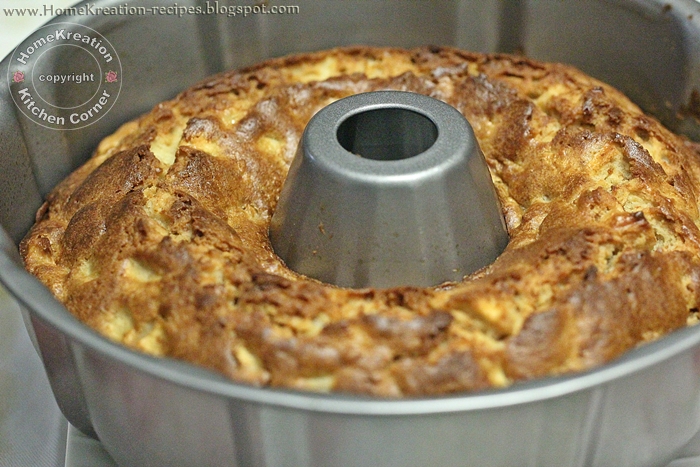
Showing my hot cake that just came out from the oven.... I must clear all the apples in the fridge that start shrinking - seemed like nobody wanted to eat them anymore - as usual mommy's job is to turn something unappealing to magically irresistible....LOL! I think I am very successful to do that this time - this cake is so delicious - loaded with apple chunks. The moment I finished shooting some photos, half of the cake gone into my children's tummies - even Liana was screaming for the hot cake! That is such a real joy for mommy!
I would say to all of you that do not wait until you have leftover apples - go and buy some and make this delicious cake! It is really awesome!
There is another excitement I want to share.... look down and see my new bundt pan - used for first time. It is a carbon steel pan - quite heavy weighted 531g and the cake did not stick at all after baked! So what is the excitement? I paid only RM3.90 for it....! Yes, that's correct! That was on special offer at Carefour so I grabbed it right away despite I already have almost similar bundt pan....haha.
By: Roz@HomeKreation
Source: link
Recipe slightly modified and retyped for simpler reference
Makes: 25cm bundt or 8"-9" round
INGREDIENTS:
~500g Apples (Green/Fuji) - peeled, cored, chopped 1cm cube
150-200g Brown Sugar (orig used white sugar)
3 large Eggs
1 cup Oil
1 tsp Grated Lemon Rind
200g Self-raising Flour
1/3 tsp Cinnamon Powder
METHOD:
1. Place sugar, egg and oil in a big bowl & whisk until creamy.
Add in grated lemon rind.
Sifted in flour & cinnamon and mix well.
Add in apple and mix well.
2. Pour into greased/lined tin and bake 170C for 45-50minutes until cooked.
Serve warm with condensed milk or just plain.
*******************************************************
Hari ni tak kerja lewat malam, jadi sempat lah Along membakar sebiji kek selepas makan malam. Susah-hati tengok buah2 epal kat dlm peti-sejuk yg dah kecut, bebudak pun tak ingin nak makan. Meh buat kek, jangan membazir - buah epal bukan nya murah pun kan, sayang kalau terbuang. Alhamdulillah, tak sia2 buat kek ni - teramat lah sedap nya.... penuh dgn potongan buah epal & tentu nya teramat harum dan sedap rasa nya. Berebut2 anak2 Along makan sewaktu panas2.... Liana yg kecik tu pun berebut2 makan sama.... hehe laku betul, tak rugi buat walaupun penat pulang kerja! Anda semua mesti cuba ni, tak payah tunggu epal kecut, pi beli epal fresh & buat - rugi tak merasa.... hehe.
By: AlongRoz@HomeKreation
Source: link
Resipi di ubahsuai sedikit & terjemah ke BM oleh HomeKreation
Saiz: 25cm bundt atau 8"-9"bulat
BAHAN2:
~500g Buah Epal (Green/Fuji) - kupas kulit, buah tengah, cincang 1cm kiub
150-200g Gula Perang (orig guna gula putih)
3 bj Telur (Gred A)
1 cwn Minyak
1 st Parutan Kulit lemon (Along petik Lemon kat tepi rumah tau... hehe)
200g Tepung Naik Sendiri
1/3 st Serbuk Kayu Manis
CARA2:
1. Letakkan gula, telur & minyak ke dlm mangkuk & pukul sehingga pekat.
Campurkan parutan kulit limau.
Ayakkan tepung & serbuk kayumanis ke dlm adunan & kacau rata.
Gaulkan epal sehingga rata.
2. Tuangkan ke dlm tin yg di minyakkan & bakar 170C selama 45-50minit sehingga masak.
Hidangkan suam bersama susu pekat jika suka.
I would say to all of you that do not wait until you have leftover apples - go and buy some and make this delicious cake! It is really awesome!
There is another excitement I want to share.... look down and see my new bundt pan - used for first time. It is a carbon steel pan - quite heavy weighted 531g and the cake did not stick at all after baked! So what is the excitement? I paid only RM3.90 for it....! Yes, that's correct! That was on special offer at Carefour so I grabbed it right away despite I already have almost similar bundt pan....haha.
By: Roz@HomeKreation
Source: link
Recipe slightly modified and retyped for simpler reference
Makes: 25cm bundt or 8"-9" round
INGREDIENTS:
~500g Apples (Green/Fuji) - peeled, cored, chopped 1cm cube
150-200g Brown Sugar (orig used white sugar)
3 large Eggs
1 cup Oil
1 tsp Grated Lemon Rind
200g Self-raising Flour
1/3 tsp Cinnamon Powder
METHOD:
1. Place sugar, egg and oil in a big bowl & whisk until creamy.
Add in grated lemon rind.
Sifted in flour & cinnamon and mix well.
Add in apple and mix well.
2. Pour into greased/lined tin and bake 170C for 45-50minutes until cooked.
Serve warm with condensed milk or just plain.
*******************************************************
Hari ni tak kerja lewat malam, jadi sempat lah Along membakar sebiji kek selepas makan malam. Susah-hati tengok buah2 epal kat dlm peti-sejuk yg dah kecut, bebudak pun tak ingin nak makan. Meh buat kek, jangan membazir - buah epal bukan nya murah pun kan, sayang kalau terbuang. Alhamdulillah, tak sia2 buat kek ni - teramat lah sedap nya.... penuh dgn potongan buah epal & tentu nya teramat harum dan sedap rasa nya. Berebut2 anak2 Along makan sewaktu panas2.... Liana yg kecik tu pun berebut2 makan sama.... hehe laku betul, tak rugi buat walaupun penat pulang kerja! Anda semua mesti cuba ni, tak payah tunggu epal kecut, pi beli epal fresh & buat - rugi tak merasa.... hehe.
By: AlongRoz@HomeKreation
Source: link
Resipi di ubahsuai sedikit & terjemah ke BM oleh HomeKreation
Saiz: 25cm bundt atau 8"-9"bulat
BAHAN2:
~500g Buah Epal (Green/Fuji) - kupas kulit, buah tengah, cincang 1cm kiub
150-200g Gula Perang (orig guna gula putih)
3 bj Telur (Gred A)
1 cwn Minyak
1 st Parutan Kulit lemon (Along petik Lemon kat tepi rumah tau... hehe)
200g Tepung Naik Sendiri
1/3 st Serbuk Kayu Manis
CARA2:
1. Letakkan gula, telur & minyak ke dlm mangkuk & pukul sehingga pekat.
Campurkan parutan kulit limau.
Ayakkan tepung & serbuk kayumanis ke dlm adunan & kacau rata.
Gaulkan epal sehingga rata.
2. Tuangkan ke dlm tin yg di minyakkan & bakar 170C selama 45-50minit sehingga masak.
Hidangkan suam bersama susu pekat jika suka.
| Top view |
| Bottom view |
The rate of unemployment in the U.S. will fall to 6.2% by 2014
On March 1, 2012 we predicted (in a Seeking Alpha post) the rate of unemployment in the U.S. to fall down to 7.8% by 2013. The BLS announced 7.8% for September 2012. Here we present our basic model and predict the evolution of unemployment in 2013.
In 2006, we developed three individual empirical relationships between the rate of unemployment, u(t), price inflation, p(t), and the change rate of labour force, LF(t), in the United States. We also built a general relationship balancing all three variables simultaneously. Since measurement (including definition) errors in all three variables are independent it may so happen that they cancel each other (destructive interference) and the general relationship might have better statistical properties than the individual ones. For the USA, the best fit model for annual estimates was a follows:
u(t) = p(t-2.5) + 2.5dLF(t-5)/dtLF(t-5) + 0.0585 (1)
where inflation (CPI) leads unemployment by 2.5 years (30 months) and the change in labor force leads by 5 years (60 months). We have already postedon the performance of this model several times.
For the model in this post, we use monthly estimates of the headline CPI, u, and labor force, all reported by the US Bureau of Labor Statistics. The time lags are the same as in (1) but coefficients are different since we use month to month-a-year-ago rates of growth. We have also allowed for changing inflation coefficient. The best fit models for the period after 1978 are as follows:
u(t) = 0.63p(t-2.5) + 2.0dLF(t-5)/dtLF(t-5) + 0.07; between 1978 and 2003
u(t) = 0.90p(t-2.5) + 4.0dLF(t-5)/dtLF(t-5) + 0.30; after 2003
There is a structural break in 2003 which is needed to fit the predictions and observations in Figure 1. Due to strong fluctuations in monthly estimates of labor force and CPI we smoothed the predicted curve with MA(24).
The structural break in 2003 may be associated with the change of sensitivity of the rate of unemployment to the change of inflation and labor force. Alternatively, definitions of all three (or two) variables were revised around 2003, which is the year when new population controls were introduced by the BLS. The Census Bureau also reports major revisions to the Current Population Survey, where the estimates of labor force and unemployment are taken from.
On March 1, 2012 the monthly model predicted a drop from 8.3% in February to 7.8% by the end of 2012. Figure 1 depicts the original prediction (upper panel) and the observed fall in the rate of unemployment (lower panel). Figure 2 shows that the observed and predicted time series are well correlated (Rsq.=0.81). This is a good statistical support to the model.
Figure 3 depicts the predicted rate of unemployment for the next 12 months. The model shows that the rate will fall to 6.2% by September 2013. For 105 observations since 2003, the modelling error is 0.4% with the precision of unemployment rate measurement of 0.2% (Census Bureau estimates in Technical Paper 66).
Hence, one may expect 6.2% [±0.4%].
Figure 1. Observed and predicted rate of unemployment in the USA as obtained in March and October 2012.
Figure 2. Observed vs. predicted rate of unemployment between 1967 and 2012. The coefficient of determination Rsq=0.81.
Figures 3. The predicted rate of unemployment. We expect the rate to fall down to 6.2% in September 2013.
Vegetables Cannelloni (Popiah Itali)
Can't wait to make the baked cannelloni ever since I returned from Taiping (for Idh in Aug) but gotta wait almost two months due to so many other priorities. I found the uncooked cannelloni in Tesco Taiping and bought only a box, which is enough for one serving for our family. I chose vegetables filling and using the usual tomato sauce that I used to cook pasta and also because it is my family's favourite. The whole combination was really delicious and Liana finished a double barrels! What a fabulous breakfast......!
By: Roz@HomeKreation
Serves 4-5 persons
INGREDIENTS:
1 box Uncooked Cannelloni
Chopped tomato, brinjal, mushroom, spinach, Fresh Basil Leaves
Garlic
Extra Virgin Olive Oil
1 Egg
1 can (>400g) Tomato Puree
Parsley
Salt, Sugar, Pepper
Grated Parmesan Cheese
METHOD:
1. In a bowl, mix chopped vegetables, 2 cloves pounded garlic, EVOO, salt, pepper & leave 5 minutes to absorb flavor.
Add in beaten egg, grated parmesan cheese & mix well.
2. Heat up 1 tbsp EVOO & stir fry 2 cloves chopped garlic until fragrant.
Add in tomato puree and 1 can water.
Season with salt & parsley.
3. Stuff cannelloni with vegetables filling.
4. Scoop half of the sauce & spread into a baking casserole.
Arrange stuffed cannelloni in a single layer.
Pour remaining sauce on top and sprinkle parmesan cheese.
5. Cover with aluminium foil & bake 180C for 30 minutes or until cannelloni is fully cooked.
Uncover foil & bake another 10 minutes to brown the top slightly.
6. Serve with pretzel sticks or garlic bread.
Pagi ni Along buat Cannelloni pasta yg di sumbat dgn bayam dan sayur campuran. Walaaa.... sedap nya hubby & anak2 makan sehingga Liana pun bertambah. Sonok tengok dia orang bersemangat makan! Along buat macam baked pasta yg selalu buat tu cuma kali ni guna Cannelloni. Along saja panggil ni Popiah Itali sebab bentuk & saiz yg sama cam popiah dan lepas tu ada pula inti sayuran.....setuju tak?
By: AlongRoz@HomeKreation
Saiz hidangan 4-5 orang
BAHAN2:
1 kotak Pasta Cannelloni
Tomato, Terung, Cendawan, Bayam, Daun Selasih - cincang
Bwg Putih
Extra Virgin Olive Oil
1 bj Telur
1 tin (>400g) Tomato Puree
Parsley
Garam, Gula, Lada Hitam
Grated Parmesan Cheese
CARA2:
1. Campurkan sayuran, 2 ulas bwg putih yg di tumbuk, EVOO, garam, lada & perap 5 minit supaya sebati rasa.
Gaulkan telur yg di pukul sedikit, grated parmesan cheese sehingga rata.
2. Panaskan 1 sb EVOO & tumis 2 ulas bwg putih cincang sehingga wangi.
Masukkan tomato puree & 1 tin air.
Perisakan dgn garam, gula & parsley.
3. Sumbatkan kesemua cannelloni dgn sayuran tadi.
4. Ratakan separuh sos tomato ke dalam dulang pembakar.
Aturkan cannelloni yg di sumbat - jgn di tindih.
Tuangkan baki sos yg separuh lagi sehingga rata.
Tabur parmesan cheese di atasnya.
5. Tutup dulang dgn kertas aluminium & bakar 180C selama 30minit sehingga pasta masak lembut.
Buka kertas aluminium & bakar 10minit utk garingkan sedikit permukaan nya.
6. Hidangkan dgn pretzel sticks atau garlic bread.
By: Roz@HomeKreation
Serves 4-5 persons
INGREDIENTS:
1 box Uncooked Cannelloni
Chopped tomato, brinjal, mushroom, spinach, Fresh Basil Leaves
Garlic
Extra Virgin Olive Oil
1 Egg
1 can (>400g) Tomato Puree
Parsley
Salt, Sugar, Pepper
Grated Parmesan Cheese
METHOD:
1. In a bowl, mix chopped vegetables, 2 cloves pounded garlic, EVOO, salt, pepper & leave 5 minutes to absorb flavor.
Add in beaten egg, grated parmesan cheese & mix well.
2. Heat up 1 tbsp EVOO & stir fry 2 cloves chopped garlic until fragrant.
Add in tomato puree and 1 can water.
Season with salt & parsley.
3. Stuff cannelloni with vegetables filling.
4. Scoop half of the sauce & spread into a baking casserole.
Arrange stuffed cannelloni in a single layer.
Pour remaining sauce on top and sprinkle parmesan cheese.
5. Cover with aluminium foil & bake 180C for 30 minutes or until cannelloni is fully cooked.
Uncover foil & bake another 10 minutes to brown the top slightly.
6. Serve with pretzel sticks or garlic bread.
Pagi ni Along buat Cannelloni pasta yg di sumbat dgn bayam dan sayur campuran. Walaaa.... sedap nya hubby & anak2 makan sehingga Liana pun bertambah. Sonok tengok dia orang bersemangat makan! Along buat macam baked pasta yg selalu buat tu cuma kali ni guna Cannelloni. Along saja panggil ni Popiah Itali sebab bentuk & saiz yg sama cam popiah dan lepas tu ada pula inti sayuran.....setuju tak?
By: AlongRoz@HomeKreation
Saiz hidangan 4-5 orang
BAHAN2:
1 kotak Pasta Cannelloni
Tomato, Terung, Cendawan, Bayam, Daun Selasih - cincang
Bwg Putih
Extra Virgin Olive Oil
1 bj Telur
1 tin (>400g) Tomato Puree
Parsley
Garam, Gula, Lada Hitam
Grated Parmesan Cheese
CARA2:
1. Campurkan sayuran, 2 ulas bwg putih yg di tumbuk, EVOO, garam, lada & perap 5 minit supaya sebati rasa.
Gaulkan telur yg di pukul sedikit, grated parmesan cheese sehingga rata.
2. Panaskan 1 sb EVOO & tumis 2 ulas bwg putih cincang sehingga wangi.
Masukkan tomato puree & 1 tin air.
Perisakan dgn garam, gula & parsley.
3. Sumbatkan kesemua cannelloni dgn sayuran tadi.
4. Ratakan separuh sos tomato ke dalam dulang pembakar.
Aturkan cannelloni yg di sumbat - jgn di tindih.
Tuangkan baki sos yg separuh lagi sehingga rata.
Tabur parmesan cheese di atasnya.
5. Tutup dulang dgn kertas aluminium & bakar 180C selama 30minit sehingga pasta masak lembut.
Buka kertas aluminium & bakar 10minit utk garingkan sedikit permukaan nya.
6. Hidangkan dgn pretzel sticks atau garlic bread.
Investing in Russia: a cross country comparison
As an investor, I have some emergent market bonds, and thus, I am highly interested in the performance of the countries in this category. As a Russian, I always prefer to know more about its potential relative to other countries. Below are several simple graphs showing the growth of GDP per capita in absolute and relative terms. Per head values say more about actual potential not related to population fluctuations.
I compare Russia to four different country groups: China and India; countries from the former USSR; East European countries (former socialist countries); a few Asian countries. There are three time points of interest: 1991 (the start of transition period), 2001 (the start of sustainable growth as a capitalist country), and 2008 (the peak before the current crises). Therefore, I have normalized the GDP per capita time series to their respective values in 1991, 2001, and 2008. The normalized curves illustrate the evolution of the corresponding economies in relative terms. Figures 1 through 4 display the obtained result for four country groups (Russia is always shown by a black line). All data are borrowed from the Total Economy Database(TED) compiled by the Conference Board (as of October 5, 2012). The GDP per capita figures are in 2011 US$ converted to 2011 price levels with updated 2005 EKS PPPs. There are several conclusions from the graphs:
1. Since 1991, India and China have been doing better than Russia in relative terms but still lag behind the Russian level of GDP per capita. Since 2001, India and Russia are close with China opening a larger gap. Since 2008, the Russian economy has been falling apart. Hopefully, the negative deviation is an indication of a higher rate associated with a recovery growth in the near future. In any case, I am lucky to have the Indian and Chinese bonds in my portfolio together with the Russian ones.
2. Among Former Soviet countries, Russia is not a good performer as well. It is in the middle of the growth curves since 1991, 2001, and 2008. The level is almost the highest, however. Hence, Russia is a good representative on average. It is not the best performer, but is less sensitive to the current crisis than many of the FSU countries. Therefore, there is no reason to diversify investments over the FSU countries - one will get the result close to the Russian one. When investing in the best performers one may meet a higher risk of slow down. The poor performers with a higher recovery potential are also characterized by a higher risk.
3. Russia is in the middle of the GDP per capita distribution among East European countries. It has been growing slowly since 1991, but outperformed almost all countries since 2001. As mentioned above, Russia was very sensitive to the 2008 crisis and the GDP per capita fell by 9%. It is one of the worst performances among East European countries. The rate of recovery since 2009 is the highest, however. If continued to intersect the paths of Poland and Albania, this recovery growth may bring a fortune for an investor.
4. Among Asian countries, Russia is a good performer since 2001, but the poorest one since 2008.
Figure 1. The level of GDP per capita (upper panel) and the evolution of GDP per capita normalized to 1991, 2001, and 2008. The case of India, China and Russia.
Figure 2. The level of GDP per capita (upper panel) and the evolution of GDP per capita normalized to 1991, 2001, and 2008. The case of the countries from the former USSR.
Figure 3. The level of GDP per capita (upper panel) and the evolution of GDP per capita normalized to 1991, 2001, and 2008. The case of the East European countries.
Figure 4. The level of GDP per capita (upper panel) and the evolution of GDP per capita normalized to 1991, 2001, and 2008. The case of the selected Asian countries.