This symposium essay addresses how the new originalism – focused on the objective semantic meaning that the Constitution’s text would have had to hypothetical members of the adopting generation – grapples with particular interpretive issues raised in the constitutional foreign affairs area. I first suggest that new originalism struggles with background norms of the common law or the law of nations which were understood by some members of the Founding generation to implicitly qualify or restrict parts of the constitutional text. This issue is omnipresent in foreign affairs law because courts, executive officials, and other interpreters must decide whether the boundaries of the Constitution’s broadly written protections for life, liberty, and property extend to domains such as wartime or extraterritorial activity by the U.S. government, or to persons beyond the paradigm case of U.S. citizens within the United States. The Constitution’s meaning is significantly altered depending on whether unwritten general law is allowed to undercut textually broad rights. Second, I suggest that the exacting textualism practiced by many new originalists might only imperfectly understand certain aspects of the foreign affairs Constitution. This is because some of it was drafted hastily and poorly, certain important topics were not addressed at all, and some Founding-era interpreters understood the foreign affairs portions of the Constitution in a holistic manner focused on purpose and structure, instead of parsing text in the manner of new originalism. This potentially large gap between results reached by new originalism and the expectations and practices of the Founders problematizes new originalism’s claim to be based on the public meaning of the text to the adopting generation.
Kent on The New Originalism and the Foreign Affairs Constitution
Andrew Kent, Fordham University School of Law, has posted The New Originalism and the Foreign Affairs Constitution, which is forthcoming in volume 82 of the Fordham Law Review. Here is the abstract:

Sunday Book Roundup

"Sometimes, in the absence of copyright, publishers have paid authors and have abstained from reprinting the books of authors they haven’t paid. Ulysses, by James Joyce, considered by some the greatest novel of the twentieth century, lost its copyright protection in America on a technicality soon after it was published. But from the 1930s to the ’90s, Joyce and his estate were paid royalties from its publication in America anyway, thanks to exactly this kind of happy anarchy. In his new scholarly book Without Copyrights, the legal and literary historian Robert Spoo tells the remarkable tale, which Spoo doesn’t necessarily deem a pretty one. Spoo rather sympathizes, in fact, with the character many observers would consider the villain."Salon publishes an excerpt of Thomas Jefferson's Qur'an: Islam and the Founders (Knopf) by Denise A Spellberg, and NPR reviews Jill Lepore's book about a Founding Father's sister, Book of Ages: The Life and Opinions of Jane Franklin (Knopf).
 H-Net adds several works this week, including one of Wolfgang Knobl and Hans Joas's War in Social Thought: Hobbes to the Present (Princeton University Press), another of Robert Cassanello's To Render Invisible: Jim Crow and Public Life in New South Jacksonville (University Press of Florida) (audio interview in last week's post), a third of Nancy Kollmann's Crime and Punishment in Early Modern Russia (Cambridge), and a fourth of Judy Tzu-Chun Wu's Radicals on the Road: Internationalism, Orientalism, and Feminism during the Vietnam Era (Cornell University Press).
"As its title suggests, Radicals on the Road uses the transpacific journeys of anti-Vietnam War activists as a window into radical American and Vietnamese politics and culture in the 1960s. Its principal claim is as multipronged as its intended audience and intervention: in the 1960s American and Vietnamese antiwar activists created a transnational political community, beyond the confines of any nation-state or locality, based on a sustained critique of U.S. policy in Asia."
Read more »
Trials for International Crimes in Asia
We have an announcement for the conference, "Trials for International Crimes in Asia," hosted by the Centre for Asian Legal Studies at the Faculty of Law, National University of Singapore, on October, 17-18, 2013. According to the announcement, the conference
Read more »
will examine the legal issues arising from the tribunals convened in Asia to deal with crimes of international import - namely, aggression, war crimes, genocide, and crimes against humanity. It will consider both tribunals that have been established on the initiative of Asian governments and tribunals mounted in Asia at the behest of non-Asian governments or international organisations. In keeping with the legal theme, it will lay particular stress on the different modes of liability developed within these courts' respective jurisdictions - among them, joint criminal enterprise, command responsibility, complicity, and defences against them.Places are limited. For further details, please email: cals@nus.edu.sg. The registration form is here. The schedule appears after the jump.
Over a seven-decade time-span, many tribunals have been convened in the region, from the earliest, established in Manila and Tokyo after the Second World War, to the latest, currently hearing cases in Phnom Penh and Dhaka. During the intervening years, lesser-known trials were also mounted by the colonial powers in Singapore, Hong Kong, Batavia, Saigon and elsewhere; by the Guomindang and People's Republic of China in the early Cold War period; and by the Vietnamese authorities after Khmer Rouge rule in the 1970s. Beyond the historical-political analysis, the conference aims to draw substantive conclusions about the legal legacy of these tribunals, and appraise the mechanisms evolving in Asia today, either at the 'hybrid' internationalised tribunals or within national systems.
Read more »
Sunday Book Roundup
 In the Chronicle of Higher Education there is a review of The Allure of the Archives (Lewis Walpole Series) in which "the historian Arlette Farge conveys how much life can burst from brittle old pages."
H-Net also has several reviews of interest, including a review of Andreas Wimmer's Waves of War: Nationalism, State Formation, and Ethnic Exclusion in the Modern World (Cambridge University Press) as well as a review of Jo Becker's Campaigning for Justice: Human Rights Advocacy in Practice (Stanford University Press). Andrew E. Busch's Truman's Triumphs: The 1948 Election and the Making of Postwar America (University Press of Kansas) has also been reviewed on H-Net.
"Busch’s purpose in Truman’s Triumphs is straightforward. His goal is to analyze the 1948 election, paying heightened attention to the nomination process, the congressional elections, and public opinion. Joining other scholars, Busch argues that the 1948 election was a validation of the domestic policy of the New Deal, of the foreign policy of containment, and of the federal policy advocating civil rights. Busch contributes the unique interpretation that the 1948 election demonstrated both the “resilience” and “vulnerability” of the New Deal coalition (p. 210). He points out that although Truman trailed in the polls and came from behind, he also had significant advantages such as the New Deal coalition. In addition, Busch proves that although the Democrats suffered from obvious schisms, the Republicans were less noticeably but no less critically divided."

"Although Hutchison and Quigley tackle the larger topic of Southern nationalism from the antebellum era to Reconstruction, they focus on the experience of the Civil War and Confederate nationalism and argue that such nationalism preceded the formation of the Confederacy. Quigley shows the emergence of Southern nationalism “as a variant” and “fringe” of American nationalism. But, by evolving into a mainstream belief, he notes, it was transformed into Confederate nationalism as it struggled to reconcile its two inherent contradictions: first, a slavery based creed needing to appeal to non-slaveholders; and second, a “nationalism that derived its legitimacy from the ostensibly anti-national principle of State rights” (p. 13). Hutchison, by way of using the Confederacy as a case study, seeks to contribute to a wider investigation of the role of various genres of literature in the emerging of political communities. At the same time, Hutchison also wishes to prove his case that literary nationalists helped produce the Confederacy and created a “literary nationalism that was not only internationally minded, but also more durable than its state apparatus” (p. 4)."
 And, here's one we missed a few months back, a review of Rick Baldoz's The Third Asiatic Invasion: Empire and Migration in Filipino America, 1898-1946 (New York University Press), "an important work for historians seeking to bridge the fields of immigration and imperial studies."
The LA Review of Books reviews The Inconvenient Indian: A Curious Account of Native People in North America (University of Minnesota) by Thomas King.
"King’s tone is breezy and light, full of funny stories and self-deprecating jokes, but just below that geniality lies a deep reservoir of bitterness over the treatment of Indians in Canada and the United States that continues on to this day. White North Americans, he argues, prefer their Indians noble, primitive, and safely extinct, and actual, live Indians who stubbornly insist on their rights as an independent people they regard as at best a troublesome nuisance."

Salon again this week publishes an excerpt from a law and history related book, Keeping It Civil: The Case of the Pre-nup and the Porsche & Other True Accounts from the Files of a Family Lawyer by Margaret Klaw (Algonquin Books).
There are a few reviews this week of Year Zero: A History of 1945 (Penguin) by Ian Buruma, here in the New York Times and here in the New York Review of Books.
There's also two reviews of The Collaboration: Hollywood’s Pact with Hitler (Belknap Press) by Ben Urwand, one in the Washington Post, and a second in the Wall Street Journal.
Sunday Book Roundup

The September issue of The Federal Lawyer is out and has reviewed several books of note: The Law of Armed Conflict: An Operational Approach (Wolters Kluwer Law & Business) by Geoffrey Corn, Victor Hansen, Chris Jenks, Richard Hackson, Eric Talbot Jenson, and Hames Schoettler Jr; Rebels at the Bar: The Fascinating, Forgotten Stories of America's First Women Lawyers (NYU Press) by Jill Norgren; Out of Order: Stores from the History of the Supreme Court (Random House) by Sandra Day O'Connor; as well as David O. Stewart's The Lincoln Deception (Kensington). Of the last book, reviewer JoAnn Baca provides an intriguing introduction:
"Lawyer and award-winning author David O. Stewart has written three nonfiction books—on Aaron Burr, Andrew Johnson’s impeachment, and the men who drafted the Constitution. But what happens when a historian comes across a story that cannot be proven by any fact he can uncover, yet it sparks his imagination? For Stewart, the answer is to leave his comfort zone and write a novel, allowing him to theorize and extrapolate, far from established facts, about a part of our history that fascinates many as much today as it did in 1865: the assassination of Abraham Lincoln. The Lincoln Deception is the result of Stewart’s need to explore to his own satisfaction a vague suggestion of duplicity as yet undiscovered in the assassination of the President."H-Net has added many reviews of interest to this week's roundup readers including several books that extend beyond the American context, such as David Lemmings's Crime, Courtrooms, and the Public Sphere in Britain, 1700-1850 (Ashgate) here; and a review of two books including Adam Roberts and Timothy Garton Ash's Civil Resistance and Power Politics: The Experience of Non-violent Action from Gandhi to the Present (Oxford University Press) and Sean Scalmer's Gandhi in the West: The Mahatma and the Rise of Radical Protest (Cambridge University Press). Elizabeth F. Thompson's Justice Interrupted: The Struggle for Constitutional Government in the Middle East (Harvard University Press) is also reviewed. Seth Offenbach writes of Thompson's work:
"In the nearly three years since the Arab uprisings began, the expertise of Middle East historians has been in demand like almost never before, as observers attempt to understand the historical roots underlying the seemingly sudden popular challenges to long-standing authoritarian regimes. The result has been a surge in publications that are broad in their scope and appeal but limited in the depth of their analysis and historical insight. A strong exception to this trend is the recent work of historian Elizabeth F. Thompson, whose study on the rise of constitutionalism in the Middle East swiftly dispenses with the facile explanations of the Arab uprisings, instead offering readers a comprehensive yet nuanced look at the lasting impact of efforts to enshrine and institutionalize the language of justice across the region during the last two centuries. While the study is bookended by a discussion of the implications that these developments hold for the contemporary calls for universal rights, its substantive chapters provide a perceptive and deeply contextualized look at the common thread underlying a struggle that dates back to the premodern era."

The Guardian reviews Churchill's Bomb: How the United States Overtook Britain in the First Nuclear Arms Race (Faber & Faber) by Graham Farmelo.
Maya Jasanoff reviews River of Dark Dreams: Slavery and Empire in the Cotton Kingdom (Harvard University Press) by Walter Johnson in the New York Review of Books. She finds:
"The artistry of River of Dark Dreams lies in the close-up—in Johnson’s mesmerizing attention to the “material” in historical-geographical materialism. In the pointillist style so dexterously displayed in his reconstruction of the New Orleans slave market, Soul by Soul, Johnson zooms in on the “nested set of abstractions” that made the Cotton Kingdom run: money, markets, maps, labor. “If you looked more closely,” he observes, “you would see that each abstraction stood at odds with the physical properties of the object it sought to represent.”River of Dark Dreams delivers spectacularly on the long-standing mission to write “history from the bottom up”: from the soil tangy and pungent with manure, and the Petit Gulf cotton plants rooted into it, and the calloused fingers plucking its blooming, sharp-edged bolls. This is a history of how wilderness became plantations that became states, nations, and empires—of how an overseer’s lashes sliced into a slave’s back turned “into labor into bales into dollars” into visions of America’s future in the world."
 This week readers can also listen to the New Books in History Podcast for a discussion with Tevi Troy, author of What Jefferson Read, Ike Watched, and Obama Tweeted: 200 Years of Popular Culture in the White House (Regnery History).
On HNN, reviewer Bernard von Bothmer finds that American Umpire (Harvard University Press) by Elizabeth Cobbs Hoffman "offers a sweeping, wide-ranging, and remarkably in-depth overview of the history of American foreign relations." HNN also reviews Thurston Clarke's JFK's Last Hundred Days (Penguin).
Salon has published an excerpt from Front Porch Politics: The Forgotten Heyday of American Activism in the 1970s and 1980s (Hill and Wang) by Michael Stewart Foley.
Sunday Book Roundup
 The Washington Post this week has a review of The Road to War: Presidential Commitments Honored and Betrayed (Brookings Institution Press) by Marvin Kalb. "In his timely book, “The Road to War,” veteran journalist and diplomatic correspondent Marvin Kalb explores the tangled history of the foreign policy commitments that modern presidents have made and the knots these leaders have turned themselves into trying to rationalize or escape their words."
The Post also notes the presence of Harvard Law's Kenneth Mack and others at the National Book Festival's History & Biography Pavilion this week.
Salon has published an excerpt from Karen Dunak's new book As Long as We Both Shall Love: The White Wedding in Postwar America (NYU Press) about "The secret history of gay marriage" and the "same-sex weddings [that] were happening in this country for decades before the Supreme Court permitted it."
"On October 10, 1987, nearly 7,000 people witnessed a wedding on the National Mall in Washington, DC. Men and women cheered and threw rice and confetti as family, friends, and community members took part in the largest mass wedding in American history. After the celebrants exchanged rings and were pronounced newlywed, guests released hundreds of balloons into the air. Brides and grooms, dressed in formal wedding attire, cried and embraced after an “emotional and festive” ceremony. Like so many brides and grooms, participants identified the wedding day as one of the happiest, most meaningful days of their lives.
But this was no ordinary wedding. And these were not typical brides and grooms. This wedding held special significance for its participants. Beyond the “mass” nature of the celebration, something else was unique. The newlyweds that fall Saturday paired off as brides and brides, grooms and grooms. “The Wedding,” as it came to be known, marked the symbolic beginning of nearly 2,000 same-sex marriages."

This week H-Net has several new reviews in law and history: Keith Altavilla finds a "Printer, Democrat, and Soldier" in Robert Grandchamp' Colonel Edward E. Cross, New Hampshire Fighting Fifth: A Civil War Biography (McFarland & Company, Inc.), and Rachel T. Van reviews Emily Clark's The Strange History of the American Quadroon: Free Women of Color in the Revolutionary Atlantic World (University of North Carolina Press).
 David Siemers also reviews for H-Net The Forgotten Presidents: Their Untold Constitutional Legacy (Oxford University Press) by Michael J. Gerhardt.
"Quick. What do William Howard Taft, Calvin Coolidge, and Jimmy Carter have in common? The answer, or one answer at least, is that they are the twentieth-century presidents placed alongside many of their nineteenth-century counterparts in Michael J. Gerhardt’s The Forgotten Presidency: Their Untold Constitutional Legacy. In this book, Gerhardt underscores that even the presidents we know least well had a major impact on governance and on the shape of their office. In this he is largely successful, with interesting tales told along the way. Scholars of the presidency will find that the book does not break substantial new ground, but lay readers interested in the presidency and wanting a broad tour of presidential history will profit from the book."More reviews after the jump...
Read more »
Parry on the Grotian Tradition in International Law
John T. Parry, Lewis & Clark Law School, has posted What is the Grotian Tradition in International Law? which is forthcoming in volume 35 of the University of Pennsylvania Journal of International Law. Here is the abstract:
Recent scholarship in international law – for example, recent books by Mary Ellen O’Connell and Michael Scharf – relies on the idea of a “Grotian tradition” or of “Grotian moments” to provide normative foundations for significant parts of the contemporary international legal system. Despite the significant value of this scholarship, the underlying claim of a Grotian tradition is deeply flawed. The Grotian tradition itself was invented by mid-twentieth century scholars such as Hersch Lauterpacht to serve the goals of post-war liberal internationalism. There is no reason to believe that there is any more longstanding and normatively attractive tradition of engagement with the ideas of Hugo Grotius in international law and/or international relations. Indeed, many of the foundational ideas of Grotius’s own system of international law are deeply at odds with liberal or progressive approaches to contemporary international law.
“What Is the Grotian Tradition in International Law?” examines the claims made by and on behalf of the Grotian tradition and exposes the ways in which it fails to match up with the actual life and writings of Hugo Grotius. The article historicizes Grotius to demonstrate that much of his work – as propagandist, government official, attorney for the Dutch East India Company, and author of The Law of Prizes, The Free Sea, and The Rights of War and Peace – functioned to legitimate a violent and imperial conception of international law that served the interests of a simultaneously vulnerable and expansionist Dutch Republic. The result is not simply that the Grotian tradition is a fraud, or that Grotius is an inapt figure for any desirable conception of international law. Even more, a behind the scenes account of the Grotian tradition serves as a cautionary tale: international legal argument and international legal theory should reject the effort to claim deep historical foundations for the goals associated with liberal and progressive approaches to international law. A more self-conscious and critical stance holds out far better prospects of advancing those goals.
Sunday Book Roundup
This weekend, you can find a review of Charles Moore's new biography, Margaret Thatcher: From Grantham to the Falklands (Knopf) in New Republic. Reviewer John Gray writes,
 HistoryToday reviews City Water & City Life:Water and the Infrastructure of Ideas in Urbanizing Philadelphia, Boston and Chicago (University of Chicago Press), by Carl Smith here.
H-Net has added two reviews of interest: editors Keith M. Brown and Alastair J. Mann's The History of the Scottish Parliament, Volume 3, Parliament in Context, 1235-1707 (Edinburgh University Press) here; and a second review of both John Ashworth's The Republic in Crisis, 1848-1861 (Cambridge University Press) and the edited volume A Political Nation: New Directions in Mid-Nineteenth-Century American Political History (Gary W. Gallagher, Rachel A. Shelden, eds.) (University of Virginia Press).

The Washington Post reviews Mac Griswold's The Manor, a cultural landscape history of a slave plantation here. (Another review of the book was included in a prior book roundup post here.) The reviewer describes the book:
 The Washington Post also reviews Mistrial: An Inside Look at How the Criminal Justice System Works . . . and Sometimes Doesn’t (Gotham) by Mark Geragos and Pat Harris.
Salon has published excerpts from In Spies We Trust: The Story of Western Intelligence (Oxford), by Rhodri Jeffreys-Jones.
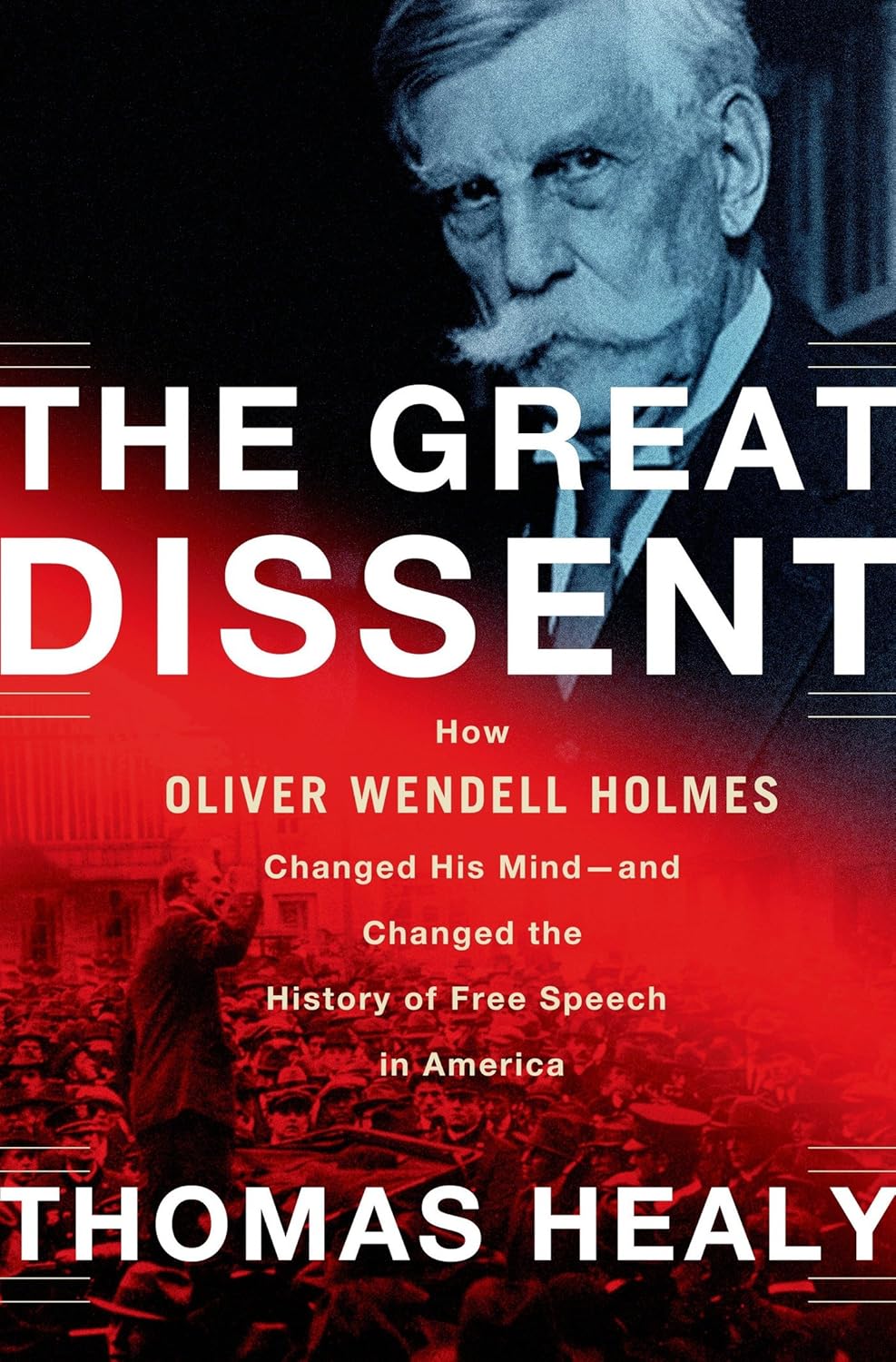
For Wall Street Journal subscribers, there is a review of Thomas Healy's The Great Dissent (Metropolitan), as well as a review of Lawrence J. Vale's Purging the Poorest: Public Housing and the Design Politics of Twice-Cleared Communities (Chicago). Of Vale's work, the reviewer writes,
Robert D. Sloane has posted a review of James Q. Whitnman, The Verdict of Battle: The Law of Victory and the Making of Modern War (Harvard University Press) on SSRN (forthcoming in American Journal of International Law).
For those heading back to the classroom this month, the New York Times reviews Why Teach? In Defense of a Real Education (Bloomsbury), by Mark Edmundson, an English professor at the University of Virginia.
And for those of you who'd like to check out a few reviews of the summer reads that our guest blogger, Sally Gordon, recommended earlier this week, try these:
"Covering the time from Thatcher's birth up to her role in the Falklands war in 1982, Margaret Thatcher: From Grantham to the Falklands is one of two projected volumes; but this is already a major study of a pivotal leader—indeed, it is already one of the greatest biographies in the English language."
HistoryToday reviews City Water & City Life:Water and the Infrastructure of Ideas in Urbanizing Philadelphia, Boston and Chicago (University of Chicago Press), by Carl Smith here.H-Net has added two reviews of interest: editors Keith M. Brown and Alastair J. Mann's The History of the Scottish Parliament, Volume 3, Parliament in Context, 1235-1707 (Edinburgh University Press) here; and a second review of both John Ashworth's The Republic in Crisis, 1848-1861 (Cambridge University Press) and the edited volume A Political Nation: New Directions in Mid-Nineteenth-Century American Political History (Gary W. Gallagher, Rachel A. Shelden, eds.) (University of Virginia Press).
The Washington Post reviews Mac Griswold's The Manor, a cultural landscape history of a slave plantation here. (Another review of the book was included in a prior book roundup post here.) The reviewer describes the book:
"“The Manor” traces the history of the house and its inhabitants, quickly leaving the garden behind to explore archaeology and research that range from West Africa to Barbados and back to Shelter Island. When Griswold stumbled upon the place, it was inhabited by Andrew and Alice Fiske, descendants of the original owners, Nathaniel and Grizzell Sylvester. Called Sylvester Manor, the house had been in the family in an unbroken line since the 1650s, providing an extraordinary lens with which to view a complex American story about (among other things) race, religion and the history of slavery in the North — largely documented."
The Washington Post also reviews Mistrial: An Inside Look at How the Criminal Justice System Works . . . and Sometimes Doesn’t (Gotham) by Mark Geragos and Pat Harris.Salon has published excerpts from In Spies We Trust: The Story of Western Intelligence (Oxford), by Rhodri Jeffreys-Jones.
For Wall Street Journal subscribers, there is a review of Thomas Healy's The Great Dissent (Metropolitan), as well as a review of Lawrence J. Vale's Purging the Poorest: Public Housing and the Design Politics of Twice-Cleared Communities (Chicago). Of Vale's work, the reviewer writes,
"The beauty of Mr. Vale's book is that as a scrupulous scholar he lays out his two case studies with all the careful detail you as a reader need to judge his conclusions. But in the end, the reformist approach exemplified by Ms. Glover is probably correct. "Poverty does not have to be a permanent condition covering multiple generations," she has said. "And we should not establish housing programs on the assumption that it is.""
Robert D. Sloane has posted a review of James Q. Whitnman, The Verdict of Battle: The Law of Victory and the Making of Modern War (Harvard University Press) on SSRN (forthcoming in American Journal of International Law).
For those heading back to the classroom this month, the New York Times reviews Why Teach? In Defense of a Real Education (Bloomsbury), by Mark Edmundson, an English professor at the University of Virginia.
And for those of you who'd like to check out a few reviews of the summer reads that our guest blogger, Sally Gordon, recommended earlier this week, try these:
- An October 2012 New York Times review, and an August 2012 Slate review by Eric Posner, of John Fabian Witt's Lincoln's Code.
- A 1998 H-Net review of James C. Scott's Seeing Like a State, as well as an April 1998 review (with a link to the first chapter) in the New York Times.
- A 2012 review of Sarah Osborn's World: The Rise of Evangelical Christianity in Early America by Catherine A. Brekus, from Books and Culture, and a second review here from Christianity Today.
- Last but not least, Beyond the Blurb reviewed Martin Walker's Bruno, Chief of Police in 2011.
Weekend Roundup
- From the Atlantic: Geoff Shepard writes about new documents that have surfaced from the "Watergate cover-up trial" and wonders about "justice denied."
- In related news, the Nixon Library has released the final batch of White House tapes and the State Department has released "Foreign Relations, 1969-1976, Volume XXXIII, SALT II, 1972-1980." (Hat tip: History News Network)
- H-Net has begun to migrate to a new platform, H-Net Commons. Read the full announcement here.
- The National Archives has an interesting new blog: Rediscovering Black History. It spotlights documents, photographs and videos that archivists found while updating NARA's black history guide. (Hat tip: H-Net)
- New from the Folio Society: An Expression of the American Mind: Selected Writings of Thomas Jefferson, edited and introduced by R. B. Bernstein.
Chadwick on Prisoners, Spies and Deserters in WW1
Elizabeth Chadwick, Nottingham Law School, has posted The Second Death of Ilya Pavlovitch Bjuscheff: The Legal Position of Prisoners, Spies and Deserters During World War 1, which first appeared in Revue de Droit Militaire et de Droit de la Guerre 36 (1997): and was republished in the Nottingham Law Journal 13 (2004): 1-19. Here is the abstract:
The article is a legal analysis of Zweig’s fictionalised account, published in 1927, of a true story which occurred in German occupied territory during World War 1. 'The Case of Sergeant Grischa' concerns a Russian prisoner of war who escapes his labour camp, is recaptured wearing the clothes of a dead German soldier, and subsequently tried and executed as a spy by German occupying forces, even though his true identity, status, and purpose in escape were by then known. In this examination, the very limits of law during ideological, industrialised warfare are illustrated by means of the repercussions on one man, who essentially is left alone to struggle against the breach of known, ‘civilised’ rules of warfare regarding the treatment of prisoners, spies and deserters.
The article considers Grischa’s case through the lens of the international laws of armed conflict in force at the time. First, the origin and evolution in the 19th and early 20th centuries of what is today known as the International Humanitarian Law of Armed Conflict are introduced, after which specific provisions of the Hague Conventions 1899 and 1907, and Geneva Conventions 1864 and 1906, as they applied to prisoners of war, are outlined. The customs and usages of war found in contemporaneous military manuals supply additional details regarding the acceptable treatment of spies and deserters, while the laws governing enemy occupied territory – on which Grischa was initially imprisoned, escaped, recaptured, tried and executed – form the backdrop. Most troublesome is the human element, as a high degree of ideological and socio-economic rivalry existed not only between the main German officers in charge of Grischa’s case, but between the enemy belligerents.

Dhondt on Diplomatic History as "International Law in Action"
Frederik Dhondt, Research Foundation Flanders/Legal History Institute, Ghent University, has posted Looking Beyond the Tip of the Iceberg: Diplomatic Praxis and Legal Culture in the History of Public International Law, which is to appear in the trilingual Rechtskultur - Zeitschrift für Europäische Rechtsgeschichte/European Journal of Legal History/Journal Européen d'histoire du Droit 2 (2013). Here is the abstract:
Historians of Public International Law traditionally start their inquiries in doctrine or look at established source-edition series, focusing mainly on treaties. However, a close reading of diplomatic correspondence can uncover "law in minds" or "the life of the law", and instruct us on the practical use of international legal argument. The present contribution is based on the theoretical and methodological part of my Ph.D.-thesis, which dealt with two cases. On one hand, French and British diplomacy in the early eighteenth century (1713-1740), based on primary archival sources. On the other, French contestation of the bipolar Cold War-order, based on edited French and West German correspondence. In both cases, anti-hegemonic, state-consent based arguments derived from international law from the vector in which third-party adherence is sought. I argue that this model is fundamental to European international relations. Diplomatic legal culture helps us explain how international order can be maintained without institutions. Tackling this issue requires training both in diplomatic history and international law, and considerably enhances our understanding of law's operation in between watershed events or landmark international treaties.
Borgwardt on Human Rights at the UN 1945
Elizabeth Borgwardt, Washington University in St. Louis, will present a public lecture, "'Present at the Creation?' Human Rights, NGOs, and the Trusteeship Debate at the 1945 UN San Francisco Conference," on Tuesday, July 16, 2013 at 4 p.m. in Room LJ119, Jefferson Building, Library of Congress. The event is sponsored by the National History Center and the Eighth International Seminar on Decolonization:
This talk is the story of how "human rights" ideas and institutions found their way into the 1945 United Nations Charter, after having been left out of earlier drafts of that document. Accordingly, this research analyses the role of "modern" public opinion sampling, the carefully cultivated role of non-governmental organizations, as well as the role of unintended consequences for U.S. diplomacy around issues of race, decolonization, and trusteeship. This story also addresses constraints and contradictions within the Charter itself around protecting domestic jurisdiction and minimizing the role of "smaller" countries.Information on two related public lectures this month is here.
Fromer on a 19th-Century Trade Secrecy Case
Jeanne C. Fromer, NYU Law, has posted A Legal Tangle of Secrets and Disclosures in Trade: Tabor v. Hoffman and Beyond, which is forthcoming in Intellectual Property at the Edge: The Contested Contours of IP, ed. Rochelle Cooper Dreyfuss and Jane C. Ginsburg (Cambridge University Press, 2013). Here is the abstract:
In this book chapter, I explore an early trade secrecy case from New York, Tabor v. Hoffman, decided in 1889. A study of this case indicates that many present-day concerns about overlapping edges between trade secrecy and patent laws — and their interaction and interference with one another's aims — were latent, if not overtly raised, when American courts were just beginning to articulate the common law right of trade secrecy. After telling Tabor’s tale, I investigate some of the longstanding interactions and tensions between trade secrecy and patent laws, through the lens of the regimes’ encouragements of disclosure in some ways and secrecy in others. Moreover, even though trade secrecy law is predominantly focused on secrecy, in some ways it enables disclosure. By contrast, although patent law is preoccupied with disclosure, in some ways, it permits and encourages secrecy. In all, patent law and trade secrecy together create a legal tangle of secrets and disclosures in trade. A full review of the Tabor case suggests that the innovator there was able to take advantage both of trade secrecy’s disclosures and patent law’s secrets. The court did not appreciate this possibility, instead focusing on the unfairness to the plaintiff of the defendant’s appropriation.
Shaviro reviews Steil, "The Battle of Bretton Woods"
Over at JOTWELL, Daniel Shaviro (New York University) has posted a review of Benn Steil, The Battle of Bretton Woods: John Maynard Keynes, Harry Dexter White, and the Making of a New World Order (Princeton University Press, 2013). Here are the first two paragraphs:
It’s always nice when you can combine outside reading for fun with something that is educational and at least indirectly professionally relevant. Benn Steil’s economic and diplomatic history of the 1944 Bretton Woods conference, which established the post-World War II global framework for currency relationships and international trade (while also creating the International Monetary Fund and the World Bank) filled this niche for me during a quiet weekend. While the subject is not literally or directly related to taxation, it touches so closely on finance, macroeconomic policy, and international trade as to occupy a common universe with overlapping concerns.

The book tells a lively story, in which U.S. Treasury economist Harry Dexter White – an ardent economic nationalist yet also a Soviet mole – thoroughly squelched the great English economist John Maynard Keynes (the U.K.’s chief negotiator) in establishing the postwar regime for trade, currency, and capital flows. With the U.S. economically dominant and the U.K. reduced to begging for loans, Keynes would have had no chance even had he been better at converting his analytical and epigrammatic skills into diplomatic ones.Read on here.
Weiner's Worlds of Law
Over on Worlds of Law, Marc Weiner, a former guest blogger, has three interesting posts:
- Sharp's Numbers, about Blackstone's Commentaries and a book owned by Granville Sharp housed in the Yale rare books collection
- Maine Meets Maine, a video reflection on the historical significance of the cattle pound, joining the State of Maine and Henry Sumner Maine.
- A thread on E.B. White and international law, and more generally about certain characteristics of the midcentury legal imagination. The final post is "Why International Law is Like Webster's Third Dictionary (at least, for E.B. White)."
Ruskola's "Legal Orientalism"
Teemu Ruskola, Emory Law, has just published Legal Orientalism: China, the United States, and Modern Law, with the Harvard University Press:
Read more »
TOC here; blurbs after the jump.Since the Cold War ended, China has become a global symbol of disregard for human rights, while the United States has positioned itself as the world’s chief exporter of the rule of law. How did lawlessness become an axiom about Chineseness rather than a fact needing to be verified empirically, and how did the United States assume the mantle of law’s universal appeal? In a series of wide-ranging inquiries, Teemu Ruskola investigates the history of “legal Orientalism”: a set of globally circulating narratives about what law is and who has it. For example, why is China said not to have a history of corporate law, as a way of explaining its “failure” to develop capitalism on its own? Ruskola shows how a European tradition of philosophical prejudices about Chinese law developed into a distinctively American ideology of empire, influential to this day.
The first Sino–U.S. treaty in 1844 authorized the extraterritorial application of American law in a putatively lawless China. A kind of legal imperialism, this practice long predated U.S. territorial colonialism after the Spanish–American War in 1898, and found its fullest expression in an American district court’s jurisdiction over the “District of China.” With urgent contemporary implications, legal Orientalism lives on in the enduring damage wrought on the U.S. Constitution by late-nineteenth-century anti-Chinese immigration laws, and in the self-Orientalizing reforms of Chinese law today. In the global politics of trade and human rights, legal Orientalism continues to shape modern subjectivities, institutions, and geopolitics in powerful and unacknowledged ways.
Read more »
Ruskola on "The Invention of American Imperial Sovereignty"
Teemu Ruskola, Emory University School of Law, has posted Canton is Not Boston: The Invention of American Imperial Sovereignty, which originally appeared in the American Quarterly: 57 (September 2005): 859-84. Here is the abstract:
Although the United States began its international legal career in 1776 as an outlaw, a rebel against the European legal order, it soon established itself as a juridical equal among the so-called Family of Nations, consisting of “civilized” European states. Yet it is a remarkable historical fact that when the British launched the Opium War in 1839 to coerce China to participate in free trade (freedom of trade not including the right not to buy opium), most Americans sided with the Chinese, against the British. With confiscated British opium being flushed into the Canton harbor, the events echoed the still not-so-distant Boston Tea Party — two heroic acts of struggle against British imperial interventions in trade, in China and America, respectively. However, after China was indeed successfully opened for “free trade” at the end of the Opium War, in 1844 President Tyler sent the first American minister to China to negotiate a trade treaty that would create a framework for American participation in the that trade as well as the basis of the United States’ political and legal relations with China until 1943. Tyler’s plenipotentiary Caleb Cushing — a New England lawyer as well as future U.S. Attorney General — ended up exceeding his instructions and (with the backing of gunboats), negotiating an extraordinary Treaty of Peace, Trade, and Amity which ultimately placed China in a semi-colonial relationship vis-à-vis the United States. Most notably, the Treaty of Wanghia of 1844 gave Americans the privilege of extraterritoriality: even while on sovereign Chinese territory, American citizens would not be subject to “despotic” Chinese law, until such time that the Chinese had created a “civilized” (i.e., modern liberal) legal regime. This article tells the little-known story of the beginnings of Sino-American legal relations and of the foundation it laid for the emergence of an extraterritorial empire of U.S. law in the Asia Pacific, ultimately ranging from China to Japan, Korea to Siam, Borneo to Tonga, and beyond. Long before the United States came to practice European-style territorial imperialism at the conclusion of the Spanish-American War 1898, the United States became a global leader in the institutionalization of a kind of legal imperialism in the Orient. In addition to analyzing the history of U.S. extraterritorial jurisdiction in Asia, this article outlines the changing global claims to sovereignty among Europe, the United States, and China over the course of the nineteenth century.
AJLH 53:2
 The April 2013 issue of the American Journal of Legal History is out. Here are the two articles:
Slavery, Executive Power and International Law:
The Haitian Revolution and American Constitutionalism . . . Robert J. Reinstein
The Marketing of Legal Services in the United States, 1855-1912:
A Case Study of Guggenheimer, Untermyer & Marshall
of New York City and the Predecessor Partnerships . . . . . Richard A. Hawkins


