The Department of International Studies in the School of Global and International Studies, College of Arts and Sciences, Indiana University, invites applications for a senior position in human rights, to begin August 2014. Qualified full and advanced associate professors are encouraged to apply, particularly those working in the areas of philosophy, history, political theory, cultural anthropology, cultural studies, or critical and/or public interest approaches to law (Ph.D. required). Candidates should have an outstanding research record with commensurate undergraduate and graduate teaching and mentorship, along with a commitment to studying global imperatives, structures, and formations alongside regional, linguistic, historical, political, and cultural particularities.For more information, follow the link.
Indiana University Seeks Human Rights Scholar
Via H-Law, we have the following job posting:

CFP: "Beyond Merchant and Missionary: Samuel Moyn and the quest for a holistic history of Human Rights, 1945-present"
Via H-Net, we have the following Call for Papers: Beyond Merchant and Missionary: Samuel Moyn and the quest for a holistic history of Human Rights, 1945-present. Here's the announcement:
With this conference we are making way for a new, comprehensive and interdisciplinary analysis of Human Rights history (1945-2013). We are bringing together different disciplines, but also renowned academics and talented young professionals. We intend to trigger those who study Human Rights to ask new questions and those who are working in a in an adjacent field to include the concept of Human Rights and the ideas of the Human Rights movement, and to face legal-philosophical complexity in their analysis.Read more »
In the last couple of years, in the United States, many books have been published on the post-War history of Human Rights. Especially Samuel Moyn’s contribution has made some challenging points. The modern concept of human rights, he says, differs radically from older claims of rights, like those that arose out of the French Revolution. According to Moyn, human rights in their current form can be traced not to the Enlightenment, nor to the humanitarian impulses of the 19th century nor to the impact of the Holocaust after World War II. Instead, he sees them as dating from the 1970s, exemplified by the efforts of the Carter presidency to make human rights a pillar of United States foreign policy and the Helsinki Accords.
Weekend Roundup
- Around the web, friends and admirers continue to pay tribute to Pauline Maier (1938-2013). MIT's obituary is here; the New York Times write-up is here; the Washington Post's, here. Chris Beneke penned a nice note here, at the Historical Society. (A taste: "Maier treated her fellow historians with the same honest consideration that she tendered her historical subjects, remaining ever open to the possibility that the lowly might possess more insight than their better appointed counterparts (as well as the possibility that they might be out of their senses).").
- I love the opening to this op-ed, by Catherine O'Donnell (Arizona State University): "I am an historian with a secret. I don’t think studying the past tells us what to do in the present. I should qualify that: If you are considering whether to invade Russia in winter, history provides the answer." The rest is good, too. (Hat tip- History News Network) (KMT)
- From In Custodia Legis: a compilation of unusual (from today's perspective) and now defunct laws from the United Kingdom, including "the common law offense of being a 'common scold'" and the statutory offense of gambling in a library.
- The Summer 2013 issue of Common-place is out. Readers may be interested in 's contribution, "A Loyalist Guarded, Re-guarded, and Disregarded: The Two Trials of Mather Byles the Elder."
- From the Atlantic: "Civil Rights, Cambodia, and Cuba: Memos That Made History. A newly released collection of legal documents reveals what high officials thought about the major events of their times."
- The Spring 2013 issue of Canadian Issues includes a few articles of interest, one on federalism and one on human rights law. (Hat tip: Canadian Legal History Blog)
Borgwardt on Human Rights at the UN 1945
Elizabeth Borgwardt, Washington University in St. Louis, will present a public lecture, "'Present at the Creation?' Human Rights, NGOs, and the Trusteeship Debate at the 1945 UN San Francisco Conference," on Tuesday, July 16, 2013 at 4 p.m. in Room LJ119, Jefferson Building, Library of Congress. The event is sponsored by the National History Center and the Eighth International Seminar on Decolonization:
This talk is the story of how "human rights" ideas and institutions found their way into the 1945 United Nations Charter, after having been left out of earlier drafts of that document. Accordingly, this research analyses the role of "modern" public opinion sampling, the carefully cultivated role of non-governmental organizations, as well as the role of unintended consequences for U.S. diplomacy around issues of race, decolonization, and trusteeship. This story also addresses constraints and contradictions within the Charter itself around protecting domestic jurisdiction and minimizing the role of "smaller" countries.Information on two related public lectures this month is here.
McAward on McCulloch and the Thirteenth Amendment
Jennifer Mason McAward, Notre Dame Law School, has posted McCulloch and the Thirteenth Amendment, which appeared in the Columbia Law Review 112 (2012). Here is the abstract:
Section 2 of the Thirteenth Amendment gives Congress the “power to enforce” the ban on slavery and involuntary servitude “by appropriate legislation.” The conventional view of Section 2 regards this language as an allusion to McCulloch v. Maryland’s explication of Congress’s executory powers, and holds that Congress has substantial, and largely unreviewable, power to determine both the ends and the means of Section 2 legislation.
This Essay argues that the conventional view departs from the original meaning of Section 2. It demonstrates that McCulloch preserved a role for judicial review with respect to both the ends and means of federal legislation. This role was clearly part of the understanding and anticipated application of McCulloch by the time the Thirteenth Amendment was ratified and the Civil Rights Act of 1866 enacted. This Essay concludes that Section 2 preserves a role for meaningful judicial review and grants Congress power to regulate conduct that threatens the reinvigoration of slavery or involuntary servitude, but not near-plenary power over all civil or human rights.
Signposts for an Alternative History of Human Rights
Recently published is the collection of essays, Human Rights from a Third World Perspective:Critique, History and International Law, ed. José-Manuel Barreto (Cambridge Scholars Publishing, 2013). Part II, “Signposts for an Alternative History of Human Rights,” consists of the following essays:
"Imperialism and Decolonization as Scenarios of Human Rights History," by José-Manuel Barreto
"Las Casas, Vitoria and Suárez, 1514-1617," by Enrique Dussel
"The Dual Haitian Revolution and the Making of Freedom in Modernity," by Anthony Bogues
"Love, Justice and Natural Law: On Martin Luther King, Jr., and Human Rights," by Vincent W. Lloyd
"Human Rights, Southern Voices: Yash Ghai and Upendra Baxi," by William Twining
"Imperialism and Decolonization as Scenarios of Human Rights History," by José-Manuel Barreto
"Las Casas, Vitoria and Suárez, 1514-1617," by Enrique Dussel
"The Dual Haitian Revolution and the Making of Freedom in Modernity," by Anthony Bogues
"Love, Justice and Natural Law: On Martin Luther King, Jr., and Human Rights," by Vincent W. Lloyd
"Human Rights, Southern Voices: Yash Ghai and Upendra Baxi," by William Twining
Weekend Roundup
- On June 27, 2013, Morehead State University will host a Federalism Symposium featuring "academic presentations of research from scholars across the nation with expertise on federalism and intergovernmental relations." For information on how to submit a proposal, follow the link. (Hat tip: H-Law)
- The latest issue of the Journal of Legal Education contains several reviews of interest: Laurie L. Levenson (Loyola Law School, Los Angeles) reviews The People's Courts: Pursuing Judicial Independence in America, by Jed Handelsman Shugerman; Mónica Pinto (University of Buenos Aires Law School) reviews The Human Rights Culture: A Study in History and Context, by Lawrence M. Friedman; and Thomas E. Baker (Florida International University College of Law) reviews Five Chiefs: A Supreme Court Memoir, by John Paul Stevens.
- Via the Historical Society: "The New York City Municipal Archives has put on-line more than 800,000 images." Check them out here.
- All you doctoral students working on immigration law and related topics: "The Immigration and Ethnic History Society announces its first annual award for an outstanding dissertation in the field of immigration and ethnic history." Follow the link for more. (Hat tip: H-Law)
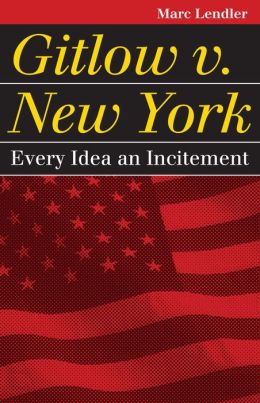
- Marc Lender discusses his book on Gitlow v. New York in Kansas's Landmark Law and American Society series here.
- From the new Environment, Law and History blog: a post on environmental history and capitalism in the Supreme Court's recent patent decision (Monsanto v. Bowman).
- "In a meadow on the banks of the Thames a King and his barons made peace on June 15th, 1215 through a great charter or "Magna Carta." Little did they know that they were laying the foundation for future democracies through a simple but unbreakable idea that would endure for centuries: that no one, not even a King, is above the law of the land." Want more of the same? Go to London this summer on Pepperdine Law's week-long study abroad program, English Legal History in the 800th Anniversary of the Magna Carta"

Law Day at the Law Library of Congress
 |
| Credit: ABA |
The Law Library explains that the program
will be held at 1 p.m. on Wednesday, May 1, in the Mumford Room, located on the sixth floor of the Library’s James Madison Building, 101 Independence Ave. S.E., Washington, D.C. The event is free and open to the public; tickets are not required.
Carrie Johnson, justice correspondent for National Public Radio, will moderate a panel discussion on the movement in America for civil and human rights and the impact it has had in promoting the ideal of equality under the law. . . . Distinguished panelists will include Sherrilyn Ifill, president and director-counsel for the, NAACP Legal Defense and Educational Fund, Inc.; Jeffrey Rosen, professor of law at The George Washington University and legal affairs editor of The New Republic; Risa L. Goluboff, professor of law and history at the University of Virginia and scholar in residence at the John W. Kluge Center in the Library of Congress; and Kirk Rascoe, director of Opportunity, Inclusiveness and Compliance at the Library of Congress.


