[We have the following call for papers.]
The University of Southern California Center for Law, History & Culture, UCLA School of Law, Columbia Law School, and Georgetown University Law School invite submissions for the tenth meeting of the Law & Humanities Junior Scholar Workshop to be held at USC School of Law in Los Angeles, CA on June 8 & 9, 2014.
PAPER COMPETITION:
The paper competition is open to untenured professors, advanced graduate students, and post-doctoral scholars in law and the humanities; in addition to drawing from numerous humanistic fields, we welcome critical, qualitative work in the social sciences. Based on anonymous evaluation by an interdisciplinary selection committee, between five and ten papers will be chosen for presentation at the June Workshop. At the Workshop, two senior scholars will comment on each paper. Commentators and other Workshop participants will be asked to focus specifically on the strengths and weaknesses of the selected scholarly projects, with respect to subject and methodology. The selected papers will then serve as the basis for a larger conversation among all the participants about the evolving standards by which we judge excellence and creativity in interdisciplinary scholarship, as well as about the nature of interdisciplinarity itself.
Papers should be works-in-progress between 10,000 and 15,000 words in length (including footnotes/endnotes), and must include an abstract of no more than 200 words. A dissertation chapter may be submitted, but we strongly suggest that it be edited so that it stands alone as a piece of work with its own integrity. A paper that has been submitted for publication is eligible so long as it will not be in galley proofs or in print at the time of the Workshop. The selected papers will appear in a special issue of the Legal Scholarship Network; there is no other publication commitment. The Workshop will pay the travel and hotel expenses of authors whose papers are selected for presentation.
Submissions (in Word, no pdf files) will be accepted until January 6, 2014, and should be sent by e-mail to:? Center for the Study of Law and Culture,culture@law.columbia.edu. Please be sure to include your name, institutional affiliation (if any), telephone and e-mail contact information.
For more information contact Cindy Gao, 212.854.0167 or culture@law.columbia.edu. Past winners are here.

Friedman's Introduction to "Law and the Modern Condition"
Lawrence Friedman, New England Law, has posted the Introduction to Law and the Modern Condition: Literary and Historical Perspectives, ed. Lawrence Friedman (Talbot Publishers, 2013). Here is the abstract:
Using fiction as a lens through which to view particular developments in the law, each of the essays in the new book, Law and the Modern Condition: Literary and Historical Perspectives (Talbot Publishing, 2013), discusses a work of literary fiction — some classical (the tale of Ruth in the Bible, the fiction of Franz Kafka and Herman Melville, the plays of William Shakespeare) some modern (the post-September 11 fiction of William Gibson, Ken Kalfus, Claire Messud, Ian McEwan and Helen Schulman) — that concerns, directly or indirectly, the historical development of the law. This exploration of legal history through fiction pays particular attention to its relevance to our present circumstances and our growing concerns about terrorism and civil liberties. Each essay considers the legal lessons about the fictional event or events at its core, lessons that tell us something worth remembering as we continue to chart law’s evolution. These lessons, like those that may be found in all great literature, necessarily extend beyond the historical confines of the characters and plot and background of each story to embrace the modern condition — which, as these great stories suggest, is and always has been the only condition.
Perry on English Legal Rhetoric Books
Lisa Perry, College of San Mateo, has published her 1998 dissertation, Legal Rhetoric Books in England, 1600-1700, on Kindle. In it, she argues
that the legal treatises and handbooks common lawyers read were also rhetoric books which assisted in the rhetorical education and practice of lawyers. The instruction in rhetoric contained in these legal treatises supplemented and eventually replaced rhetorical instruction in the Inns of Court. These legal rhetoric books can be placed into three categories: method books, legal commonplace treatises, and pleading manuals. In this dissertation I present a detailed textual analysis of works in each category, exploring and discussing the rhetorical aspects of each. The existence of three discernible types of rhetorical treatises sheds new light on a hitherto overlooked area of forensic rhetorical theory in the English renaissance, and these treatises should be included within the recognized canon of renaissance rhetorical treatises.
Brophy on Popular Constitutionalism and the Antebellum Cemetary
Alfred L. Brophy, University of North Carolina Law, has posted “These Great and Beautiful Republics of the Dead”: Public Constitutionalism and the Antebellum Cemetery. Here is the abstract:
 |
| Mt. Auburn Cemetery (Credit: LC) |
“Public Constitutionalism and the Antebellum Cemetery” joins the growing literature on public constitutionalism by focusing on the seventy addresses given at cemetery dedications from Supreme Court Justice Joseph Story’s address at Mount Auburn Cemetery in Cambridge, Massachusetts, in 1831, through the addresses of Edward Everett and Abraham Lincoln at Gettysburg in November 1863. The addresses were part of a vibrant public discussion of constitutional principles, which spanned such diverse occasions as July Fourth celebrations, arguments in great constitutional cases (like Daniel Webster’s Dartmouth College argument), dedication of public monuments (like Daniel Webster’s speech at the placement of the cornerstone of the Bunker Hill Monument in 1824), lyceum addresses, and college literary society lectures. For Americans, especially those of the Whig Party, the Constitution was a key component of culture and a key unifier of the nation.
Rural cemeteries provided support for such constitutional values. They brought beauty and order to the landscape; they served to mediate an impersonal, commercial world and brought uplift through the lessons of morality and patriotism that people learned when they visited the cemeteries. The cemetery supported constitutional values of Union, respect for property, and obedience to the rule of law. For visitors to the cemetery learned about the importance of each of those values at the cemetery. It was an instructor of values; its ordered lanes and graves also served as a sign of the health of the Christian republic. For the cemetery fulfilled duties owed the past. The cemetery inspired sentiments of love of family and country. People would leave the cemetery inspired to preserve the United States as a Christian republic. Finally, these abstract ideas were promoted through private charitable corporations. Those private organizations brought the community together to promote the republic.
The cemeteries were, thus, one important institution – along with the schools, churches, civic associations, and businesses – that helped create and preserve the Union. The cemetery dedication addresses, like other addresses designed to promulgate constitutional ideas, mixed appeals to economics, morality, religion, and political theory with legal and constitutional ideas. Rural cemeteries promoted Whig constitutional ideals about order, patriotism, and Union. Those values were at the center of the debate over the response to secession and they were put into practice by soldiers along Cemetery Ridge at Gettysburg in 1863. Lincoln’s address at Gettysburg, thus, reflects the appeals to sentiment and Constitution that were so frequently invoked in the thirty years before the War.
This article reveals an important and neglected role of oratory in disseminating constitutional ideas, as well as the significance of rural cemeteries to public constitutional thought. This hidden history reveals how those ideas mobilized support for Union and, thus, how public constitutional thought affects the actions of voters, jurists, and politicians.
Dedek on Tristam Shandy and Individual Rights
Helge Dedek, McGill University Law, has posted De Iure Homini et Homunculi: Rights, Tristram Shandy, and the Legal Language of Isolation, which is forthcoming in Rechtsanalyse als Kulturforschung, ed. Werner Gephart & Jan Christoph Suntrup (Frankfurt am Main: Vittorio Klostermann, 2013). Here is the abstract:
In Laurence Sterne’s 1759 comic novel, Tristram Shandy, we encounter a startling invocation of protected individual rights, the individual in this case being the hapless proto-human Homunculus destined to become the titular character. Decades before the revolutionary declarations of rights, Sterne, Thomas Jefferson’s favorite author in matters of moral philosophy, blatantly ridicules the idea of the self-evidence of rights. Sterne’s satirical “rights-talk” captures two important facets: the atomistic, alienating aspect of perceiving human relations through the lens of rights, as famously criticized by Marx and so many others ever since; and the way in which drawing on genuinely legal concepts has contributed to the development of this often criticized language of isolation. In this paper, I trace, in particular, the ideas of Natural law scholars like Grotius and Pufendorf (who is explicitly referred to by Sterne) who conceptualized rights as non-relational, as domains, modeled on the Roman law concepts of dominium, ownership, and patria, the power of a pater familias over his household, both concepts that are characterized by domination over objects or human beings. Yet a theory of rights that insists on the integrity of exclusive spheres of power cannot easily accommodate non-transgressive intersubjective action – most importantly, contract. Nonetheless, the rhetoric of the protected sphere of the subjective right never left the language of law.
Chadwick on Prisoners, Spies and Deserters in WW1
Elizabeth Chadwick, Nottingham Law School, has posted The Second Death of Ilya Pavlovitch Bjuscheff: The Legal Position of Prisoners, Spies and Deserters During World War 1, which first appeared in Revue de Droit Militaire et de Droit de la Guerre 36 (1997): and was republished in the Nottingham Law Journal 13 (2004): 1-19. Here is the abstract:
The article is a legal analysis of Zweig’s fictionalised account, published in 1927, of a true story which occurred in German occupied territory during World War 1. 'The Case of Sergeant Grischa' concerns a Russian prisoner of war who escapes his labour camp, is recaptured wearing the clothes of a dead German soldier, and subsequently tried and executed as a spy by German occupying forces, even though his true identity, status, and purpose in escape were by then known. In this examination, the very limits of law during ideological, industrialised warfare are illustrated by means of the repercussions on one man, who essentially is left alone to struggle against the breach of known, ‘civilised’ rules of warfare regarding the treatment of prisoners, spies and deserters.
The article considers Grischa’s case through the lens of the international laws of armed conflict in force at the time. First, the origin and evolution in the 19th and early 20th centuries of what is today known as the International Humanitarian Law of Armed Conflict are introduced, after which specific provisions of the Hague Conventions 1899 and 1907, and Geneva Conventions 1864 and 1906, as they applied to prisoners of war, are outlined. The customs and usages of war found in contemporaneous military manuals supply additional details regarding the acceptable treatment of spies and deserters, while the laws governing enemy occupied territory – on which Grischa was initially imprisoned, escaped, recaptured, tried and executed – form the backdrop. Most troublesome is the human element, as a high degree of ideological and socio-economic rivalry existed not only between the main German officers in charge of Grischa’s case, but between the enemy belligerents.

Weekend Roundup
 |
| Image credit |
- We've previously noted the publication of Roadblocks to Freedom, by Andrew Fede. A review has now been published in the (gated) Journal of Southern History.
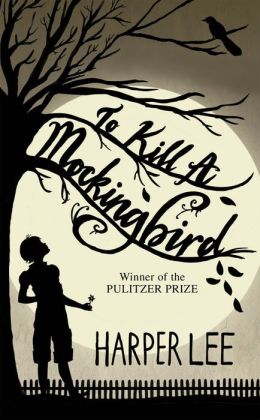
- The ABA Journal invites you to help them choose the winner of the 2013 Harper Lee Prize for Legal Fiction. (Hat tip: In Custodia Legis)
- Mississippi announces plans to build a civil rights museum. (Hat tip: HNN)
- The Spring 2013 issue of the Green Bag is out. LHB readers may be particularly interested in G. Edward White's piece on "the ALI's recent history and current challenges."
- Summer Tips for Visiting Archives from AHA Today.
- The journal is gated and all that’s up on SSRN is an abstract, but be on the lookout for Laura Phillips Sawyer’s study of a landmark in the legal history of free labor, Contested Meanings of Freedom: Workingmen's Wages and the Company Store System, Godcharles v. Wigeman, 1886, which is to appear in the Journal of Gilded Age and Progressive Era (Summer 2013).
- Back in April, Kurt Newman (Ph.D. candidate, University of California, Santa Barbara) wrote a series of posts for the U.S. Intellectual History Blog on “Pragmatism and the Class Politics of Oliver Wendell Holmes, Jr.’s Copyright Jurisprudence.” Check it out here.
- From the Canadian Legal History Blog: an announcement of this year's article and book prize winners from the Osgoode Society for Canadian Legal History.
Murray on "Punishment and the Costs of Knowledge"
Yxta Murray (Loyola Law School Los Angeles) has posted "Punishment and the Costs of Knowledge," which is scheduled to appear in an anthology of essays dedicated to the Irish poet Seamus Heaney (Four Courts Press, 2014). The abstract on SSRN reads as follows:
Read more »
A too-bookish law professor doesn't know if literature has helped refine her position on the death penalty, or just turned her into an insufferable snob: An essay on elitism, bibliomania, confusion, and capital punishment.When Professor Murray contacted us about this essay, we asked whether she had a fuller abstract. She sent back the following text, which both previews the content of the essay (Heaney's poem "Punishment" (1975) is a jumping-off point) and meditates on the scholarly practice of writing an abstract ("What is an abstract, anyway?"):
Read more »


