This article traces the historical development of the Clean Hands Doctrine (CHD), and its ancillary accepted affirmative (obscenity) defense in copyright infringement, and its residual application to pornographic works. As an equitable doctrine, the CHD was an entirely reasonable judicial response to the earliest statutory provision of copyright protection in the early 18th century in England as applied to different forms of literary property and in particular those suspected of having seditious, blasphemous and immoral tendencies. With no statutory guidance regarding substantive (or content) restrictions on extending copyright protection to literary property and generally reticent to rule on a completely discretionary basis, the Chancery court relied on established equitable maxims or principles as ratio for individual rulings, in the process developing an ersatz structure of procedural precedent. In the process, it sequestered content as a procedural issue deferred to law prior to any equitable consideration, leaving unresolved the more substantive issue of whether all works of literary property were eligible for copyright protection, or differentially when and in what forms could literary works be accorded protection.The full article is available here, at SSRN.
The CHD, and more specifically the obscenity defense, was adopted wholesale and with little consideration into American jurisprudence in the 19th century, on occasion nuanced by historical debate over the meaning and intent of the Copyright Clause. Subsequent American statutory delineations for copyright protection, after a few nascent efforts to restrict eligibility to only those works that were original and informative, retreated to a marked absence of discussion of content, throwing judicial consideration of copyright protection almost entirely onto procedural issues, such as registration. By the latter part of the century, courts began to sporadically differentiate between the substantive and procedural elements of the CHD, the former spawning a transforming debate over doctrinal acceptance of the 1868 Hicklin test of obscene tendency and the latter focusing more narrowly the discretionary authority to the Register of Copyrights to reject works of certain content. I argue that this differentiation, and the subsequent obfuscation of obscenity standards resulting from a range of cases leading to and built upon Roth v. U.S. (1957), inevitably led to the appellate ruling in Mitchell Brothers v. Cinema Adult Theater (1979), now generally considered accepted doctrine, that the CHD does not support a substantive exclusion of selected content from copyright protection.
Alexander on the Passing of the Obscenity Defense in Copyright
Here's an article we missed earlier this year: "Evil Angel Eulogy: Reflections on the Passing of the Obscenity Defense in Copyright," by James R. Alexander (University of Pittsburgh at Johnstown). The article appeared in Volume 20 of the Journal of Intellectual Property Law (2013). Here's the abstract:

Birnhack's Microhistories of IP in Mandate Palestine
Michael Birnhack, Tel Aviv University Buchmann Faculty of Law, has posted Copyright Pioneers, which is forthcoming in W.I.P.O. Journal 5 (2013). Here is the abstract:
How did ordinary authors, publishers, copyright owners, and users act and interact within a particular, copyright setting? The historical view of the everyday life of copyright law — the way the law operated in practice — has by and large gone under the radar of mainstream copyright history. Missing from this picture is the micro-level: the nuanced, fragmented, perhaps messy or mundane, local dealings with copyright. Applied to the law, microhistory queries not only the law and its direct history, or the particulars of a judicial decision. A microhistorian legal analysis asks about the context of the events surrounding a case, or about a specific person, trying to better figure out the political, social, and cultural meanings of the developments, going beyond the inevitably limited contours of the judicial opinion or legislation.
Applying the microhistorian lens to copyright law can yield yet-unobserved elements of the big picture, supplementing our understanding of the making and application of the law. The study of specific events can offer explanations for such gaps. By exposing the messiness of the law, micro-analysis supplements or challenges the macro picture. This article suggests that we pay more attention to the people who engaged with copyright in their everyday life: the less powerful authors and publishers, who were not necessarily involved in a major litigation. More specifically, the article wishes to draw attention to authors or intermediaries that changed the law in some aspect, but who acted on their own behalf, protecting or promoting their own interests, rather than under an official role or as self-designated activists. These are copyright pioneers. While they did not necessarily seek a broader change, their engagement with copyright has nevertheless brought such change. I illustrate the relevance of such a lens, by two short case studies from Mandate Palestine (1917-48).
Griffiths, "Dematerialization, Pragmatism and the European Copyright Revolution"
Jonathan Griffiths (Queen Mary University of London, School of Law ) has posted "Dematerialization, Pragmatism and the European Copyright Revolution." It is forthcoming in the Oxford Journal of Legal Studies. Here's the abstract:
Over the last three centuries, a particular model of copyright law has evolved in the United Kingdom. Under this "dematerialised" model, the law’s attention is directed towards an immaterial, malleable essence (identified as, amongst other things, “originality”, “labour and skill” or creativity”). This immaterial essence has come to serve as a touchstone for the resolution of all fundamental questions concerning the scope and attribution of rights under copyright law - as the threshold for legal protection, as a marker of authorship and as the key concept in the assessment of infringement. Nevertheless, some aspects of copyright doctrine have, until very recently, appeared to remain incompatible with this dominant model. In some situations, rather than focusing purely on an abstract form of property that is capable of shifting from form to form, the law has continued to limit the scope of a copyright owner’s powers by reference to the boundaries of the material form with which the work is first recorded. It is argued here that the maintenance of these apparently incompatible aspects of copyright doctrine is not necessarily the product of theoretical incoherence. Rather, the law’s continued ability to regulate some forms of copyright dispute by reference to material form has served an important function in justifying judicial resistance to expansionist pressures.Read more »
O'Connor, "Taking, Tort, or Crown Right?"
Sean M. O'Connor, University of Washington School of Law, has posted Taking, Tort, or Crown Right? The Confused Early History of Government Patent Policy, which appeared in the John Marshall Review of Intellectual Property Law 12 (2012): 145-204. Here is the abstract:
From the early days of the Republic, Congress and the federal courts grappled with the government’s rights to own or use patents it issued. Courts rejected the British "Crown Rights" rule that allowed the sovereign to practice whatever patents it issued. Instead, the federal government was conceptualized as a legal person on par with any other persons with regard to issued patents. But, this simple rule presented challenges as complexities arose in three intertwined patent rights scenarios. The first involved inventions by government employees. The second revolved around government and government contractor use of patents held by private citizens. And the third involved inventions by federal contractors and their employees arising under federal funding. While these three scenarios seem quite distinct today, nineteenth and early twentieth century courts often treated them as overlapping. The confusion was not resolved until the mid-twentieth century when a combination of executive branch and Congressional legislation set the roots of current government patent policy. This Article reviews the history in detail and illuminates current government patent policy debate occurring through such seemingly diverse cases as Stanford v. Roche and Zoltek Corp. v. United States.
Marier and Piper on Canadian Medical Patent Law
Virginie Marier and Tina Piper, McGill University, have posted Early Twentieth-Century Canadian Medical Patent Law in Practice: JB Collip and the Discovery of Emmenin, which originally appeared in the University of Toronto Law Journal 60 (2010): 855-891. Here is the abstract:
In the 1930s, James Bertram Collip (1892-1965) purified, standardized, and then commercialized the hormone Emmenin at McGill University. This focused history of Collip’s development of Emmenin considers how Collip used (and avoided) the legal tools of intellectual property to his advantage, given his complicated place as a scientist/business person/academic/physician inventor in the inter-war era. Collip’s story is significant as a case study as it lends nuance to the picture of the Canadian inventor, shows the daring foresight of early Canadian commercialization business models, and explores the influences that eventually led to the development of university technology transfer offices in Canada. It also highlights germinal moments in the negotiation of standardized agreements and university-industry partnerships. Ultimately, this paper contributes to the task of filling out the history of the development of legal norms regarding intellectual property in Canada by exploring sources outside of case law and legislation to tell a rich story of invention, ownership, and profit.
June 2013 Issue of Reviews in American History
The June 2013 issue of Reviews in American History is out. Although full text is limited to subscribers, we'll spotlight some items of interest:

The Constitution Goes Public: Politics and the Ratification Debate -- Todd Estes (Oakland University) reviews Jürgen Heideking, The Constitution before the Judgment Seat: The Prehistory and Ratification of the American Constitution, 1787–1791 (John P. Kaminski and Richard Leffler, eds.) (University of Virginia Press, 2012).
The Inventor’s Dilemma—The Confederate Version -- William G. Thomas (University of Nebraska, Lincoln) reviews H. Jackson Knight, Confederate Invention: The Story of the Confederate States Patent Office and Its Inventors (Louisiana State University Press).Social Reform through Social Exclusion --Thomas J. Humphrey (Cleveland State University) reviews Craig Calhoun, The Roots of Radicalism: Tradition, The Public Sphere, and Early Nineteenth-Century Social Movements (University of Chicago Press, 2012) and Michele Lise Tarter and Richard Bell, eds., Buried Lives: Incarcerated in Early America (University of Georgia Press, 2012).Officers sans Army -- Erik S. Gellman (Roosevelt University) reviews Shawn Leigh Alexander, An Army of Lions: The Civil Rights Struggle Before the NAACP (Pennsylvania University Press, 2012).
The Many Faces of Judicial Independence -- Charles Zelden (Nova Southeastern University) reviews Jed Handelsman Shugerman, The People’s Courts: Pursuing Judicial Independence in America (Harvard University Press, 2012).
Weekend Roundup
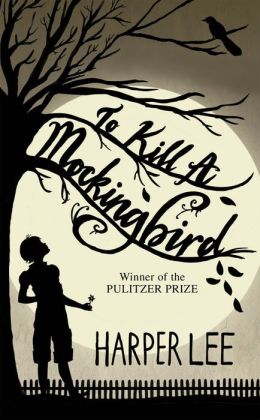 |
| Image credit |
- We've previously noted the publication of Roadblocks to Freedom, by Andrew Fede. A review has now been published in the (gated) Journal of Southern History.
- The ABA Journal invites you to help them choose the winner of the 2013 Harper Lee Prize for Legal Fiction. (Hat tip: In Custodia Legis)
- Mississippi announces plans to build a civil rights museum. (Hat tip: HNN)
- The Spring 2013 issue of the Green Bag is out. LHB readers may be particularly interested in G. Edward White's piece on "the ALI's recent history and current challenges."
- Summer Tips for Visiting Archives from AHA Today.
- The journal is gated and all that’s up on SSRN is an abstract, but be on the lookout for Laura Phillips Sawyer’s study of a landmark in the legal history of free labor, Contested Meanings of Freedom: Workingmen's Wages and the Company Store System, Godcharles v. Wigeman, 1886, which is to appear in the Journal of Gilded Age and Progressive Era (Summer 2013).
- Back in April, Kurt Newman (Ph.D. candidate, University of California, Santa Barbara) wrote a series of posts for the U.S. Intellectual History Blog on “Pragmatism and the Class Politics of Oliver Wendell Holmes, Jr.’s Copyright Jurisprudence.” Check it out here.
- From the Canadian Legal History Blog: an announcement of this year's article and book prize winners from the Osgoode Society for Canadian Legal History.
Cummings's "Democracy of Sound"
Alex Sayf Cummings, an assistant professor in the Department of History at Georgia State University, has recently published Democracy of Sound: Music Piracy and the Remaking of American Copyright in the Twentieth Century (Oxford University Press). Saith the Press:
"Beautifully crafted, intelligently researched, and cogently argued, Democracy of Sound offers readers a compelling analysis of the changing legal status of recorded music in the United States from the 1870s to the present. Many books have been written about intellectual property; few have done more to make its significance accessible to the general reader. It will appeal not only to specialists in American studies, music, and law, but also to anyone who cares about American popular culture, past and present." --Richard John, author of Network Nation
Here’s a blurb that matters:It was a time when music fans copied and traded recordings without permission. An outraged music industry pushed Congress to pass anti-piracy legislation. Yes, that time is now; it was also the era of Napster in the 1990s, of cassette tapes in the 1970s, of reel-to-reel tapes in the 1950s, even the phonograph epoch of the 1930s. Piracy, it turns out, is as old as recorded music itself.
In Democracy of Sound, Alex Sayf Cummings uncovers the little-known history of music piracy and its sweeping effects on the definition of copyright in the United States. When copyright emerged, only visual material such as books and maps were thought to deserve protection; even musical compositions were not included until 1831. Once a performance could be captured on a wax cylinder or vinyl disc, profound questions arose over the meaning of intellectual property. Is only a written composition defined as a piece of art? If a singer performs a different interpretation of a song, is it a new and distinct work? Such questions have only grown more pressing with the rise of sampling and other forms of musical pastiche. Indeed, music has become the prime battleground between piracy and copyright. It is compact, making it easy to copy. And it is highly social, shared or traded through social networks--often networks that arise around music itself. But such networks also pose a counter-argument: as channels for copying and sharing sounds, they were instrumental in nourishing hip-hop and other new forms of music central to American culture today. Piracy is not always a bad thing.
An insightful and often entertaining look at the history of music piracy, Democracy of Sound offers invaluable background to one of the hot-button issues involving creativity and the law.
"Beautifully crafted, intelligently researched, and cogently argued, Democracy of Sound offers readers a compelling analysis of the changing legal status of recorded music in the United States from the 1870s to the present. Many books have been written about intellectual property; few have done more to make its significance accessible to the general reader. It will appeal not only to specialists in American studies, music, and law, but also to anyone who cares about American popular culture, past and present." --Richard John, author of Network Nation


