New Release: Edited Collection on Substantive Law and Procedure in English Legal History

New from Cambridge University Press: Law and Legal Process: Substantive Law and Procedure in English Legal History, edited by Matthew Dyson (University of Cambridge) and David Ibbetson (University of Cambridge).

The Press explains:
This collection of papers from the Twentieth British Legal History Conference explores the relationship between substantive law and the way in which it actually worked. Instead of looking at what the courts said they were doing, it is concerned more with the reality of what was happening. To that end, the authors use a wide range of sources, from court records to merchants' diaries and lawyers' letters. The way in which the sources are used reflects the possibilities of legal historical research which are opening up in the twenty-first century, as large databases and digitised images – and even online auction sites – make it a practical possibility to do work at a level which was almost unthinkable only a short time ago.
TOC after the jump.
Read more »

Hanford on Lord Campbell and the Fatal Accidents Act

Credit
Peter Handford, University of Western Australia Faculty of Law, has posted Lord Campbell and the Fatal Accidents Act, which appears in Law Quarterly Review 129 (21013): 420.  Here is the abstract:    
The object of this article is to examine the events that led to the creation of the Fatal Accidents Act and Lord Campbell’s part in them. It will therefore first briefly review his life and career, and then look in more detail at the old law, its replacement by the new law contained in the Fatal Accidents Act, and the extent of the reform.

McSweeney on Civil and Common Law in Medieval England

Thomas J. McSweeney, William & Mary Law School, has posted two articles.  The first is Property Before Property: Romanizing the English Law of Land, which appeared in the Buffalo Law Review 60 (2012):
We tend to treat the idea of property as if it is a neutral way to speak about the relationship between people and things. In comparative legal studies, it is easier to compare two different cultures’ approaches to people and things when we assume that both can usefully be spoken of in terms of property. But property has a history. Terms like proprietas and possessio, which give the modern common law a vocabulary for speaking about that relationship, arose in the context of the classical Roman law and were worked into a systematic language of property by medieval Roman law scholars. The early common law, however, did not use the language of property to describe the relationship between people and things.
Image Credit: BC Law Library
In this paper, I will examine the period when English justices first attempted to turn English norms and practices concerning landholding into a law of property. Between 1187 and 1258, several justices tried their hands at writing treatises in which they translated English court practices into a systematic property law on the Roman model. The justices of the twelfth and thirteenth centuries, particularly the justices who wrote the treatise known as Bracton, were heavily invested in the idea that English law was part of the Romano-canonical ius commune. They realized, however, that the practices of the English courts and the landholding norms of the Anglo-Norman landed elite could not be made to fit neatly into a Roman law mold. The authors of Bracton embarked upon what we might consider an early exercise in comparative law scholarship. They created several complicated and contradictory schemes to try to express English landholding in Roman law terms, but ultimately failed in their attempts to create a coherent English law of property. Their failure is useful to us, however, in that it shows us very clearly that the language of property is not natural or essential and in that it helps us to understand a way of talking and thinking about landholding that is alien to us today. We can use the ways the Bracton authors creatively misunderstood the Roman law of property to help us to understand the cultures of landholding they came from: those of the English courts and the Anglo-Norman landed elite of the twelfth and thirteenth centuries.
The second is English Judges and Roman Jurists: The Civilian Learning Behind England's First Case Law, which appeared in Temple Law Review 84 (2012):
This Article looks at a historical problem — the first use of case law by English royal justices in the thirteenth century — and makes it a starting point for thinking about the ways legal reasoning works in the modern common law. In the first Part of the Article, I show that, at its origin, the English justices’ use of decided cases as a source of law was inspired by the work civil and canon law scholars were doing with written authorities in the medieval universities. In an attempt to make the case that English law was on par with civil law and canon law, the justices and clerks of the royal courts began to treat cases as if they were the opinions of great jurists, to apply the same types of dialectical reasoning that were used in civil law discourse to those cases, and to work them into systems of authority. They used cases, as the modern common law does; but they used cases to create systems of the kind we usually associate with civil law. In the second Part of the Article, I turn to the modern common law and, using the methods of medieval case law as a mirror, show that the differences between civil law and common law reasoning are more perceived than real. American lawyers tend to view common law as flexible and creative, whereas they view civil law as ossified and hierarchical. This largely stems from the fact that common lawyers focus on the judicial opinion as the place where legal reasoning takes place. By integrating other texts, like the student outline and the restatement — which seek to create a harmonious system out of judicial opinions — into the picture of common law reasoning, I show that common law reasoning shares quite a bit in common with civil law reasoning.

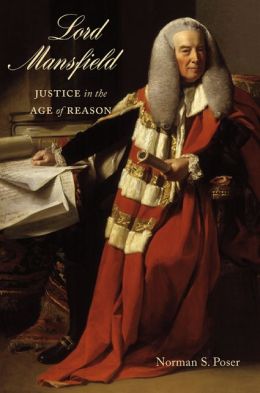
New Release: Poser, "Lord Mansfield: Justice in the Age of Reason"

New from McGill-Queen's University Press: Norman S. Poser, Lord Mansfield: Justice in the Age of Reason (2013). Poser is professor emeritus at Brooklyn Law School. A description from the publisher:
In the first modern biography of Lord Mansfield (1705-1793), Norman Poser details the turbulent political life of eighteenth-century Britain's most powerful judge, serving as chief justice for an unprecedented thirty-two years. His legal decisions launched England on the path to abolishing slavery and the slave trade, modernized commercial law in ways that helped establish Britain as the world's leading industrial and trading nation, and his vigorous opposition to the American colonists stoked Revolutionary fires. Although his father and brother were Jacobite rebels loyal to the deposed King James II, Mansfield was able to rise through English society to become a member of its ruling aristocracy and a confidential advisor to two kings. Poser sets Mansfield's rulings in historical context while delving into Mansfield's circle, which included poets (Alexander Pope described him as "his country's pride"), artists, actors, clergymen, noblemen and women, and politicians. Still celebrated for his application of common sense and moral values to the formal and complicated English common law system, Mansfield brought a practical and humanistic approach to the law. His decisions continue to influence the legal systems of Canada, Britain, and the United States to an extent unmatched by any judge of the past. An illuminating account of one of the greatest legal minds, Lord Mansfield presents a vibrant look at Britain's Age of Reason through one of its central figures.
A few blurbs:
"I read this book with much pleasure and instruction. It admirably fills a major gap in the body of legal historical literature - the absence of a comprehensive biography of arguably the most famous and influential Anglo-American judge of the modern era." -- Simon Devereaux

"A remarkable portrait of both a man and a legal age. I enjoyed the book tremendously, learned so much, and am deeply grateful. A master work." -- Kent Syverud

Conference: Law and Governance in Britain

Via the Canadian Legal History Blog, we have the following announcement:
The University of Western Ontario is holding a conference, Law and Governance in Britain, October 25-26, with an impressive slate of historians from Canada and around the globe.
Here's some additional information, from the conference website:
Over the course of two days we will hear from an international group of social historians of the law that spans the full breadth of career stages, from doctoral students through postdoctoral fellows, young and mid-career faculty and full professors. The temporal focus is on the eighteenth and nineteenth centuries. The theme of these conferences has always been intentionally broad, with speakers asked simply to talk about whatever aspect of their research interests them most at the time. The results have proved rewarding: in 2009 policing emerged as a key topic; in 2013 the relationship between justice and the press is an evident preoccupation for many of our participants. The initial paper thus considers the current historiography relating to crime and the press; one panel concentrates on various components of the newspapers, from law reports and advertisements to letters to the editor; another panel is devoted to press coverage of famous murder trials. We expect, however, that discussion will range widely over the field, covering issues of process and procedure, content and format. Courtrooms include the King's Bench as well as the Old Bailey, and the contribution of habeas corpus to the rule of law is considered. The media theme is not limited to text, but also includes analysis of satirical prints. Recent interest in the history of the emotions is represented in our offerings and foreign nationals' experience of British justice also emerges as a subtheme.

Perry on English Legal Rhetoric Books

Lisa Perry, College of San Mateo, has published her 1998 dissertation, Legal Rhetoric Books in England, 1600-1700, on Kindle.  In it, she argues
that the legal treatises and handbooks common lawyers read were also rhetoric books which assisted in the rhetorical education and practice of lawyers. The instruction in rhetoric contained in these legal treatises supplemented and eventually replaced rhetorical instruction in the Inns of Court. These legal rhetoric books can be placed into three categories: method books, legal commonplace treatises, and pleading manuals. In this dissertation I present a detailed textual analysis of works in each category, exploring and discussing the rhetorical aspects of each. The existence of three discernible types of rhetorical treatises sheds new light on a hitherto overlooked area of forensic rhetorical theory in the English renaissance, and these treatises should be included within the recognized canon of renaissance rhetorical treatises.

Weekend Roundup

      • Prawfsblawg reports that Michael Lobban is moving from Queen Mary to the London School of Economics.
      Weekend Roundup is a weekly feature compiled by all the Legal History bloggers.

      New Release: The Legal Language of Scottish Burghs Standardization and Lexical Bundles (1380-1560)

      New from Oxford University Press: The Legal Language of Scottish Burghs Standardization and Lexical Bundles (1380-1560) by Joanna Kopaczyk (Adam Mickiewicz University, Poland).

      From the publisher: 
      This book offers an innovative, corpus-driven approach to historical legal discourse. It is the first monograph to examine textual standardization patterns in legal and administrative texts on the basis of lexical bundles, drawing on a comprehensive corpus of medieval and early modern legal texts. The book's focus is on legal language in Scotland, where law—with its own nomenclature and its own repertoire of discourse features—was shaped and marked by the concomitant standardizing of the vernacular language, Scots, a sister language to the English of the day.  
      Joanna Kopaczyk's study is based on a unique combination of two methodological frameworks: a rigorous corpus-driven data analysis and a pragmaphilological, context-sensitive qualitative interpretation of the findings. Providing the reader with a rich socio-historical background of legal discourse in medieval and early modern Scottish burghs, Kopaczyk traces the links between orality, community, and law, which are reflected in discourse features and linguistic standardization of legal and administrative texts. In this context, the book also revisits important ingredients of legal language, such as binomials or performatives. Kopaczyk's study is grounded in the functional approach to language and pays particular attention to referential, interpersonal, and textual functions of lexical bundles in the texts. It also establishes a connection between the structure and function of the recurrent patterns, and paves the way for the employment of new methodologies in historical discourse analysis.

      A blurb:
      "This study is impressive in its scope, ranging from a detailed description of the social organization and the practice of law in medieval Scottish burghs, to reporting the results of sophisticated corpus-driven linguistic investigations of Scottish legal documents. The study is especially innovative in its application of corpus analysis to identify lexical bundles, phraseological chunks of language that are used to structure texts, tracing textual standardization patterns in Scots legal and administrative texts based on the use of lexical bundles. As such, the book will become required reading for scholars from many subfields, including the study of legal discourse, historical discourse analysis, literacy and standardization, and the application of corpus-driven methods in historical textual analysis." --Douglas Biber, Northern Arizona University

      Two Foundational Texts in Modern Criminal Law

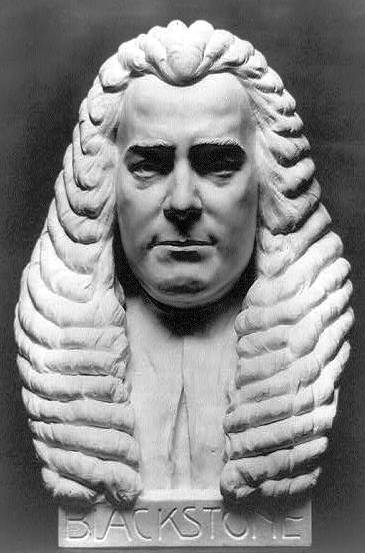
      William Blackstone
      Just up on SSRN are prepublication drafts of two chapters in the forthcoming Foundational Texts in Modern Criminal Law, ed. Markus Dubber (Oxford University Press).  Simon Stern, University of Toronto Faculty of Law, has posted William Blackstone, Commentaries on the Laws of England, Vol. 4 (1769):
      This book chapter discusses the fourth volume of Blackstone's Commentaries (1769), asking what contribution this volume makes to English criminal law. Issues addressed include the general structure of Blackstone's discussion, the relation between Blackstone's treatment and those of his precursors (especially Sir Matthew Hale and William Hawkins), the historical and literary range of Blackstone's references, the nature of his legal reform agenda, and his conception of the book's audience.
      Bernard E. Harcourt, University of Chicago Law School, has posted Beccaria's 'On Crimes and Punishments': A Mirror on the History of the Foundations of Modern Criminal Law:
      Cesare Beccaria
      Beccaria’s treatise "On Crimes and Punishments" (1764) has become a placeholder for the classical school of thought in criminology, for deterrence-based public policy, for death penalty abolitionism, and for liberal ideals of legality and the rule of law. A source of inspiration for Bentham and Blackstone, an object of praise for Voltaire and the Philosophies, a target of pointed critiques by Kant and Hegel, the subject of a genealogy by Foucault, the object of derision by the Physiocrats, rehabilitated and appropriated by the Chicago School of law and economics — these ricochets and reflections on Beccaria’s treatise reveal multiple dimensions of Beccaria’s work and provide an outline of a history of the foundations of modern criminal law. In becoming a classic text that has been so widely and varyingly cited, though perhaps little read today, "On Crimes and Punishments" may be used as a mirror on the key projects over the past two centuries and a half in the domain of penal law and punishment theory — and this essay hopes to contribute, in a small way, to such an endeavor. In the end, we may learn as much about those who have appropriated and used Beccaria than we would about Beccaria himself — perhaps more.

      Hulsebosch on "The Origin and Nature of Colonial Grievances"

      No version is available on the web, but be on the lookout for The American Revolution (II): The Origin and Nature of Colonial Grievances, an essay by Daniel J. Hulsebosch, NYU School of Law, forthcoming this year in The Oxford History of the British Empire: The American Colonies in the British Empire, 1607-1776, ed. Stephen Foster.  Here is the abstract:    
      Colonial grievances were not new in July 1776 but rather were as old as the British Empire and a constant feature of imperial governance. The continuous stream of grievances was not, however, evidence that “the spirit of the colonies demanded freedom from the beginning.” Paradoxically, grievances helped make the Empire work. They facilitated imperial development for two reasons. First, people lodging grievances could rely on a communication network for processing them, a system that helped integrate the many different subjects and places in the empire. Second, from the colonial perspective, the imperial grievance system had a safety valve: war. When the empire was at war, metropolitan policy-makers and local governors were more willing to compromise with provincial interests and acceded to claims that had been or threatened to become the source of grievances. The two together – the imperial grievance system and the leverage enjoyed by colonists during war – generated the sense throughout North America that the imperial constitution was a flexible set of institutions responsive to provincial claims and yet also efficient enough to facilitate common projects, like carrying out transatlantic commerce and waging war. The imperial constitution, with the grievance system at its core, provided the possibility for change that is essential to any workable constitution.

      By the middle of the 1770s, however, the grievance network no longer performed effectively. A system that for over a century helped bind the North American colonies to the empire suddenly, after an unusually long and stable period of peace, fragmented and became an instrument of rebellion. Only then, in the Declaration of Independence, were the many and sometimes inconsistent colonial grievances compiled into a “history of repeated injuries and usurpations, all having in direct object the establishment of an absolute Tyranny over these States.” These grievances were irremediable and flowed outside the imperial constitution. The genre to which they now belonged was the international declaration of war.

      Weiner's Worlds of Law

      Over on Worlds of Law, Marc Weiner, a former guest blogger, has three interesting posts:
      • Sharp's Numbers, about Blackstone's Commentaries and a book owned by Granville Sharp housed in the Yale rare books collection 
      • Maine Meets Maine, a video reflection on the historical significance of the cattle pound, joining the State of Maine and Henry Sumner Maine.
      • A thread on E.B. White and international law, and more generally about certain characteristics of the midcentury legal imagination.  The final post is "Why International Law is Like Webster's Third Dictionary (at least, for E.B. White)."

      Yale Law Acquires the Taussig Collection

      In case you missed the story in yesterday's New York Times:
      A pocket-size 14th-century handwritten copy of Magna Carta, the first book on the legal rights of women published in England, letters from the 18th-century jurist William Blackstone and papers belonging to a real-life London lawyer praised by Charles Dickens’s fictional yes-man Uriah Heep are among the highlights of a rich trove of rare legal books and manuscripts just acquired by Yale University.
      More.

      Reid on Scotland's First Banknotes

      Kenneth Reid, University of Edinburgh School of Law, has posted Banknotes and Their Vindication in Eighteenth-Century Scotland, which is forthcoming in Money in the Western Legal Tradition, ed. David Fox and Wolfgang Ernst (Oxford University Press, 2014).  Here is the abstract:    
      The first banknotes in Scotland were issued in 1695 following the incorporation of the Bank of Scotland. In a country critically short of coin and vulnerable to changes in its value, they were an almost immediate success. A century later no fewer than 21 banks, mainly private, issued notes, and Scotland was awash with paper money. This proliferation of paper would hardly have been possible without a stable legal framework. In 1749 the case of Crawfurd v The Royal Bank considered, and settled, one of the key legal issues: whether the holder of a banknote took free from infirmities of title which affected those from whom it had been acquired. In the litigation Mr Crawfurd sought to vindicate a £20 Bank of Scotland note which had gone missing in the post and turned up some time later in the hands of the Royal Bank of Scotland. The printed arguments of counsel which have survived provide a fascinating glimpse into a collision between orthodox property law on the one hand and the needs of commerce and the future of the banking system on the other. According to the former, Mr Crawfurd’s victory was assured because no one can acquire title through a thief; according to the latter, the Royal Bank must prevail, for any other result ‘would be to render the Notes absolutely useless, and consequently would in a great Measure deprive the Nation of the Benefit of the Banks, which could hardly subsist without the Circulation of their Notes’. In this battle of doctrine against policy, Roman law was used as a proxy, with both sides calling on Digest texts and on the account of vindication in Voet’s Commentarius ad Pandectas. Victory for the Royal Bank was obtained only by re-characterising a rule of bona fide consumption, by spending, as one of bona fide acquisition; and so with this flimsiest of doctrinal veneers, the free circulation of banknotes was assured.

      Richardson on Private Acts of Parliament

      Ivor Richardson, Victoria University of Wellington Law, has posted "Private Acts of Parliament,” which originally appeared in Victoria University of Wellington Law Review 41 (2010): 653.  Here is the abstract:
      The article explains the role that Private Acts of Parliament have played and still play. It does so by recounting their historical development and then discussing some 70 Bills and their progress through the Parliamentary processes. The narrative follows a broad subject-matter classification of Private Bills which are promoted by private individuals, local institutions, companies, particular charities, associations and other corporate bodies for their own benefit, whereas Public Bills and Local Bills are directed to the functioning of Central Government and Local Government respectively.

      Baskind on a Right to Silence at the Old Bailey

      Stephen L. Baskind of the firm Kleiman Lawrence Baskind Fitzgerald LLP, will present "No Man is Bound to Accuse Himself: Establishing a Right of Silence at the Old Bailey" on Tuesday, June 18, 2013, from Noon to 1:00 PM, to the Legal History Discussion Group of the Dallas Bar Association.  It will take place at the Bar's headquarters, the Belo Mansion, 2101 Ross Ave., in downtown Dallas, Texas.  Attendees will receive one hour of CLE credit at no charge.  Lunch is available for a fee beginning at 11:30 AM.

      Rose on the Law of Maintenance and Sir John Fastolf

      Jonathan Rose, Arizona State University College of Law, has posted The Law of Maintenance and the Obligations Of Lordship: A Case Study.  Here is the abstract:    
      As part of continuing work on the law of maintenance, in The Law of Maintenance and the Obligations of Lordship: A Case Study, this paper focuses on two important legal and social norms in medieval disputing. Maintenance was a legal concept describing conduct that involved assisting or supporting the litigation of another person. Statutes prohibiting maintenance were an important weapon directed at misuse of the legal system, especially by powerful individuals and officials. Lordship was an important medieval social and political institution. ‘Good lordship’ meant that lords were supposed to protect and support their tenants, household members, and retainers in their litigation and other disputes. An interesting issue raised by the prohibitions on maintenance is their relationship to the obligations of lordship. To study the relation between lordship and maintenance, he focuses on the mid-15th century litigation involving the servants of Sir John Fastolf, a wealthy and well known 15th century knight. Despite what may appear to be a conflict between the prohibitions on maintenance and obligations of lordship, he concludes that it is doubtful whether the exercise of 'good lordship' was usually illegal maintenance.

      From Maine to Maitland via America

      [Here’s the latest post from David Rabban on Law’s History.]

      In my last post about my new book, Law's History: American Legal Thought and the Transatlantic Turn to History, I discussed the importance of Henry Adams as the first major professional legal historian in the United States.  Underlining the "transatlantic" theme of my book, this post emphasizes that Adams, followed by a small group of other American legal scholars who wrote about the history of English law during the last three decades of the nineteenth century, constituted a fascinating intellectual link between the two great nineteenth-century English legal historians, Henry Maine and Frederic Maitland.

      During his short career teaching history at Harvard from 1870 to 1877, Adams relied on German scholarship on the history of early Germanic law and on primary sources of Anglo-Saxon law to assert the Germanic origins of the English common law.  He drew on his findings to challenge many of the generalizations about stages of legal evolution that Maine derived from the history of Roman law in his hugely influential book, Ancient Law, published in 1861.  Maine claimed that the primitive family was patriarchal and probably preceded the state.  He concluded that the transformation from primitive to progressive societies has uniformly "been distinguished by the gradual dissolution of family dependency and the growth of individual obligation in its place.  The Individual is steadily substituted for the Family, as the unit of which civil laws take account."  In his most famous expression of this transformation, Maine wrote that "the movement of the progressive societies has hitherto been a movement from Status to Contract."

      Adams and his students rejected these claims.  They emphasized the individualism of early Germanic societies, including Anglo-Saxon England.  They asserted that in these societies the state was already supreme over the family and consisted of individuals democratically associated as equals.  Unlike the patriarchal Roman family, they added, in the Germanic family the wife and children had rights against the father, and property was held by individuals rather than by the family as an entity.  More dramatically, Adams maintained that Germanic law not only differed fundamentally from Roman law, but preceded it.  Whereas Maine generalized from Roman law to all "progressive" legal systems, Adams called Roman law a "perversion" of earlier Indo-European law.

      For a variety of reasons, neither Adams nor his students pursued careers in legal history after the publication of their Essays in Anglo-Saxon Law in 1876.   But other Americans did, most prominently Melville Madison Bigelow, Oliver Wendell Holmes, Jr., James Barr Ames, and James Bradley Thayer, who all lived in the Boston area and knew each other well.  In publications from the 1870s through the end of the nineteenth century, these four scholars often portrayed themselves as extending the original research Adams and his students had begun on the history of English law.  They agreed with Adams and his students that the English common law derived mainly from Germanic sources, but they viewed those sources as primarily Norman rather than Anglo-Saxon.  They, therefore, directed their research into the history of English law after the Norman Conquest, debating among themselves and with leading German scholars, particularly Heinrich Brunner, about the extent to which Norman antecedents, especially of the modern jury, developed independently in England.

      Bigelow and Thayer focused on the history of particular subjects, procedure for Bigelow and evidence for Thayer, whereas Holmes and Ames wrote about numerous issues in the history of the common law.  They shared the view, elaborated most explicitly in an article by Thayer entitled "The Teaching of English Law at Universities," that historical research into the entire development of current law is a prerequisite to understanding and, ultimately, to restating it.  They referred to Maine less frequently than had Adams and his students, but they often recognized his influence in turning their attention to the historical study of law.  English legal scholars, in turn, widely noticed and praised the work of these Americans, often observing that they had surpassed the English themselves in the study of English legal history, "however mortifying to our national vanity," as an English reviewer commented while praising Bigelow's major book, History of Procedure in England from the Norman Conquest, 1066-1204 (1880).

      Maitland agreed with the English praise for the American scholars of English legal history.  S.F.C. Milsom, a respectful late twentieth-century critic of Maitland, has asserted that Maitland essentially created the field of legal history.  According to Milsom, Maitland "had nothing to stand on.  There was no legal history worthy of the name."  More recently, J.H. Baker reiterated that Maitland "inaugurated the scholarly study of English legal history."  Maitland himself had a different view.  In the preface to his great book, The History of English Law Before the Time of Edward I, published in 1895, Maitland listed Bigelow, Holmes, Ames, and Thayer among the eight scholars whose previous work he most admired and did not intend to duplicate by what he called "vain repetition."  The frequent citation of these Americans throughout the book's two volumes made clear that this prefatory praise was substantive and not merely polite.  Maitland corresponded extensively with Ames, Thayer, and especially Bigelow, who visited Maitland several times in England and became an extremely close personal friend.  By contrast, Maitland frequently criticized Maine, often in terms that echoed Adams and his students.  In addition to relying on the previous work of the Americans he cited, Maitland shared many of their historiographical views.  Because so many subsequent scholars have viewed Maitland as distinctively interested in legal history as a window into social and economic history, it is particularly striking that he himself, like the American scholars who preceded him, emphasized his primary focus on the internal evolution of legal doctrine, precisely the attribute his successors condemned in others.

      [The series continues here.]

      Going Once . . .

      Yesterday's Cotswald Journal reports that the a collection of legal volumes, including "a George II calf-bound volume containing Acts of Parliament of 1741-1742," that the Gloucestershire County Council no longer requires "are being auctioned by Chorleys on Thursday, May 16 at 10.30am at their Upper Salesroom at Prinknash Abbey Park."  "“I’m sure the sale will generate a lot of interest," said Christine Wray, head of legal Services at Gloucestershire County Council.  Catalogue here.

      Blog Archive