Pasta con le Sarde – Small Fish, Big Flavor, Long Shelf-Life

I’m no survivalist, but like any responsible chef I like to have a few cans of sardines stocked away, just in case. If times ever get tough, I could survive for hours, maybe days on them; but since things are going pretty well, I decided to dust off a can, and show you my version of Sicily’s famous, pasta con le sarde.

This will work well with many kinds of pasta, but I think bucatini is the best. It’s hollow, which sucks in the sauce, and flavors the noodles from the inside out. And, there’s a lot of flavor to suck. Speaking of which, be sure to get sardines that are packed in olive oil.

The flavor and texture is going to be better, plus you get sardine-infused olive oil that comes packed with the fish, which makes a great addition to our sauce.  By the way, if you can’t get fresh fennel, you can crush up a teaspoon of fennel seeds, and make a pretty decent version using that.

Like I said in the video, if you can get fresh sardines, they’re amazing in this. Fresh sardines are common around here, and they are such a delicious and under-appreciated fish. However, I honestly enjoy this version just as well, and seriously hope you give it a try soon. Enjoy!


Ingredients for 2 large or 4 appetizer sized portions:
1/4 cup extra virgin oil olive
1 cup diced yellow onion
1 cup diced fennel
2 cloves garlic, minced
1 anchovy filet
1/4 cup chopped golden raisins
small pinch saffron
1/4 cup white wine
2 cans (4-oz each) sardines packed in olive oil
1/4 cup toasted pine nuts
pinch red chili flakes
salt to taste
1/2 pound bucatini pasta, or thick spaghetti
1/4 to 1/2 cup reserved pasta water, as needed
3-4 tablespoons roughly chopped fennel fronds, toss some in pasta at the end, and save some for the top
toasted breadcrumbs to garnish

Ricotta Pie – Call It “Cheesecake” At Your Own Risk

You would certainly be well within your rights to call this ricotta pie a “cheesecake,’ except then your guests would be expecting cheesecake, and that might cause some problems. 

If you tell me I’m about to get a slice of cheesecake, I’m picturing something tall, dense, sweet, and very rich. Those adjectives are why people order cheesecake in the first place.

That’s why this lighter, less sweet variation is being called a ricotta pie. So much of cooking for people is managing expectations, and a recipe’s name is a big part in that. Moving past semantics, I really enjoyed this cannoli-inspired take on the rustic Italian classic.

I played around with a hybrid pie-dough/cookie crust, with flavors borrowed from a cannoli shell, as well as studded the filling with chocolate and candied orange; also common features of that other ricotta-based dessert. If you don’t want to mess around with my crust, or you’re still trying to do the paleo thing, you can skip that step, and just butter and flour the pan first. Your favorite graham cracker crust will work as well, especially with some ground almonds tossed in.

Regarding the sweetness: Generally, ricotta pies are not very sweet, and contain only about half the sugar of a traditional cheesecake. For this size pie (9-inch), you could use between a 1/4 and 1/2-cup of sugar, depending on your tastes. I used a 1/3-cup, which is perfect for me, but I’m not you, so adjust accordingly. Same goes for the grated citrus, and chocolate. I really hope you give this great ricotta pie a try soon. Enjoy!


Ingredients for 8 portions:
For the crust:
2 cups all-purpose flour
1 tablespoon sugar
1 teaspoon baking powder
1/4 teaspoon fine salt
1/2 cup cold butter, cut in chunks
1 large egg
2 tbsp marsala wine
2-3 tablespoons ice water, or enough to form dough
Prebake crust for 15 min at 400 F.

For the filling
3 cups whole-milk ricotta cheese
4 large eggs
2 large egg yolks
1/3 cup sugar
1 1/2 teaspoons vanilla extract, to taste
1 or 2 teaspoons freshly grated lemon and/or orange zest
pinch of salt (not shown!)
2 tbsp semi-sweet chocolate chips, optional
2 tbsp diced candied orange zest, optional

Bake 45 minutes at 350 F., or until just set (160 internal temp)

*I garnished with chopped pistachios, and some  additional orange zest that I tossed with some simple syrup (1/4 cup water and a 1/4 cup sugar brought to a simmer and allowed to cool.)

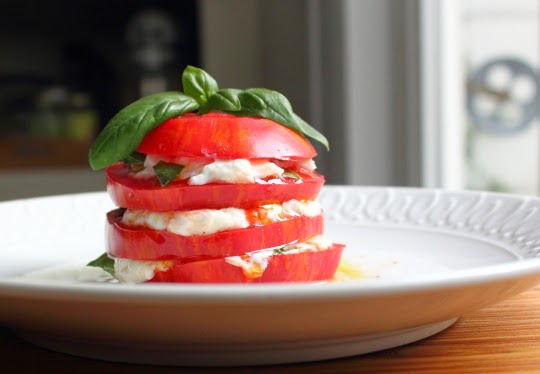
Stacked Tomato & Mozzarella Salad – Now 100% Mozzarella Free!

There’s absolutely nothing wrong with using a nice, fresh mozzarella in your Caprese salad, but once or twice a summer, you simply must treat yourself to the natural wonder that is burrata cheese.

Comparing mozzarella and burrata is a little unfair, as burrata is significantly richer and creamier. It’s not like comparing apples and oranges; it’s more like apples and supermodels. In fact, burrata means “buttered,” which is really all you need to know.

Like I said in the video, if you do use burrata, please try it “as is,” before pouring over any vinegar. The subtle sweetness of this mildly tangy cheese is a delicate flower; so don’t crush it with a heavy hand.

Burrata used to be a specialty item, but I now see it next to the fresh mozzarella at all of your nicer grocery stores. While it will cost a little more, and may take a drive across town to find, I believe you'll find the extra effort well worth it. I hope you give this a try soon...before it snows. Enjoy!


Ingredients for 1 serving:
1 perfect vine-ripened tomato (don’t even bother using a supermarket tomato!)
4-6 tablespoons burrata cheese, or fresh mozzeralla
1 tbsp extra virgin olive oil
flaky sea salt, freshly ground black pepper, and torn basil to taste

Shrimp Fra Diavolo – The Brother Devil Made Me Do It

This latest test of still how little I know about editing in Adobe Premier, features a devilishly delicious shrimp fra diavolo, or “shrimp brother devil,” if we’re being literal for comic effect.

I think this came out looking pretty good, although it took me so much longer to edit, since I’m still barely at novice level using the new software. So, with it being Friday afternoon and all, I’m gong to keep this short and sweet, and simply suggest you do two things.

First of all, if you know any great Premier tips, tricks or resources, send them my way! You’ll notice I don’t have consistent transitions, or captions for the times and temperatures; but I’m sure I’ll have that figured out soon enough. Secondly, make this. It’s really good, and turns any pile of pasta or rice into a memorable meal. I hope you give this a try soon. Enjoy!


Ingredients for 2 large or 4 smaller portions:
1 pound shrimp, peeled and deveined (16/20 per pound size, bigger is better)
1 teaspoon red pepper flakes, or more if you’re sexy
1 teaspoon salt, or to taste
2 or 3 tablespoons olive oil, enough to generously coat the shrimp
1/2 large yellow onion, sliced
1/2 tsp dried oregano, or 2 tsp of fresh
3 garlic cloves, minced
1 cup drinkable white wine
11/2 cups can crushed San Marzano tomatoes
2 tablespoons chopped Italian parsley
2 tablespoons sliced fresh basil leaves
*some people like lemon, but I don’t think it needs it unless your wine was too sweet.

Spinach & Leek Torta di Riso – Open Recipe, Insert Vegetables

I made this delicious and rustic torta di riso with fresh spinach and leeks, but the recipe is a perfect catchall for those abundant summer vegetables. Things like eggplant, peppers, beans, and squash will all work beautifully. Just cut them kind of small, cook them tender, and let the rice, cheese, and eggs do the rest.

I also encourage the use of other cheeses with, or instead of the Parmigiano-Reggiano seen herein. Fontina would be a great choice, as would almost any other melty variety. You can also double the recipe and use a taller spring form pan, which will give you a taller and more authentic looking torta.

Speaking of authentic, this isn’t. Whether sweet or savory, these are usually done with some kind of crust, which I generally skip. It’s not like it’s bad with a crust, but it adds another step, and for me the payoff isn’t worth the extra time, work, and calories.

So, whether you’re making this to use up leftover rice and/or vegetable; or your playing the old “we’re having pie for dinner!” prank on your family, I hope you give this a try soon. Enjoy!


Ingredients for 6 portions:
1 tbsp olive oil, plus more as needed
3 cups chopped leeks (2 large leeks, about 1 cup sautéed)
3 cloves garlic, minced
2 cups cooked rice
1 1/2 cups finely chopped cooked spinach, squeezed very dry
2 large eggs, beaten
3/4 cup finely grated Parmigiano-Reggiano cheese, or other delicious cheese, plus more to dust pan and top
1 generous teaspoon fine salt, or to taste
1/2 tsp freshly ground black pepper
pinch cayenne
pinch nutmeg
- 350 degrees F. for 35 - 40 minutes

Savory Ricotta Tart – Thin to Win

I got a food wish for a ricotta cheesecake recently, which sounded fantastic, but with bikini season rapidly approaching, my love handles and I thought we’d compromise and do a savory, sugar-free version instead.

I love the simple combination of really good ricotta and fresh herbs, baked with just enough eggs to hold things together. I was in the mood for some heat, but things like pepper and cayenne are totally optional. 

As I alluded to in the video, I usually do this as a pie, which comes out about twice as thick, but I wanted to try it in tart-form and the pan I used was clearly too large. Next time I’ll simply double the ingredients, and add about 10 or 15 minutes to the cooking time, and I recommend you do the same.

Keep this humble pie in mind when the “way too many vegetables” part of summer rolls around. This could be a great base for using up leftover veggies in a very fritatta-like way. I hope you give it a try soon. Enjoy!


Ingredients for 6 thin portions:
1/2 cup panko breadcrumbs, toasted in some olive oil
olive oil to coat pan
2 large eggs
1/2 tsp salt
1/4 tsp freshly ground black pepper
cayenne or other hot peppers to taste
1/4 cup fresh chopped or torn basil
1 tbsp chopped Italian parsley
tiny pinch nutmeg
1 1/2 cups ricotta cheese
1 oz finely greated Parmigiano-Reggiano cheese (about 1/2 cup if the real stuff, otherwise 1/4 cup packed of the fake “stuff”)
*Bake at 325 for about 20 to 25 minutes, or until set.

Prison-Style Meatloaf – How to Stretch Your Meat Further

The main point of this prison-style meatloaf video is to show you what happens when you make meatloaf like your grandparents did. And no, I'm not accusing your relatives of spending time in the joint. During the Great Depression this type of dish was a popular strategy for stretching what little meat you had, into as filling a meal as possible.

As times got better, people went back to meatier versions, and now only low-budget, high-volume food service operations feature this culinary dinosaur. I did an Italian meatball-inspired version, which was quite nice, but this method will work with virtually any meatloaf recipe.

Most modern meatloaves call for about 1/2 to 3/4 cup of dry crumbs per two pounds of meat, and here we’re using 1 1/2 cups. It makes a significant difference in the texture, producing something much softer and moister. While not as "meaty," this does make for an interesting alternative to play around with. I'm looking at you, family of 10.

As I say in the video, I decided to spike my tomato sauce with too much balsamic vinegar, which rendered it not great. So, if you’re going to follow this recipe, just use a regular pasta sauce, or your favorite meatloaf glaze. I hope you give this a try soon. Enjoy!


Ingredients for 1 giant meatloaf (about 10 large portions):
1 tbsp olive oil
1 tbsp butter
1 onion, diced
4 cloves garlic, minced
2 pounds ground chuck
2 tsp salt
1 tsp freshly ground black pepper
cayenne to taste
2 large eggs, beaten
2 oz Parmigiano-Reggiano, finely grated (about a packed 1/2 cup)
1/2 cup chopped Italian parsley
1 1/2 cups very dry white bread crumbs (not toasted!)
1 1/2 cups milk to soak (squeeze out excess)
3 or 4 cups of tomato sauce to bake in, optional

The Great Flank Steak Roulade Experiment

I don’t remember exactly why, but for the longest time I’ve wanted to try stuffing and braising a beef flank steak, and this very brociale-like roulade was the result. And while the outside was an unsightly mess of frayed meat fiber, the overall dish was a delicious success.

Braising a flank steak seems counterintuitive since it’s almost always cooked briefly and served medium-rare, but so is top-sirloin, and I’ve used that cut for beef roulade before, and it worked fine. Flank steak is also one of the “beefiest” cuts on a cow, and has a decent amount of fat, so I felt pretty confident going in.

The only thing I hadn’t considered was the appearance, and that ended up being my only real complaint. Because flank steak has such large, pronounced meat fibers, after a few hours of simmering, my roulade had a bad case of split ends. As I mention in the video, we may try and wrap the meat with some type of protective layer, and by protective, I mean fatty.

Other than that, it was a fairly straightforward procedure. Feel free to stuff with anything you like (just not too much), and the same goes for the braising liquid. No matter what you decide to simmer this in, once you’re done, simply reduce it, and use it as a sauce. That means be careful with the salt. I generously salted the roulade, so I didn’t need to heavily season the braising liquid as well. Best to adjust that later.

Anyway, whether you use my specific ingredients or not, I hope you give this technique a try soon. All you need is a flank steak, a sharp, thin knife, and you’re ready to roll. Enjoy!


Ingredients:
1 trimmed beef flank steak, butterflied, and pounded flat (please note: you must cut and roll the meat in the exact way shown, so the grain is going the right way for slicing!)
salt and pepper to taste
1 tbsp black currants
1/4 cup plain breadcrumbs
2 tbsp chopped Italian parsley
1 ounce pancetta, slice into thin strips
2 tbsp finely-grated Parmigiano-Reggiano cheese
For the braising liquid, I used:
3/4 cup white wine
3 cups tomato sauce
2 cups chicken broth
1 bay leaf
enough water to just cover

Tiramisu – It Will Pick You Up and Not Let You Down

In addition to being an incredible tasting dessert, Tiramisu also offers the perfect segue when you’re trying to steer the Valentine’s dinner conversation towards spicier subjects. Please feel free to embellish the following history to further enhance the version your sweetheart hears.

Tiramisu was invented in an Italian brothel, where it was a popular snack with customers looking for a little restorative treat after certain strenuous activities. Tiramisu actually means “pick-me-up,” which of course makes it the best culinary double entendre in history.

Besides the great story, it really is the perfect romantic occasion dessert. This heady, mood-elevating concoction is a rich and deeply satisfying, yet remarkably light in texture. I know someone will ask, so yes you can use regular cream cheese, but mascarpone is far superior, and it is Valentine’s Day after all.

As far as the booze goes, I used Marsala, but it also works beautifully with amoretti, rum, brandy, or even Bailey’s. The other key liquid in this is the espresso, and I highly recommend that’s what you use. Regular coffee doesn’t have the same punch. You can use instant, but the last time I checked there was literally a café on every corner of every city.

I did these as two, rather large individual portions, but this could be easily stretched into four cups, or layered in a square baking dish, as is more traditional. Don’t over-think it; no matter what you use, it’s basically three layers of mascarpone mixture around two layers of coffee-dipped ladyfingers. 

They say you can tell how good your Valentine's dessert was, by whether or not you end up also having to cook breakfast. Which reminds me, if you make this, be sure to not use up the last of the eggs. I really hope you give this tiramisu a try soon. Enjoy!


Ingredients for 2 large or 4 small portions:
1/2 cup espresso with 2 tbsp Marsala wine for dipping cookies
10 or 12 ladyfinger cookies, broken in half if making cups
2 large egg yolks
2 tablespoons plus one teaspoon white sugar
1/2 tsp vanilla
pinch of salt
3/4 cup mascarpone cheese (6 oz)
2 large egg whites
cocoa for dusting
dark chocolate for shaving

That Other Meat Sauce

We did a classic Italian bolognese sauce not too long ago, which reminded me that I’ve actually never posted a basic, Italian-American meat sauce. This sauce goes by many names, including Sunday sauce, since that’s the day it’s traditionally made, but for me growing up, this was just called “sauce.”

This is one of those primal recipes that always follows the same procedure, yet almost never contains exactly the same ingredients. I was raised on a blend of beef, pork, and chicken, but any and all leftover proteins can, and must, be added to the pot.

Meatballs are a great choice; as are things like pigs feet, neck bones, and other similar cuts. The tougher the meat, the better it’s going to be in this sauce. Besides playing meat roulette, I’ll also switch different herbs like basil in and out, as well as include the occasional season vegetable.

You can also vary your results here with different tomato products. I went old-school and hand-crushed whole plums, but you can also use crushed or pureed tomatoes as well. The finer and smoother the tomatoes are processed, the thicker your sauce will be, so keep that in mind. Speaking of tomatoes; yes, it is much better to caramelize the tomato paste with the onions before you add the San Marzanos, but I didn't because Grandma didn't, and also, I forgot. 

As long as you cook the meat long enough, and season thoughtfully, there’s really no way this sauce isn’t going to be great. So, while you may not have grown up in an Italian-American home, with this comforting sauce simmering on the stove every Sunday, your family still can. I hope you give this a try soon. Enjoy!


Ingredients for 6 portions:
2 tbsp olive oil, divided
1 beef shank
2 pounds pork ribs
2 bone-in chicken thighs
1 diced onion
6 cloves garlic
3 (28-oz) cans San Marzano plum tomatoes, crushed or blended smooth
(Note - any canned tomato product will work. Try with pureed or already crushed tomatoes and save a step)
1/4 cup tomato paste
2 cups water, more as needed
2 tsp salt, or to taste
1 tsp black pepper
1/4 tsp red pepper flakes
2 tbsp chopped Italian parsley
1/4 cup freshly grated Parmigiano-Reggiano

Chicago Italian Beef “Stew Meat Edition” – The Deep Dish Pizza of Sandwiches

I’ve always wondered how stewed beef would work instead of the traditional sliced roast beef for Chicago’s famous Italian Beef Sandwich, which is kind of weird, since I’ve only had the classic version a few times, and never actually made it myself. 

I figured if you’re going to roast a hunk of beef, then slice it and put it back in the juices, why not just cook the meat in a broth to begin with? How had the fine people of Chicago not thought of this obvious adaptation? Were the same people running the Cubs also in charge of civic recipe improvements? Was Kanye West somehow to blame? And another thing; why the hell would the Bears give Jay Cutler that new contract?

Anyway, once I finished my mad experiment, I realized that this wasn’t an improvement on an old sandwich at all; it was just a new sandwich. While the flavors are similar, the texture and overall mouthfeel of this sandwich is completely different. It’s much closer to pulled pork in that respect, but delicious nevertheless.

So, while this ended up not being the Chicago Italian beef breakthrough I had hoped for, it did make for a fine lunch, and if you’re looking for a manly hand-meal for your next shindig, I hope give this tasty, and very juicy sandwich a try. Enjoy!


Ingredients for 4 large sandwiches:
1 1/2 or 2 pounds beef chuck, cut in 2-inch chunks, seasoned with salt and pepper to taste
1 tbsp vegetable oil
6 cloves garlic, sliced
1/4 tsp red pepper flakes. to taste
1 tbsp dried oregano
1 tsp dried thyme
1 tsp dried rosemary
1 tsp freshly ground black pepper
1 1/2 tsp salt or to taste
1 bay leaf
2 tbsp white vinegar
3 cups chicken broth, or enough to cover meat by an inch
4 crusty sandwich rolls
1 cup drained Giardiniera (pickled vegetables), chopped into a relish
- Brown meat and simmer covered in the remaining of ingredients until tender

Utica Greens and Beans – Finding Good Fortune in Upstate New York

As many of you hardcore foodies know, there’s a southern tradition of eating beans and greens on New Year’s Day to help bring good fortune in the coming year. 

By eating “poor” the first day of the year, you supposedly ensure prosperity and good luck the rest of the year. I think I speak for all superstitious, Italian-Americas when I say, that totally makes sense.

Whether you believe in such things or not, you should still try this year’s edible good luck charm, Utica Greens. This delicious Upstate New York vegetable casserole comes in many forms, but usually contains some combination of bitter greens, usually escarole, pancetta or prosciutto, hot fresh or pickled peppers, and bread crumbs.

I’m adding some cranberry beans, so you all get rich in 2014, but that’s totally fine since the locals often add chunks of potatoes, and once you start doing things like that, all bets are off. Whether side dish or main course, this is a perfect winter vegetable magnet, and I hope you give it a try soon. Enjoy, Happy New Year, and most of all, good fortune!


Ingredients for 6 side dish servings:
2 heads escarole
2 tbsp olive oil
4 ounces pancetta or prosciutto, diced (You can drain some of the rendered fat if it looks like it's going to be too much. You want about 2 tablespoons total rendered fat pancetta in the casserole)
handful of sliced fresh hot peppers, or jarred pickled peppers
3 cloves minced garlic
1 cup chicken broth
12 ounce can cooked cranberry beans, or Cannellini beans, butter beans, white beans, etc., optional
salt and black pepper to taste
red pepper flakes
1/2 cup fine plain bread crumbs, plus more for the top
1/2 cup finely grated parmesan cheese
drizzle top with more olive oil

Focaccia di Recco – Treating Myself

When I treat myself to a personal “food wish,” it’s usually something I’ve eaten out and become obsessed over, and this episode is a classic case. There’s a Ligurian restaurant called Farina near us, and I’ve become a full-blown focaccia di Recco stalker. 

After watching them make it in front of me so many times, I had to give it a try. It doesn’t look like the focaccia most of us are used to, but come to find out, “focaccia” simply means any flatbread cooked in a hearth, and varies region to region.


This particular example hails from Recco, and is nothing more than some Stracchino cheese trapped in between two, super-thin layers of dough. The dough is nothing more than flour, water, olive oil, and salt; but thanks to a very hot oven, and this probably ancient technique, some serious flatbread magic happens.

As I confess in the video, I was scared to use too much cheese, but I’ll use more next time. At Farina, you can see a thin layer of the molten Stracchino oozing out between the layers. My Crescenza cheesewas basically absorbed, but while you couldn’t see it, you could certainly taste it, and it was amazing.

The obvious question is, can you add other fillings to this? Yes, but don’t. It’s perfect…as long as you find the cheese. Please, find the cheese (no substitutions will be offered #toughlove). 

 By the way, I’m officially recommending the quarter sheet pan seen herein, which is what they use in the restaurant, but I think a round tart pan would work as well. In fact, from what I see online, the round pan seems to be the standard. I can’t wait to try this again, and sincerely hope you give it go as well. Enjoy!


Ingredients for 2 small or 1 large Focaccia di Recco (Tip for first timers: Make a double batch of dough so you have plenty to work with!)
*2 cups all-purpose flour (9.5 by weight)
1/2 cup plus 2 tbsp water           
1 tbsp extra virgin olive oil
3/4 tsp fine salt
*use enough flour to form a soft, but not too sticky dough. Knead for about 5-6 minutes to from a smooth, elastic dough. Let rest 1 hour at room temp.
12 oz Crescenza or Stracchino cheese (6 oz for each focaccia) 
extra virgin olive oil and sea salt, to taste for the top
Bake at 500 degrees F.for about 6-7 minutes, or until well-browned

Bolognese Sauce – Hip Hip Hazan!

This bolognese sauce is dedicated to the late, great Marcella Hazan, who passed away in September, at the age of 89. She was considered the Julia Child of Italian food, and at a time when most Americans though “bolognese” was spaghetti sauce with chunks of hamburger it, Marcella taught us just how magnificent this meat sauce could be.

One thing that always surprises people making this recipe for the first time is the absence of garlic. Hazan railed against the common belief that garlic should be added to any and all Italian recipes. She once wrote, “the unbalanced use of garlic is the single greatest cause of failure in would-be Italian cooking,” and “Garlic can be exciting when you turn to it sporadically, on impulse, but on a regular basis, it is tiresome.”

Would a few minced garlic cloves ruin this incredibly delicious pasta sauce? Probably not, but since this is supposed to be something of a tribute, I decided to remain true. Speaking of ingredients, I used ground beef here, but I’ve also done this with cubed chuck roast, which works wonderfully as well.

Anyway, I really hope you give this classic bolognese a try, and if you do, and there’s some extra wine around, please raise a glass, and toast the “Nonna” of Italian cuisine in America. Enjoy!


Ingredients for 6 portions:
1 tbsp olive oil
2 tbsp butter
1 cup finely diced onions
1/2 cup finely diced celery
1/2 cup finely diced carrot
1 1/2  tsp salt, or to taste
freshly ground black pepper and cayenne to taste
1/8 tsp ground nutmeg
1 1/2 lb ground beef
1 1/2 cups milk
2 cups white wine
1 can San Marzano plum tomatoes (28-oz), about 3 cups
2 cups water, or as needed

Perfect Polenta – Dedicated to Some Fun Girl

Not only is polenta one of the first foods I remember watching someone cook, but it’s probably also responsible for the first time I ever heard someone curse. 

I remember my grandfather standing at the stove, stirring a big pot of the stuff, and every once in a while some of the thick, bubbling polenta would burp out of the pot and on to his hand. He would jump back and yell something, which to my very young ears sounded sort of like, “hey, some fun girl!” 

Of course, years later I realized he was actually saying, “vaffanculo.” I’ll let you translate yourself. By the way, one way to avoid the wrath of the molten mush is to adjust your heat to maintain a nice gentle bubble.

Besides severe burns, there’s not a lot that can go wrong with this recipe. As long as you stir it in slowly, whisking constantly, and simmer it until it’s perfectly soft, you will have one of the world’s great comfort foods, and a beautiful base for any number of stews or braises. Enjoy!


Ingredients for 4 Portions:
4 cups water or broth
1 cup polenta (you can use regular corn meal, but it’s not as easy to work with, and the texture isn’t as interesting)
1 tsp salt
2 tbsp butter
1/2  cup finely grated Parmigiano-Reggiano

Note: if your question is, “can you add [blank] to this recipe,” the answer is yes.

Pork “Al Latte” – Now 100% Milk Free!

This comforting pork stew recipe is exactly the kind of homey dish you want waiting for you after a long, hard week…and maybe a 13-hour drive. Unfortunately, I made this last week, so I couldn’t actually enjoy it today, after a long, hard week and 13-hour drive, but just editing it made me feel better. It was that good.

This stew version is inspired by the classic Italian recipe, “maiale al latte,” or “pork in milk,” but instead of the usual moo juice, I decided to make my own with chicken broth and crème fraiche. I figured I’d get the same basic viscosity and fat content (okay, maybe a tad more), but also a little more flavor, and a better texture once reduced.

I topped it with some fried sage, which is an optional, messy, but delicious extra step, and makes this much more restauranty. Simply heat a 1/2-inch of vegetable oil in a small pan, and toss in some (not wet!) whole sage leaves. Fry until crisp, about 10-15 seconds

The classic preparation involves braising and slicing a whole roast, but one taste and I think you’ll agree it translates beautifully to the stew delivery system. I really hope you give it a try soon. Enjoy!


Ingredients for 4 portions:
1 1/2 pound pork shoulder, cut in 2-inch cubes (note: I only had 1 pound, but the recipe will work with another half, which will make four nice portions)
1 tbsp olive oil
2 strips bacon
1 small yellow onion, diced
4 cloves garlic, sliced
1 1/4 cups chicken broth
2 tbsp fresh chopped sage leaves, plus more for frying
salt and pepper to taste
red chili flakes to taste
*Simmer covered for 1 hour, and then uncovered until the meat is very tender, and the sauce is thickened. Adjust with more broth if needed.

Sorta Porchetta

One of my all-time favorite street foods in San Francisco is Roli Roti’s famous porchetta sandwich, served at the Ferry Plaza Farmers Market. For those of you not familiar with the perfection that is the porchetta, it's a loin, and possibly other cuts of heavily seasoned pig parts, wrapped inside a pork belly, which is then roasted until the inside is tender, and the outside is crispy and crackling. It’s then sliced and served on a crusty roll with salsa verde.

It’s insanely good, and something I've always wanted to try doing at home. Of course, a real porchetta feeds like 20 people, so I wanted a version that would be better suited for a smaller group. 

I decided to try using a small pork shoulder roast. The plan was to mimic the same flavors, but cook it more like pork loin, instead of the usual fork tender, falling apart state we associate with this cut. Pulled pork was not what I was after here.

It worked wonderfully, although you do need to slice it nice and thin. We’re only cooking this to 145 F. which is not high enough a temperature to break down all that connective tissue. All in all, I thought it was a very successful experiment, especially when you consider how much we scaled this down. 

What it didn’t feature however, was that crispy skin, also known as “the best part.” I wish I’d thought of it before I finished the video, but what I should have done was fried up some diced pancetta (un-smoked Italian bacon) until it was perfectly crispy, and topped the sandwich with that! That would have put this already fine faux-porchetta over the top! I hope you give this a try soon. Enjoy!


Ingredients for 4 very large portions:
2 1/2 pound boneless pork shoulder roast, butterflied open, and slashes made all over the connective tissues
olive oil as needed
1 tbsp kosher salt (2 tsp for inside, and 1 for out)
1 tbsp black pepper
2 tbsp chopped sage leaves
2 tbsp chopped rosemary
6 cloves minced garlic
zest from a large orange
2 tsp fennel seeds, crushed
- Stuff, tie, salt, and refrigerate uncovered for 24 hours
- Roast at 450 F. for 15 minutes
- Reduce heat to 250 F. and roast another hour, or until an internal temp of 145 F.

For the vinegar sauce:
1/2 anchovy fillet
1 tsp hot chili flakes or to taste
1/4 cup white wine vinegar
1/4 cup freshly chopped Italian parsley

Bonus How to Butterfly Meat for Rolling Video! 


Blog Archive