Litchfield Law School Sources

Among the recent activities of the William Nelson Cromwell Foundation is a  project to locate and facilitate the use of Litchfield Law School student notebooks and related sources.  The project now has a website, Litchfield Law School Sources, at the Yale Law School Library’s Document Collection Center.  The site explains:
Tapping Reeve, 1744-1823 (Credit)
This resource brings together text, images, interpretive material and bibliography about Litchfield Law School and the law notebooks kept by its students.  During the school’s years of operation, 1774 to 1833, nearly 1,000 young men traveled to Litchfield to study with Tapping Reeve, the founder, and James Gould, his assistant and sole proprietor after Reeve’s death. More than 270 notebooks have survived, representing the efforts of 90 students as they recorded law lectures delivered by their teachers and copied charts and essays on particular points of  law. At a time when the usual method of legal training in this country was an apprenticeship with a solo practitioner, these notebooks are evidence of the beginning of professional legal education, based on a comprehensive curriculum which relied heavily on the content and structure of  William Blackstone’s Commentaries on the Laws of England. These manuscript notes are housed in 36 academic law libraries, historical societies, and state repositories, concentrated in New England, but also found in New Jersey, Maryland, North Carolina, Georgia, Louisiana, Iowa, Ohio and Michigan. Gathering, describing and scanning these notebooks in a single location enables further study without additional travel. This website is a portal for research, description, and comparison of those volumes which have been digitally scanned.  Readers can also consult the Litchfield Historical Society website, where the Litchfield Ledger provides biographical information and a list of students both at the law school and at Miss Pierce’s Female Academy in Litchfield, where many law students met their future wives.

Konefsky and Sullivan on Legal Education Now

Alfred S. Konefsky, SUNY Buffalo Law School, and Barry Sullivan, Loyola University Chicago School of Law, have posted In this, the Winter of Our Discontent: Legal Practice, Legal Education, and the Culture of Distrust, which is forthcoming in the Buffalo Law Review.  Here is the abstract:
This essay seeks to situate the challenges facing legal education within the broader context of professional culture—a context that seems to us to have been neglected in the present debates. In a sense, the “market reformers” have been swept up, consciously or not, in a wider movement that elevates markets over other forms of social analysis and therefore asserts and takes for granted what is in fact deeply contested. More specifically, they have pushed to the side the public-serving dimension of the lawyer’s role because it allegedly conflicts with the psychology of classical economic liberalism. Our aim, then, is to restore the concept of the public domain to a discussion now dominated by mere considerations of costs and a belief in the inevitable triumph of a narrowed sense of professional culture. Before we can begin to reform the infrastructures of legal education, we need to identify the function of the legal profession in a democratic society and the role that a legal education might play in preparing men and women for service in a profession so conceived. In that sense, cost is not an independent variable, and any judgment about the cost-effectiveness of legal education necessarily depends on a decision concerning the purposes to be served by a legal education.

In Part I, we discuss, in a general way, some of the changes that have occurred in society, the profession, and legal education in the past 40 years or so. We are particularly interested in the growing tendency to re-conceptualize many social phenomena in market terms and the effects of this trend on legal education and the practice of law. In Part II, we continue our discussion of those themes, as they relate to the current debate over the future of legal education, by considering the analyses of Thomas D. Morgan and Brian Z. Tamanaha, both of whom approach the problem from the vantage point of economic analysis. Notwithstanding the similarities in their methodologies, their respective prescriptions point in somewhat different directions. We suggest that a broader view is necessary and that the work of these commentators and others suffers from a failure to give sufficient attention to the public dimension and significance of the legal profession. In Part III, we endeavor to reframe the problem in a way that may be useful in developing a forward-looking approach to accomplishing the reforms that are necessary.

Walker on Llewellyn and the Law School Crisis of the 1930s

Anders Walker, Saint Louis University School of Law, has posted Bramble Bush Revisited: Karl Llewellyn, the Great Depression, and the First Law School Crisis, 1929-1939.  Here is the abstract:   
This article recovers the plight of legal education during the Great Depression, showing how debates over practical training, theoretical research and the appropriate length of law school all emerged in the 1930s. Using Bramble Bush author Karl Llewellyn as a guide, it strives to make three points. One, Depression-era critics of law school called for increased attention to practical skills, like today, but also a more inter-disciplinary curriculum – something current reformers discount. Two, the push for theoretical, policy-oriented courses in the 1930s set the stage for claims that law graduates deserved more than a Bachelor of Laws degree, bolstering the move away from a two year LL.B. and towards a mandatory three year Juris Doctor, or J.D. The rise of the J.D. following World War II, this article concludes, heightened the role of inter-disciplinary work in the first three years, even as it substantially diminished the role of advanced, graduate-level research, a point worth recalling as law school reformers, the ABA and, even the President of the United States lobby for shorter, more-practice oriented programs. While such proposals may be prudent, they may also warrant a return to plural law degrees.

Pearce and Jenoff on "How the Legal Profession's Twenty-First Century Challenges Resemble Those of the Turn of the Twentieth Century"

Russell G. Pearce (Fordham University School of Law) and Pam Jenoff (Rutgers School of Law - Camden) have posted "Nothing New Under the Sun: How the Legal Profession's Twenty-First Century Challenges Resemble Those of the Turn of the Twentieth Century," which was recently published in the Fordham Urban Law Journal. Here's the abstract:
Drawing upon Julius Henry Cohen’s classic 1916 work, 'The Law: Business or Profession?', this Essay explains that the challenges facing the legal profession today are not new and that in current debates lawyers, judges, and law professors too often rely on inaccurate assumptions regarding the history of the legal profession. In particular, this Essay identifies five crises facing the legal profession today that parallel challenges at the turn of the Twentieth Century: (1) determining whether law is a business or a profession; (2) debating whether lawyers have responsibility for civic and business leadership; (3) considering whether lawyers should have control of the market for legal services; (4) promoting reform of legal education; and (5) managing increased diversity. The Essay argues that placing these crises in historical context reveals that the legal profession’s responses to these dilemmas have varied over time, suggests that today’s status quo is neither traditional nor inevitable, and seeks to create space for rethinking assumptions that underpin our current debates.
The full article is available here, at SSRN.

Entering the Field of Legal History


This is the time of year when all thoughts turn back to …. school.  Legal historians generally do a LOT of school.  When others talk of “finishing,” this crowd talks of the long haul.  As Bruce Mann once said, this kind of training is not for the faint of heart.

So what draws people – otherwise talented and accomplished people – into legal history?  I asked a group of people who are either just about to start graduate school or at an early stage of graduate work (a total of six: three joint degree students, two more doing a history PhD first and then law school, and a third who has completed a JD and is now in the second year of history graduate work).  What, I queried, drew you to the field?

Most often, the answers had to do with research.  Sometimes it was on the job – going to the NAACP archives to research a case, and finding that the most exciting questions were debated in past generations.  Or finding that research in a state archive far from home was more challenging and rewarding than a summer internship in law, even a highly competitive public interest internship.

The joys of research, said this group, made the prospect of all that school less daunting.  They knew, in other words, that eventually they would be released back into the world of archive rats, and there they could flourish.

Read more »

"ON THE MARKET"

In August, the annual recruitment of new professors for law schools officially gets underway. Later this month, the AALS will release the first batch of “FAR” forms for the 2013-14 hiring season. This deceptively simple on-line questionnaire is just the beginning of what, for most candidates, is a grueling, months’-long process.

We thought it might be interesting and useful to talk with several candidates who are “on the market” this year, to see how they are thinking about the process, and what kinds of advice they have received.  Over the past two decades, I have been involved with this process from various vantage points, as a member or chair of hiring committees, as an adviser to graduate students in both legal history and American religious history. 

I interviewed three of this years’ candidates, each of whom has a law degree and one of whom has finished the Ph.D.  The other two are at various stages of work on the dissertation, one quite far along, the other less so, but still having made considerable progress on research and some writing.  Two are doing joint degrees; one has done the J.D. and Ph.D. degrees seriatim.
Read more »

John Marshall Harlan, Con Law Prof

Brian L. Frye, Kentucky Law, Josh Blackman, South Texas Law, and Michael McCloskey, the Harlan Institute for Constitutional Studies, have published two items relating to the first Justice John Marshall Harlan in the George Washington Law Review.  The first is “the complete, annotated lecture notes” of Harlan's constitutional law lectures from 1897-98.  Professor Blackman tells us that “Harlan taught the Constitution by clause, so it is very easy to find his views on a particular topic.”  The trio have also published an analysis as Justice John Marshall Harlan Professor of Law:
Credit: LC
From 1889 to 1910, while serving on the United States Supreme Court, the first Justice John Marshall Harlan taught at the Columbian College of Law, which became the George Washington University School of Law. For two decades, he primarily taught working-class evening students, in classes as diverse as property, torts, conflicts of law, jurisprudence, domestic relations, commercial law, evidence — and most significantly — constitutional law.

Harlan’s lectures on constitutional law would have been lost to history, but for the enterprising initiative — and remarkable note-taking — of one of Harlan’s students, George Johannes. During the 1897-98 academic year, George Johannes and a classmate transcribed verbatim the twenty-seven lectures Justice Harlan delivered on constitutional law. In 1955, Johannes sent the transcripts to the second Justice Harlan. The papers were ultimately deposited in the Library of Congress. Though much attention has been given to the life and jurisprudence of Justice Harlan, his lectures have been largely ignored.

Harlan’s lectures are a treasure trove of insights into his jurisprudence, as well as the state of constitutional law at the turn of the 20th century. They provide the unique opportunity to listen in as one of our greatest Justices lectures on the precipice of a constitutional revolution that he helped create. In this article, we use the lectures to paint a picture of who Justice Harlan was, what he believed, how he sought to impart that knowledge to the future lawyers of America, and how he predicted many of the changes in constitutional law that occurred during the 20th century.
Finally on Professor Blackman's blog you may find Harlan's con law exam from 1899.

Lempert, "Growing Up in Law & Society: The Pulls of Policy and Methods"

Richard Lempert (University of Michigan) has posted "Growing Up in Law & Society: The Pulls of Policy and Methods." Here's the abstract:
credit
This article which will appear as the introductory essay in Volume 9 of the Annual Review of Law and Social Science begins, at the editor’s request, with a professional autobiography which traces the aspirations and training that led to Lempert’s commitment to the field of law and social science and allows him to comment on the emergence of Empirical Legal Studies and other development sin [sic] the field. Some of what is written may be of interest to those who seek to understand the history of the field’s revival, and those who were among the first generation of Law & Society Association members may see some of their own experience in Lempert’s account. But much of the article’s first portion may be of interest largely to the author’s friends and family. The second and larger portion of the article discusses uses of law and social science research in the policy arena and cautions against the possibility that a study’s policy appeal may exceed the weight that can fairly be put on it. Five studies are used as examples: James Q. Wilson and Kelling’s essay on "Broken Windows," Lawrence Sherman and Richard Berk’s work on arrest for spouse abuse, Isaac Ehrlich’s article on the deterrent effects of the death penalty, John Lott and David Mustard’s work on "right to carry" laws and Richard Sander’s mismatch critique of affirmative action. The portion discussing Sander’s work presents previously unpublished data that not only refutes published claims by Professor Sander that Michigan Law School’s minority graduates fare poorly on the bar, but also indicates in 3 recent years affirmative action eligibility appears to have had little if any relationship to bar passage success. The article also emphasizes the importance to policy of understanding mechanism, and the need for sophistication in the soft methods of study design along with a good understanding of formal statistics.
The full essay is available here, at SSRN.

Weekend Roundup

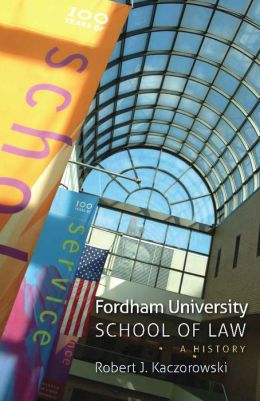
  • Over at Concurring Opinions, Danielle Citron plugs Robert Kaczorowski's Fordham University School of Law: A History.  “Ever since the inception of the recession, we have been embroiled in a conversation about legal education–its costs, value, and flaws," she writes.  “Amidst this debate, legal historian Robert Kaczorowski has written a brilliant and engrossing history of Fordham Law School, one that highlights, among many issues, the struggles that law schools have with their universities about the funds they generate.”  More.  
    • The Washington Post's story on the National Archives' Founders Online project, is here.  The project puts on the web “over 119,000 searchable documents, fully annotated,” by or relating to George Washington, Benjamin Franklin, John Adams (and family), Thomas Jefferson, Alexander Hamilton, and James Madison, “from the authoritative, federally funded Founding Fathers Papers projects.”
    • Emory Law's profile of LHB Founder Mary L. Dudziak is here
       Weekend Roundup is a weekly feature compiled by all the Legal History bloggers.

      Conk, "People's Electric: Engaged Legal Education at Rutgers-Newark Law School in the 1960's and 1970's"

      Readers interested in the history of legal education and the activist lawyering of the 1960s and 70s may be interested in the following article: "People's Electric: Engaged Legal Education at Rutgers-Newark Law School in the 1960's and 1970's," by George W. Conk (Fordham Law School). It appeared in Volume 40, no. 503 of the Fordham Urban Law Journal (201). Here's the abstract:
      Rutgers-Newark Law School was the most innovative, exciting, and effective law school in the 1960's and 1970's. Civil rights and liberties, 'poverty law', women's rights, employment discrimination, open housing, and public education were the foci of legal education at Rutgers - Which is the State University of New Jersey. In those two decades Rutgers-Newark - which we affectionately called People's Electric - developed a model of engaged legal education that was and is unique.

      No other law school of its era - and perhaps since - to my knowledge has been so thoroughly characterized by a broad progressive social agenda. Affirmative action, racial justice, women’s rights, public education, open housing, and civil liberties were the focus of the frequently landmark litigation which originated or was substantially aided by students and faculty from Rutgers Newark.

      The unique activism of Rutgers-Newark - a small public law school in an afflicted city - had a huge impact in the development of the law. The activist faculty and the clinics engaged law students deeply in innovative and intense litigation regarding the most important and controversial issues of the day. Students at People’s Electric learned first-hand the law-making function of the courts. They often helped make that law. No other law school in the country can begin to match its record in the 1970's. This was accomplished without endowment, without a base of high ranking or wealthy alumni, without a tradition of such activism at the school, a public law school whose tuition was nominal. Students learned from extraordinarily talented lawyers who they assisted. Their successes showed students how to succeed by really trying. We left Rutgers confident that we knew how to and could change the law, confident that we could make a difference.

      Graduates continued the mission in many ways. One outstanding example is the cadre who joined the Office of the Public Defender - a statewide agency - which led or participated in the defense of over two hundred capital trials from 1982-2007 when the death penalty was repealed and replaced with life without parole. There were no executions.
      The full article is available here, at SSRN. 

      Bessie Margolin (1909-1996)

      [My exam in American Legal History usually includes a biographical essay.  The 2012 exam, for example, had one on Marion Harron; the 2011 exam had one on Bernice Lotwin Bernstein, and the 2010 exam profiled Ida Klaus.  For this year's question, I drew heavily upon Marlene Trestman, “Fair Labor: The Remarkable Life and Legal Career of Bessie Margolin (1909-1996)," Journal of Supreme Court History 37 (2012): 42–74, as well as my own research.  See also Karen's essay, Portia's Deal, and her post on the Frankfurter quote below.]

      Bessie Margolin (credit)
      Bessie Margolin (1909-1996) was born in Brooklyn to Russian Jewish immigrants.  When she was two, the family moved to Memphis, where, when Bessie was four, her mother died in childbirth.  Her father felt incapable of carrying for his children, so Bessie and a brother were sent to live at the Jewish Children’s Home in New Orleans.  There she received an excellent education and was deemed “a very splendid girl, far above average in every way.”  At sixteen she left the Home and enrolled in a women’s affiliate of Tulane University.  After two years she enrolled in Tulane itself to complete her bachelor’s degree and a law degree.  She was the only woman in the Tulane Law School when she started.  She became Civil Law Editor of the Tulane Law Review.  In 1930, at the age of twenty one, she graduated second in her law school class of twenty three, “a fraction” behind the top student.

      Margolin impressed Tulane’s dean with her “unusual professional ability,” her “unusually charming personality,” and her “unusually broad, balanced, and progressive social outlook.”  She also impressed the Yale law professor Ernest Lorenzen, who published an article in her volume of the law review and hired her as his research assistant.  She would spend the next three years in New Haven, the last on a prestigious fellowship as a doctoral candidate in law.  Her thesis, directed by William O. Douglas, was on the French law of corporate reorganizations.  Douglas called it meticulous and “of the highest caliber,” with “an air of realism about it.”

      While at Yale, Margolin also wrote a comment on pending legislation on corporate reorganizations.  After the Yale Law Journal, edited that year by Abe Fortas, published it over her initials, partners of eminent law firms inquired after its author.  Their interest in a potential hire vanished when they learned that “B.M.” was a woman.  After receiving her legal doctorate in 1933, she took a temporary job at the Inter-American Commission of Women in Washington, where she researched the legal status of women in Latin America.  Then the creation of the Tennessee Valley Authority (TVA) presented her with a better alternative.  Lorenzen assured TVA’s personnel director that Margolin “is intent upon a legal career or professional career as a primary objective from which she will not be deflected by marriage.”

      In the late summer of 1933, Margolin started as a research attorney in TVA’s Knoxville office at a salary of only $2,000.  About that time, a TVA lawyer described her telegraphically: “Tulane, Yale, TVA.  One of the Washington ‘prima donnas.’  Excellent on research.  A good kid.  Sadly underpaid and a bit sore on things.”  He predicted that she “will be all right” under the newly appointed general counsel James Lawrence Fly, and in fact Fly promoted her to Associate Attorney and raised her salary to $3,600.

      The TVA’s legal division, one of Margolin’s coworkers recalled, was “an extraordinary able, brilliant group of relatively young lawyers, who had outstanding academic records and law school achievements.”  Fly considered his legal division TVA’s central policymaker.  He let it be known, a lawyer recalled, that “the legal division was going to be the key to the works.”

      Fly set Margolin to work organizing evidence, researching legal issues, and writing substantial portions of the briefs in two challenges to TVA that went to the U.S. Supreme Court.  Although she can be seen sitting, hatless, behind TVA’s lead counsel John Lord O’Brian, in a photograph of one trial, she never argued in any branch of the cases.  Although Fly promoted her to Senior Attorney and raised her salary to $4600, she only tried a few condemnation cases “of lesser importance.”

      In 1939 Margolin moved to the legal staff of the recently created Wage and Hour Division of the Labor Department, charged with implementing the Fair Labor Standards Act (FLSA).  She asked for $5600, even though she knew that the general counsel might “think this an awful lot ‘for a girl’”; she was pleased when she received $5000.  Save for six months in 1946, when she was in Germany helping organize trials of Nazis, she remained at Wage & Hour until retiring in 1972.   From the start, she appeared in court.  Her argument of motions in federal district court in New Orleans was extensively covered by the local press.  Margolin is “a brunette, with flashing black eyes and a stunning figure,” a newspaperman reported.  “When you see a face like Miss Margolin’s you almost immediately wonder what that ‘Miss’ is tacked on before for.”  At first, she declined to discuss her marital status.  “I’m interested in labor and I’m a New Dealer,” she said.  “Incidentally, I’m not a radical.”  When pressed, she finally responded that she “hadn’t had time for love.”
         
      A few months with time cards and payroll records in damp New England warehouses convinced Margolin that trial work was a “deadly bore,” so she transferred to Wage & Hour’s appellate division.  She would ultimately argue 150 cases before the U.S. Circuit Courts (winning 114) and 28 before the U.S. Supreme Court (winning 23).  Frankfurter, who sparred with her in oral argument, described her as “a very good girl & a good advocate but not a lawyer of unsettling brilliance apart from the deft use of her feminine charms.”  She was promoted to Assistant Solicitor of the Department of Labor, but she never became Solicitor or a federal judge, a post she coveted.  Instead, she remained an imposing presence in the Department of Labor.  One Solicitor described his selection process as having three stages: “I had to be nominated by the President, confirmed by the Senate, and interviewed by Bessie.”

      Regular visits to the Elizabeth Arden Salon, during which she sometimes edited briefs, kept her impeccably coiffed.  When she entered a courthouse, “she walked with absolute assurance that a door would be opened before she got to it.”  After the Equal Pay Amendment to the FLSA was passed in 1963, she became its greatest defender within the Department of Labor.

      [As you can see, the essay does not mention Margolin's affair with Fly, a married father of two, which commenced at TVA and continued after he became chairman of the Federal Communications Commission in September 1939.  Because I had not discussed sexuality and the legal profession in class, I thought the issue too challenging for students to tackle for the first time in the exam room.  FCC Commissioner Clifford Durr described the affair as "one of these things that was known but wasn’t known."  The chairman of an ad hoc investigation of the FCC threatened to make it public until House Speaker Sam Rayburn (like Fly, a Texan) instructed him not to.]

      Oral History at Law Alumni Weekends

      In their brilliant skewering of law school histories, Alfred S. Konsefsky and John Henry Schlegel lamented the tendency of authors to ignore the student experience of legal education, when the few glimpses provided in the works they reviewed were so revealing of a significant phase in the making of the American legal profession.  I note with interest the following item in the schedule for the upcoming alumni weekend at the University of Chicago:
      12:15–3:00 p.m.     Oral and Photographic History Project
      Lend your voice and wisdom to the Law School’s growing archives! The Communications Office will be on-hand to videotape alumni remembrances about life at the Law School and beyond. Photographs from our archives will also be available for your perusal, and we welcome your help with identifying those pictured.
      As a sometime historian of legal education and full-time beneficiary of an active alumni relations office, I think this is a terrific idea and wonder if other law schools have tried something similar.

      Blog Archive